

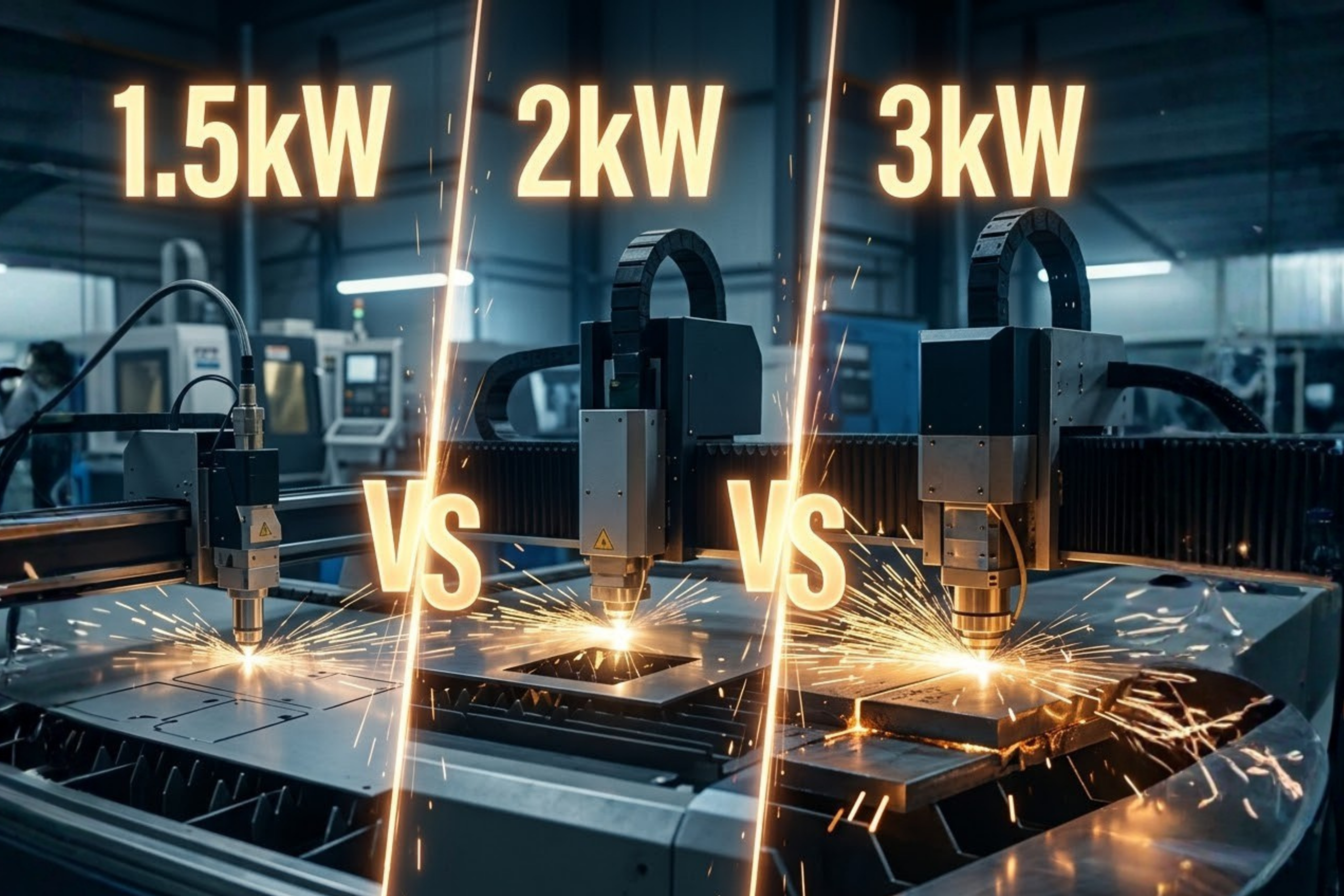
Choosing between a 1.5kW, 2kW, or 3kW Fiber Laser Cutting Machine depends mainly on the metal thickness, cutting speed, and the daily workload your business handles. For lighter sheet work, 1.5kW may be enough, while 2kW and 3kW are better suited for broader production needs. Many buyers compare these options because each power level suits different types of workshops, material ranges, and production targets. Understanding these differences clearly helps avoid spending extra on capacity you may not need or choosing a machine that becomes limiting too quickly.
This “1.5kW vs 2kW vs 3kW Fiber Laser Cutting Machines comparison” will help you decide which option best fits your work requirements.
Table Of Contents
- 1.5kW Vs 2kW Vs 3kW Fiber Laser Cutting Machine At A Glance
- What Does Laser Power Mean In A Fiber Laser Cutting Machine?
- Fiber Laser Power Comparison By Material Type
- Fiber Laser Cutting Thickness Chart For 1.5kW, 2kW, And 3kW
- 1.5kW Vs 2kW Vs 3kW Fiber Laser Cutting Machine: Which Should I Choose For My Work?
- Common Mistakes When Choosing Fiber Laser Power
- Final Words: Is 1.5kW, 2kW, Or 3kW The Better Choice?
- Frequently Asked Questions
1.5kW Vs 2kW Vs 3kW Fiber Laser Cutting Machine At A Glance
The main difference between these machines is the thickness they can handle and the speed at which they can process regular production work. A 1.5kW model suits lighter jobs, a 2kW offers a balanced range, and a 3kW supports thicker materials with stronger output.
Where does 1.5kW fit best?
- A 1.5kW fiber laser cutting machine is best suited for shops that regularly handle thin sheets, lighter workloads, and simpler production needs.
- It is often a practical starting point for businesses that want controlled investment while still maintaining clean, accurate metal cutting.
Where does 2kW become the practical middle ground?
- A 2kW machine is a practical middle ground when a business needs more flexibility for daily work without incurring too much additional cost.
- It usually suits shops that handle mixed materials, a range of moderate thicknesses, and a steady flow of repeat and custom jobs.
Where does 3kW add more capability?
- A 3kW machine offers greater capability for work involving thicker metals, larger production targets, and faster cutting expectations under demanding operating conditions.
- It is often more suitable for businesses that need higher output and want extra room to accommodate growing production requirements.
What Does Laser Power Mean In A Fiber Laser Cutting Machine?
Laser power indicates how much cutting power the machine can deliver across different metals and thicknesses. Higher wattage usually allows the machine to cut thicker material and complete demanding jobs more efficiently.
Wattage affects cutting thickness.
- Wattage directly affects how much metal the laser can cut through during normal cutting conditions.
- A higher-power machine can usually cut thicker sheets more effectively than a lower-power machine handling the same material type.
Why does power also affect speed and workload?
- Power also affects how quickly the machine completes jobs, especially when many sheets or parts need to be processed in regular production.
- Faster cutting helps businesses manage heavier workloads more smoothly without creating unnecessary delays in day-to-day operations.
Why is higher power not always the best value?
- Higher power is not always the best value because many businesses mainly cut thinner materials that do not need extra machine strength.
- In such cases, paying more for additional power may raise costs without providing sufficient practical benefit in daily production work.
Fiber Laser Power Comparison By Material Type
Different metals respond differently to laser power, so the same machine may not perform equally well across all material types. Comparing materials separately makes it easier to understand where 1.5kW, 2kW, and 3kW machines fit best.
Carbon steel
- Carbon steel is often easier to cut than some reflective metals, so lower and mid-range power levels can handle many common jobs well.
- A 3kW machine becomes more useful when carbon steel thickness increases and faster output is needed for heavier production requirements.
Stainless steel
- Stainless steel usually requires stable cutting power because clean edges and consistent results matter more in many finished-product applications.
- A 2kW or 3kW machine is often preferred when stainless steel jobs involve moderate thickness and regular production demands.
Read More: Photo Engraving On Stainless Steel Using Fiber Laser
Aluminum
- Aluminum can be more demanding because it reflects heat differently, making power selection more important for consistent cutting performance.
- A 2kW or 3kW machine usually offers better flexibility when aluminum work involves varying thicknesses or repeated daily cutting.
Copper and brass
- Copper and brass often require careful handling because they can be more challenging for lower-power machines under practical shop conditions.
- A higher power level generally provides better support when cutting these metals, especially for thicker sheets or repeated cuts.
Fiber Laser Cutting Thickness Chart For 1.5kW, 2kW, And 3kW
Cutting thickness is one of the most important factors when comparing fiber laser machines with different power levels. A simple thickness chart helps businesses understand which machine can handle their typical metal-cutting requirements.
Approximate cutting range for 1.5kW
- A 1.5kW fiber laser cutting machine is typically suitable for thin metal sheets used in light fabrication and everyday production tasks.
- It commonly handles thinner carbon steel, stainless steel, and aluminum when the cutting process prioritizes moderate output over heavy industrial workloads.
Approximate cutting range for 2kW
- A 2kW fiber laser cutting machine offers a wider cutting range, making it suitable for many fabrication shops that handle mixed material thicknesses.
- This power level supports moderate sheet cutting while maintaining good cutting quality across common metals used in regular production environments.
Approximate cutting range for 3kW
- A 3kW fiber laser cutting machine offers greater cutting capability, enabling businesses to process thicker metal sheets more efficiently.
- It is often chosen by shops that require higher throughput and greater flexibility in handling materials of varying thicknesses.
Why is the published max thickness not always the best production thickness?
- Published maximum thickness values indicate the upper cutting limit of a machine under controlled conditions, rather than its most efficient everyday operating range.
- In real-world production environments, businesses often choose slightly thinner materials to maintain higher cutting speeds, cleaner edges, and consistent output quality.
Quick Comparison Table
| Laser Power | Carbon Steel | Stainless Steel | Aluminum |
|---|---|---|---|
| 1.5kW | 8-10 mm | up to ~4 mm | up to ~4 mm |
| 2kW | up to ~12–14 mm | up to ~6 mm | up to ~6 mm |
| 3kW | up to 16 mm | up to ~8 mm | up to ~6 mm |
1.5kW Vs 2kW Vs 3kW Fiber Laser Cutting Machine: Which Should I Choose For My Work?
The right machine depends on the thickness you most often cut, the workload you handle daily, and the production speed you need. A 1.5kW machine suits lighter work, 2kW offers better flexibility for regular jobs, while 3kW fits businesses cutting thicker metals and aiming for faster output.
Choose 1.5kW for lighter sheet work and lower entry cost.
- A 1.5kW machine is a practical choice for businesses that primarily process thin sheets and want to keep initial investment costs low.
- It usually works well for shops with simpler cutting needs, lighter output targets, and a steady focus on everyday sheet work.
Choose 2kW for balanced capability and everyday shop flexibility.
- A 2kW machine suits businesses that need a balance between cutting range, daily flexibility, and manageable investment for regular production work.
- It is often a good fit for shops handling mixed jobs, moderate thickness levels, and both repeat orders and custom requirements.
Choose 3kW for thicker metals and faster throughput.
- A 3kW machine is better suited for businesses that often process thicker metals and need stronger performance during regular production cycles.
- It also supports higher throughput, making it useful for shops handling larger order volumes or more demanding cutting schedules.
If you are interested in knowing more, read here: Metal Laser Cutting: Everything You Need to Know
Common Mistakes When Choosing Fiber Laser Power
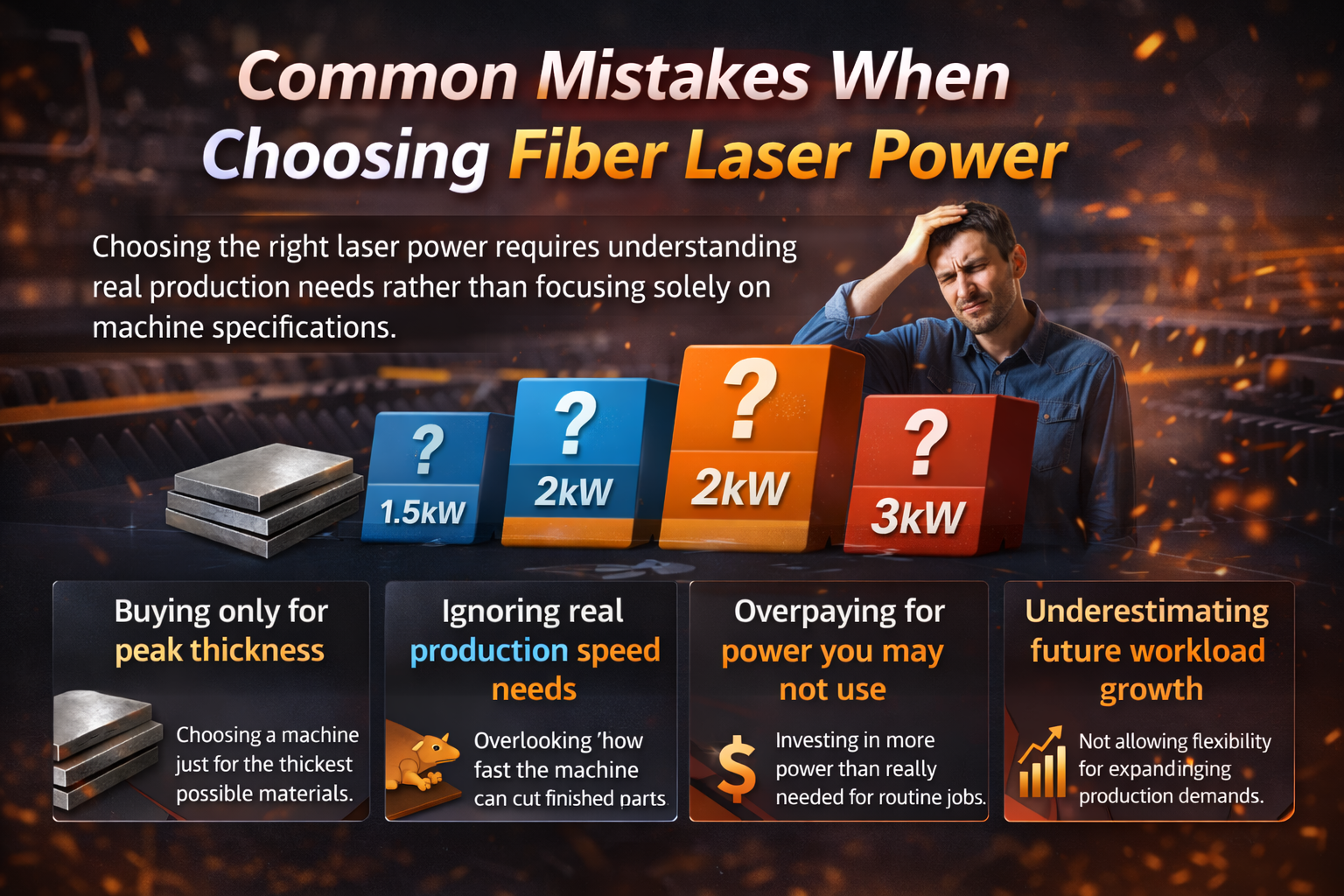
Choosing the right laser power requires understanding real production needs rather than focusing solely on machine specifications. Many buyers make decisions based on occasional requirements rather than everyday cutting conditions.
Buying only for peak thickness
- Some buyers choose a machine mainly because it can cut the thickest sheet possible, even if that thickness rarely appears in their daily work.
- However, once you understand the basics of laser cutting, it becomes clear that the machine’s power should match the materials most often used.
- A better decision usually comes from selecting a power level that fits the thickness regularly processed during everyday production work.
Ignoring real production speed needs
- Cutting speed matters when shops handle multiple orders, repeated parts, or continuous workloads during normal production schedules.
- Choosing a machine without considering production speed may slow operations when the shop begins handling larger volumes of work.
Overpaying for power you may not use
- Higher power machines often cost more, and some businesses invest in extra capability that does not match their actual cutting requirements.
- Selecting suitable power based on everyday materials and workloads can help control investment while still supporting reliable production.
Underestimating future workload growth
- Some buyers select power only for current work without considering how production needs may expand over time.
- Choosing a machine with some growth flexibility can help avoid early limitations if order volumes or material thickness requirements increase later.
To learn more about applications, read: Which Industries Can Fiber Laser Cutting Machines Be Used In?
Final Words: Is 1.5kW, 2kW, Or 3kW The Better Choice?
When comparing 1.5kW, 2kW, and 3kW Fiber laser cutting machines, the right choice usually depends on the materials you cut, the thickness you most often handle, and your overall production needs.
A 1.5kW machine is generally suitable for lighter sheet metal work and smaller fabrication jobs. A 2kW machine offers greater flexibility for regular workshop production and a range of cutting tasks. Meanwhile, a 3kW machine is often preferred by businesses that work with thicker metals and need faster cutting speed during larger production runs.
Instead of simply choosing a higher-power machine, it is better to select one that matches your everyday cutting work and supports steady production growth.
Frequently Asked Questions
1. What thickness can a 1.5kW fiber laser cut?
A 1.5kW fiber laser is usually suitable for thin metal sheets. The exact thickness depends on the material type and cutting conditions.
2. What materials can a 2kW fiber laser cut?
A 2kW fiber laser can cut common metals such as carbon steel, stainless steel, and aluminum. It is often used for moderate cutting needs.
3. Is a 3kW fiber laser suitable for heavy metal cutting?
A 3kW fiber laser is better suited to thicker metals than lower-power machines. It works well for businesses that require stronger cutting.
4. Which fiber laser power is best for small workshops?
Small workshops often choose 1.5kW or 2kW machines based on their daily cutting work. The better option depends on material thickness and workload.
5. What industries require high-power fiber lasers?
High-power fiber lasers are often used in heavy fabrication, industrial manufacturing, and metal processing businesses. These industries usually handle thicker materials and larger workloads.
6. Does higher laser power increase cutting speed?
Yes, higher laser power can improve cutting speed in many cases. This is especially useful when working on thicker metals or larger production volumes.
7. When should a business upgrade from 2kW to 3kW?
A business should consider upgrading from 2kW to 3kW when regular work begins to involve thicker metals or higher production demands. It can also be a better choice when a faster cutting speed becomes important for managing larger workloads.