

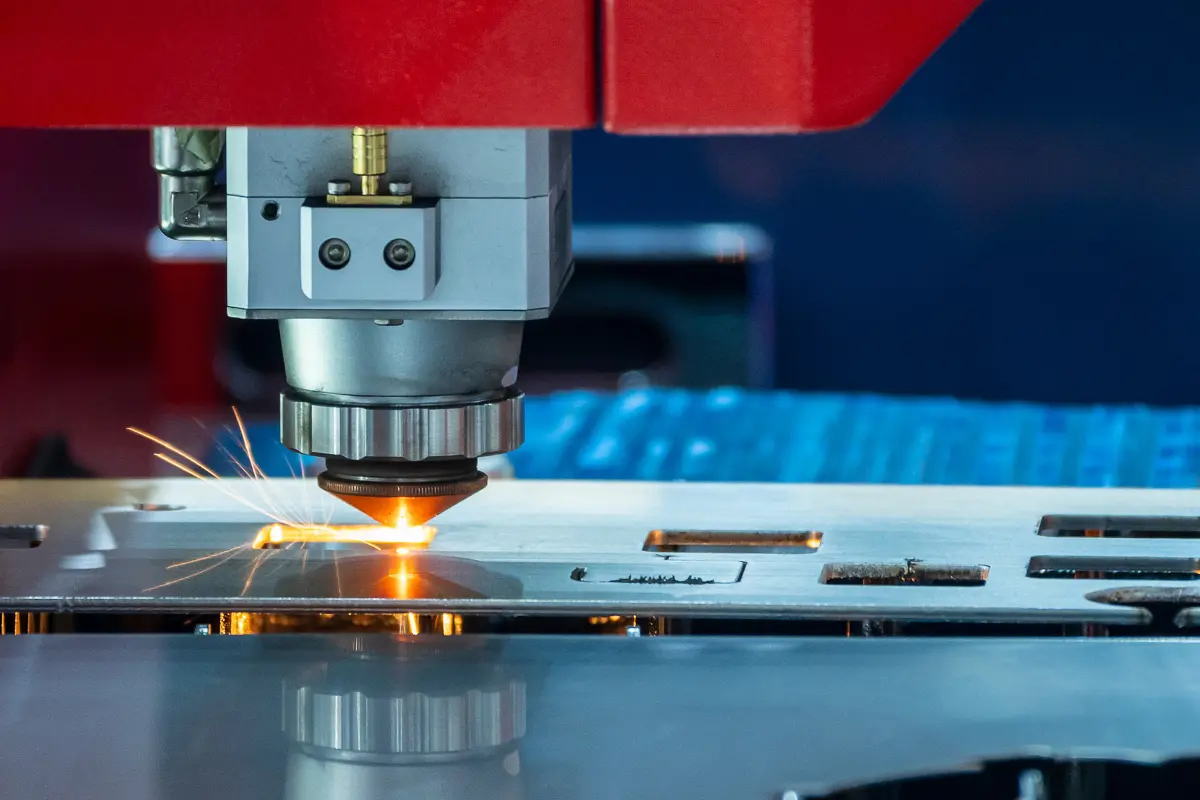
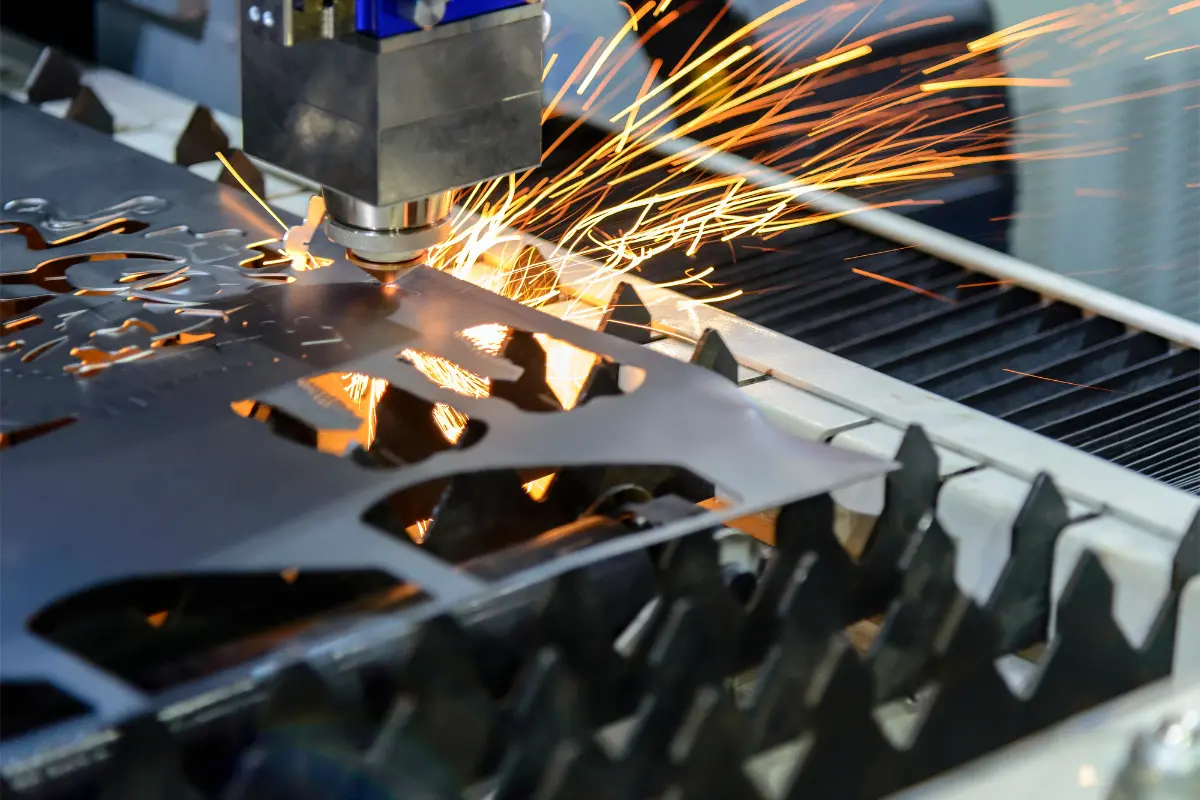
A Laser Cutting Machine works by focusing a high-power laser beam onto the material and moving it along a programmed path to melt, burn, or vaporize the surface with precision. The machine uses CNC control, optics, and often an assist gas to make clean, accurate cuts.
If you are searching for ‘how does Laser Cutting Machine work,’ this guide clearly covers its working, types, and applications in detail. It will help you identify the right laser cutting technology for your industrial needs.
Table of Contents:
- Understanding How Laser Cutting Works
- What Are The Types Of Laser Cutting Machines?
- What Are The Advantages Of Laser Cutting Machines?
- Which Laser Cutting Machine Is Best For Your Application?
- Choosing The Right Laser Cutting Machine
- Frequently Asked Questions
Understanding How Laser Cutting Works
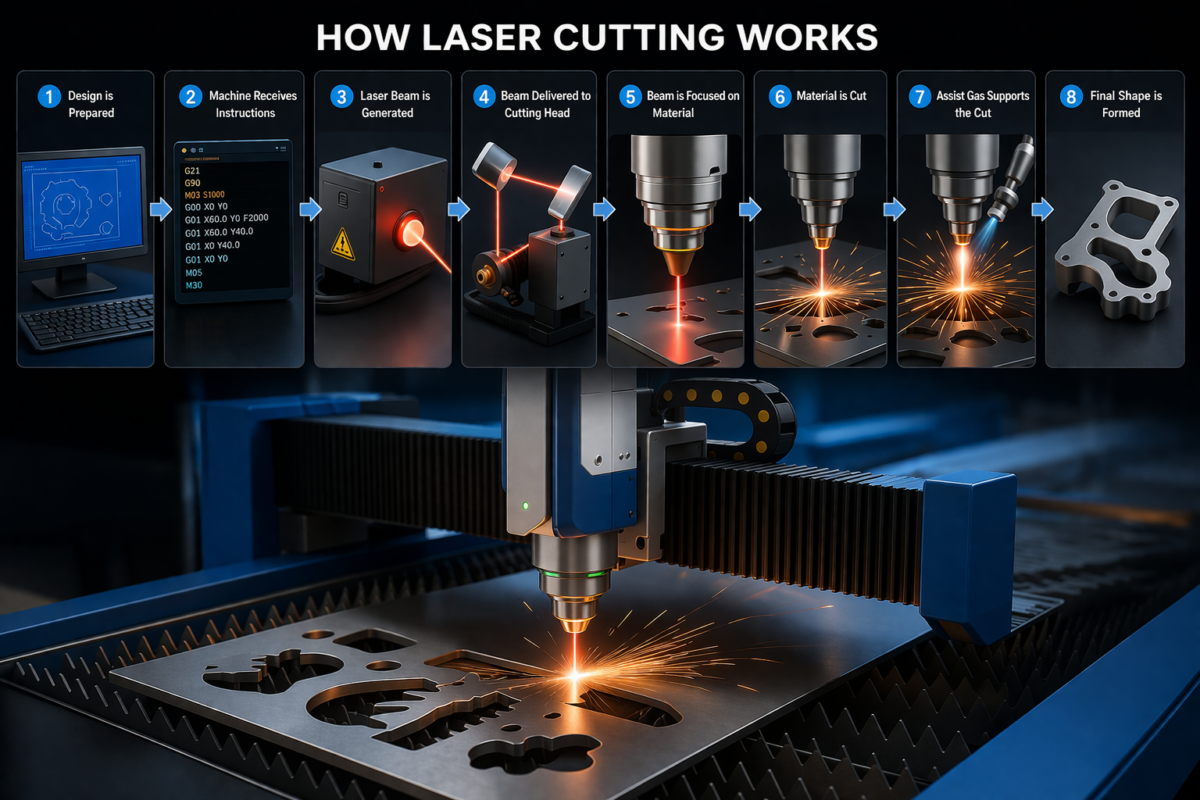
Behind every clean cut is a set process. From beam generation to CNC-guided movement, each stage plays a role in shaping the final result. Here is the Laser Cutting Machine process in a simple flow:
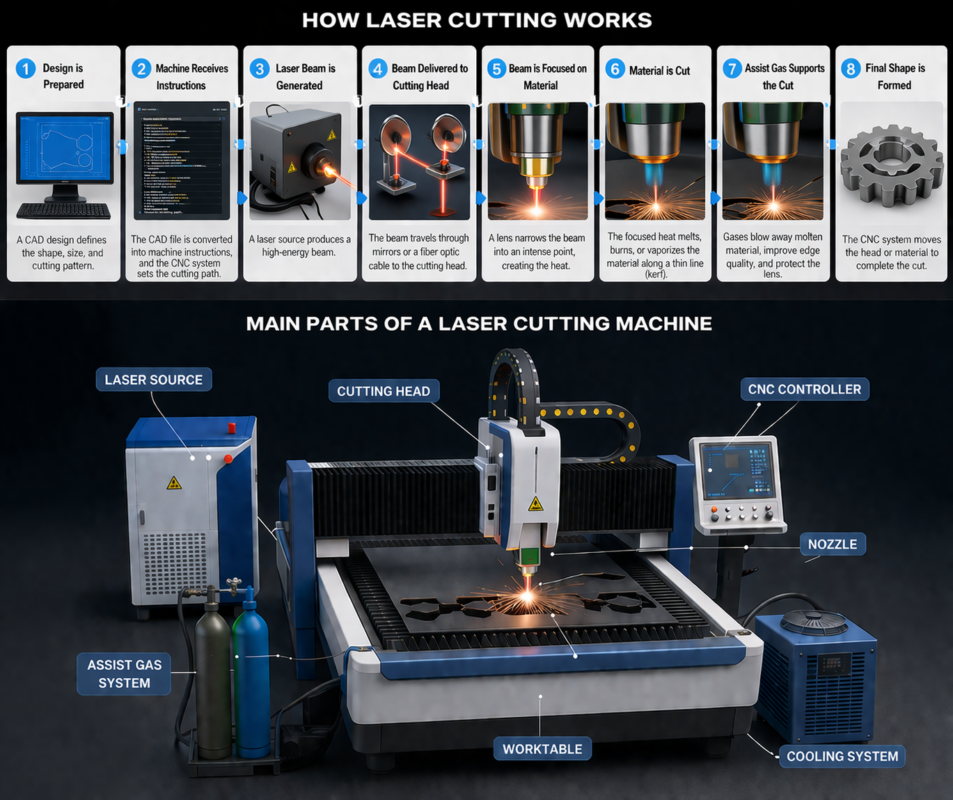
- The design is prepared: The job begins with a CAD design that defines the shape, size, and cutting pattern.
- The machine receives cutting instructions: The CAD file is converted into machine instructions, and the CNC system uses them to control the cutting path.
- The laser beam is generated: A laser source produces a high-energy beam. In most cases, CO2 lasers are used for non-metals, while fiber lasers are commonly used for metals.
- The beam is delivered to the cutting head: The beam travels through mirrors in CO2 systems or through a fiber optic cable in fiber laser systems until it reaches the cutting head.
- The beam is focused on the material: A lens inside the cutting head narrows the beam into a highly intense point. This is the core of the Laser Cutting Machine’s working principle: it generates the heat required for precise cutting.
- The material is cut: The focused heat melts, burns, or vaporizes the material along a thin line, which is known as the kerf.
- Assist gas supports the cut: Gases such as oxygen or nitrogen blow away molten material, improve edge quality, and help protect the lens during operation.
- The final shape is formed: As the CNC system moves the head or material along the programmed path, the machine completes the cut and separates the finished part accurately.
What Are The Main Parts of A Laser Cutting Machine?
- Laser source
- CNC controller
- Cutting head
- Nozzle
- Assist gas system
- Worktable
- Cooling system
What Are The Types Of Laser Cutting Machines?
Laser Cutting Machines mainly come in two widely used types: Fiber Laser Cutting Machines and CO2 Laser Cutting Machines. Here’s how they work:
Fiber Laser Cutting Machine
A fiber laser is designed to process materials such as mild steel, stainless steel, aluminum, and copper with speed and accuracy. It is often preferred in high-output environments where fast turnaround and clean edges matter.
Why do many industries choose it:
- Cuts metal faster than many traditional alternatives
- Produces neat edges with strong cutting precision
- Has lower running costs due to fewer consumable parts
- Needs less maintenance because of its compact setup
Common applications:
- Metal fabrication
- Automotive parts
- Industrial enclosures
- Signboards
Pro Tip: If someone is searching for the best Laser Cutting Machine for metal, a fiber laser is usually the first option to consider. It is also a common choice for industrial Laser Cutting Machines because it enables faster production and consistent performance.
👉 Read more: How Does Fiber Laser Cutting Machine Work?
CO2 Laser Cutting Machine
A CO2 laser is better suited for non-metal materials. It is commonly used on acrylic, MDF, leather, wood, and fabric, especially for jobs involving detailed shapes or decorative work.
Why it stays in demand:
- Gives clean and smooth cuts on non-metals
- Works well for curved patterns and fine detailing
- Offers good value for smaller setups
- It is easier to adapt to light commercial work
Best suited for:
- Acrylic letters and display items
- Wood crafts and partitions
- Fashion and fabric cutting
- Packaging samples and prototypes
What Are The Advantages Of Laser Cutting Machines?
| Fiber Laser Cutting Machine | CO2 Laser Cutting Machine |
|---|---|
| Strong choice for sheet metal and reflective metals | More practical for custom and creative production |
| Supports faster turnaround in metal-heavy production | Delivers smoother results on decorative and display-focused work |
| More suitable for factory-floor output and long production runs | Useful for businesses that handle custom orders and varied design jobs |
| Compact setup with fewer alignment-related parts | Better suited for engraving, along with cutting, in one setup |
| Helps streamline metal fabrication workflows | Widely used for signage, gifting, models, and creative applications |
| Practical for industrial environments where output speed matters | Often easier to adopt for small workshops and entry-level setups |
Which Laser Cutting Machine Is Best For Your Application?
The best choice depends less on the machine name and more on what the job demands every day. Before deciding, consider the type of output you need, the level of detail, the production volume, and how often the machine will run.
A setup that suits fast, repetitive factory work may not be the right fit for custom design or mixed production.
- ✓ Choose a fiber laser for faster metal cutting and regular production work
- ✓ Choose a CO2 laser for detailed cutting, engraving, and design-focused jobs
- ✓ Match the machine to your daily workload, not just the specs
- ✓ Consider output volume before making the final choice
- ✓ Pick the option that fits your cutting needs and business setup
Choosing The Right Laser Cutting Machine
Once you have a full understanding of “how does Laser Cutting Machine work?”, it becomes easier to pick a machine that practically suits your work. The right choice depends on the material, the types of jobs you handle, and your budget, all of which also affect the price of a Laser Cutting Machine in India.
If you are planning to invest in one, it helps to buy from a manufacturer you can trust. That is where Prakash Laser can be a reliable option.
Need help with setup? Watch our YouTube video on CO2 Laser Cutting Machine Installation.
Frequently Asked Questions
1. What is laser cutting?
Laser cutting is a process that uses a focused laser beam to cut, melt, or vaporize material with high precision. It is widely used for metal, acrylic, wood, and other industrial materials.
2. How does a CO2 Laser Cutting Machine work?
CO2 Laser Cutting Machine working starts with the generation of a laser beam inside a gas-filled tube. The beam is then guided through mirrors and a lens onto the material, where the focused heat cuts the surface along the programmed path.
3. How does a fiber Laser Cutting Machine work?
A fiber Laser Cutting Machine operates by producing a laser beam from a fiber laser source and delivering it directly to the cutting head. The beam is then focused on the material for fast and precise cutting.
4. What gas is used in laser cutting?
Oxygen, nitrogen, and air are the most commonly used gases in laser cutting.
5. How laser cut a metal sheet?
A laser cuts a metal sheet by focusing a high-energy beam onto its surface until the metal melts or vaporizes. Assist gas then removes the molten material, creating a clean cut.
6. Is laser cutting suitable for industrial use?
Yes, laser cutting is widely used in industrial applications because it offers precision, repeatability, and the ability to handle both simple and complex cutting jobs efficiently.
7. Does laser cutting melt or burn material?
Laser cutting can do both. It may melt, burn, or vaporize the material depending on the setup and material type.
👉 Read More: How To Get Rid Of Laser Burn Marks From A CO2 Laser Cutting Machine?
Get In Touch With Us
📤 sale@lasercuttingmachines.co.in
📲 +91-9871377550
7 thoughts on “How Does A Laser Cutting Machine Work?”
Comments are closed.