

Starting a jewelry business in 2026 can be a great move, especially in the age of online marketplaces, social media, and local pop-ups. It’s easier than ever to get your jewelry pieces into the market without investing a chunk of money in a big setup up front.
That said, success doesn’t just fall into your lap easily. So, a bit of planning, a realistic budget, the right technology, and some basic skills can go a long way.
This guide on how to start a jewelry business keeps it simple and practical. It explains the process step by step, helping you figure out what to tackle first and how to move forward with confidence, without feeling overwhelmed. Let’s get started.
Table Of Contents
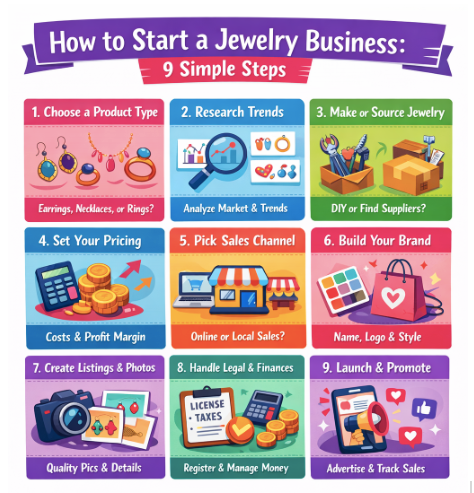
How To Start A Jewelry Business: Easy 9-Steps For Beginners
It’s 2026, and the jewelry business is clearly booming. If you’ve been thinking about jumping in, now’s a great time to start. So, here are the step-by-step basics to help you understand where to begin and how to turn your idea into something real:
Step 1: Choose One Jewelry Product Type
First things first, decide exactly what you want to sell and who it’s for. Focus on one product category, such as earrings, necklaces, or rings, and one clear style. A focused niche makes pricing, branding, and marketing far easier, especially when starting.
Step 2: Market Research And Understanding Trends
Before investing your hard-earned money in your jewelry business idea, take time to see what already sells and what’s in trend. Look at online marketplaces, social platforms, and search results to understand pricing, popular designs, and customer preferences. Notice what keeps showing up in the top listings. This helps you get clarity.
Step 3: Decide Whether To Make Jewelry Or Source It
Choose between creating jewelry yourself or sourcing it from suppliers. Making jewelry offers creative control, while sourcing allows for faster setup. Both options work for beginners. The key is to start with a small, manageable product range rather than an extensive catalog. Once you set foot in the door, you can plan to scale up. If you want to create your own range without spending a lot on machines, opt for job work and keep your costs under control.
Step 4: Get Your Pricing Right
Make sure you list all expected costs, including materials, tools, packaging, platform fees for selling, and shipping supplies. Your pricing should cover these expenses while leaving room for profit. Many beginners underprice in the early stages, so careful planning of costs helps avoid that mistake.
Step 5: Choose Where You’ll Sell Your Jewelry
Decide on one primary selling channel to start with. This could be an online marketplace, your own website, or local selling options like pop-ups or markets. Focusing on one platform first helps you learn faster and refine your process.
Step 6: Build A Simple But Consistent Brand
Create a brand that feels uniform, even if it’s minimal. Pick a simple yet striking name for your brand, a defined color palette, proper labeling, and a consistent style for product photos and packaging. Jewelry buyers often make emotional decisions, and visual consistency builds that trust quickly.
Step 7: Create Strong Product Listings And Photos
Jewelry sells visually, so clear photos and detailed listings matter. When you’re learning how to start a jewelry business, you must know that it matters to use natural lighting, show close-ups, and include size, materials, and care details. Well-written descriptions and quality images reduce buyer hesitation and increase conversions.
Step 8: Legal And Financial Setup
It’s essential to register your jewelry business in accordance with local requirements and to understand basic tax responsibilities. Set clear store policies for shipping, returns, and order handling. This step protects you and creates a smoother customer experience as orders come in. Plus, you can track your inventory and finances seamlessly.
Step 9: Go Live, Promote, And Track What Works
Once your store is live, shift your focus to consistent promotion and keeping an eye on your sales. Share your products regularly, gather early feedback, and pay attention to which designs attract the most interest. Use these insights to fine-tune both your product lineup and your marketing.
Moreover, on social media, you can run sponsored ads for your best-selling pieces and explore influencer marketing to reach a wider audience. But explore these additional channels for your jewelry business plan without rushing growth.
Common Mistakes New Jewelry Businesses Must Avoid
- Pricing too low: Charging too little just to attract buyers often leaves no room for profit and can burden your finances over time. Price your jewelry correctly.
- Skipping market research: Not researching properly about what sells, current price ranges, market trends, or buyer habits can lead to poor product choices. Do not skip this part even if it takes time.
- Trying to grow too fast: Launching too many designs right from the start or selling everywhere at once can be hard to manage. Don’t get overwhelmed, start slow and gradually grow.
Concluding How To Start A Jewelry Business
Starting a jewelry business is really about getting the basics right and not overthinking every move. Take it step by step, stay realistic, and give yourself room to learn as you go. You don’t need everything perfect to begin. Just start with confidence, stay consistent, and let the experience guide you forward.
Read more: 10 Most Profitable Laser Cut Products That Rule The Market.
Frequently Asked Questions
1. Which machines are commonly used in jewelry making?
The popular machines used in jewelry making include Laser Cutting Machines for intricate designs and Laser Engraving Machines for personalization. The choice depends on the type of jewelry you plan to create.
2. How important is packaging in a jewelry business?
Packaging really sets the tone for that first impression. Even clean, simple packaging can make your jewelry feel more special and thoughtful. It often gives customers a reason to come back and buy again.
3. Are laser cutting machines suitable for small jewelry businesses?
Yes, many small jewelry brands use laser cutting machines for clean cuts and intricate patterns. They’re especially useful for materials like acrylic, wood, leather, and thin metals when designs require precision and accuracy.
4. How long does it realistically take to start seeing sales?
It depends on factors such as product demand, pricing, visibility, and the consistency of jewelry promotion. Steady sales often take longer to achieve but improve as designs, listings, and marketing are refined over time.
One thought on “How To Start A Jewelry Business In 2026? A 9-Step Guide For Beginners ”
Comments are closed.