

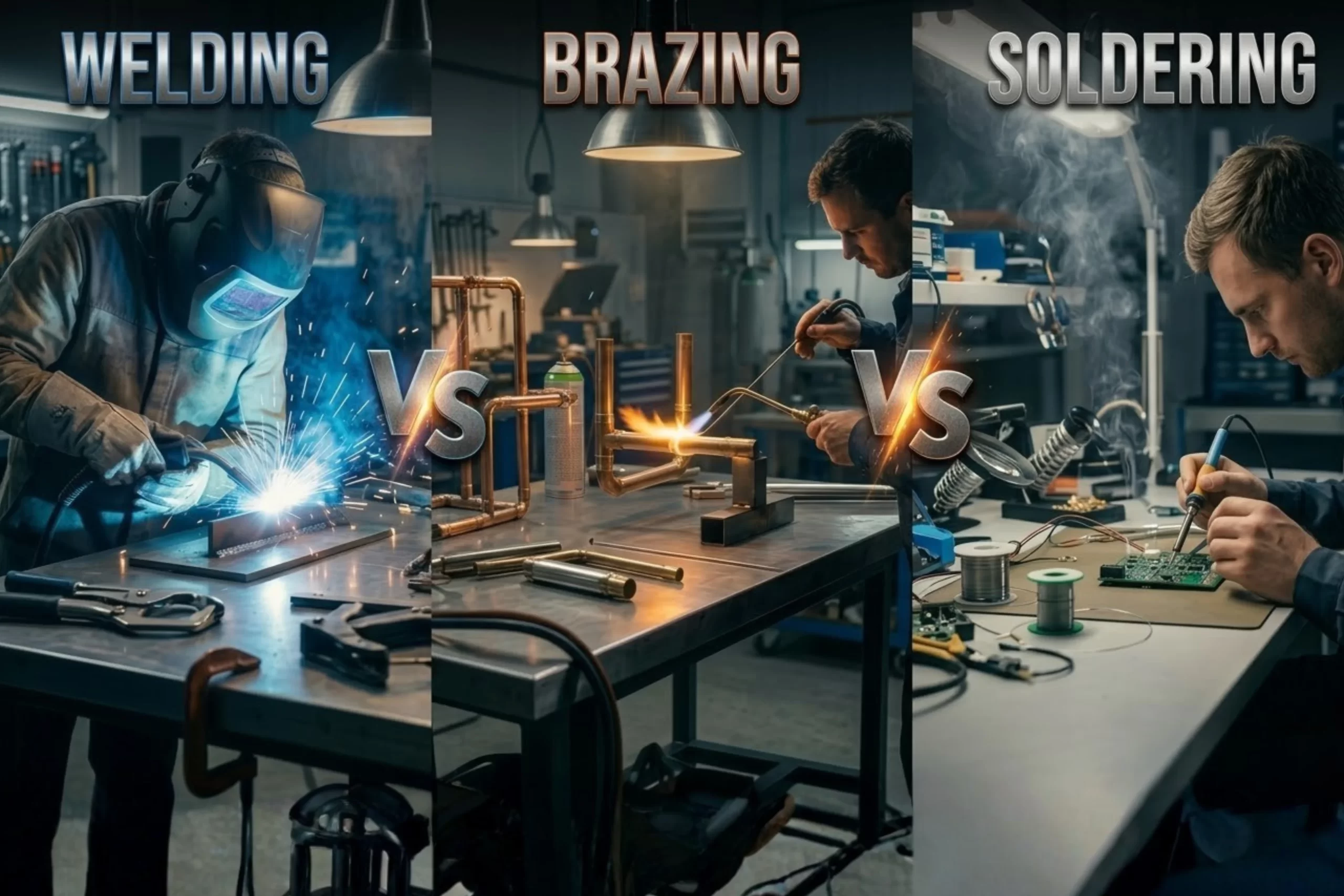
When joining metal parts, three methods are commonly compared: Brazing, Soldering, and Welding. While they may look similar, each process works in a very different way. Choosing the wrong process can lead to weak joints, material distortion, or long-term failure. That’s why understanding the “Brazing vs Soldering vs Welding” differences is critical before starting any fabrication or repair work.
Table Of Contents
- What Is Welding?
- What Is Brazing?
- What Is Soldering?
- Side-By-Side Comparison: Brazing vs Soldering vs Welding
- How Laser Technology Impacts Brazing vs Soldering vs Welding
- Equipment and Tools Needed for Each Method
- Advantages and Limitations of Each Method
- When to Use Each Method
- How Joint Strength Compares Over Time
- Safety Considerations for Each Method
- Final Words For Brazing, Soldering, And Welding
- Frequently Asked Questions
What Is Welding?
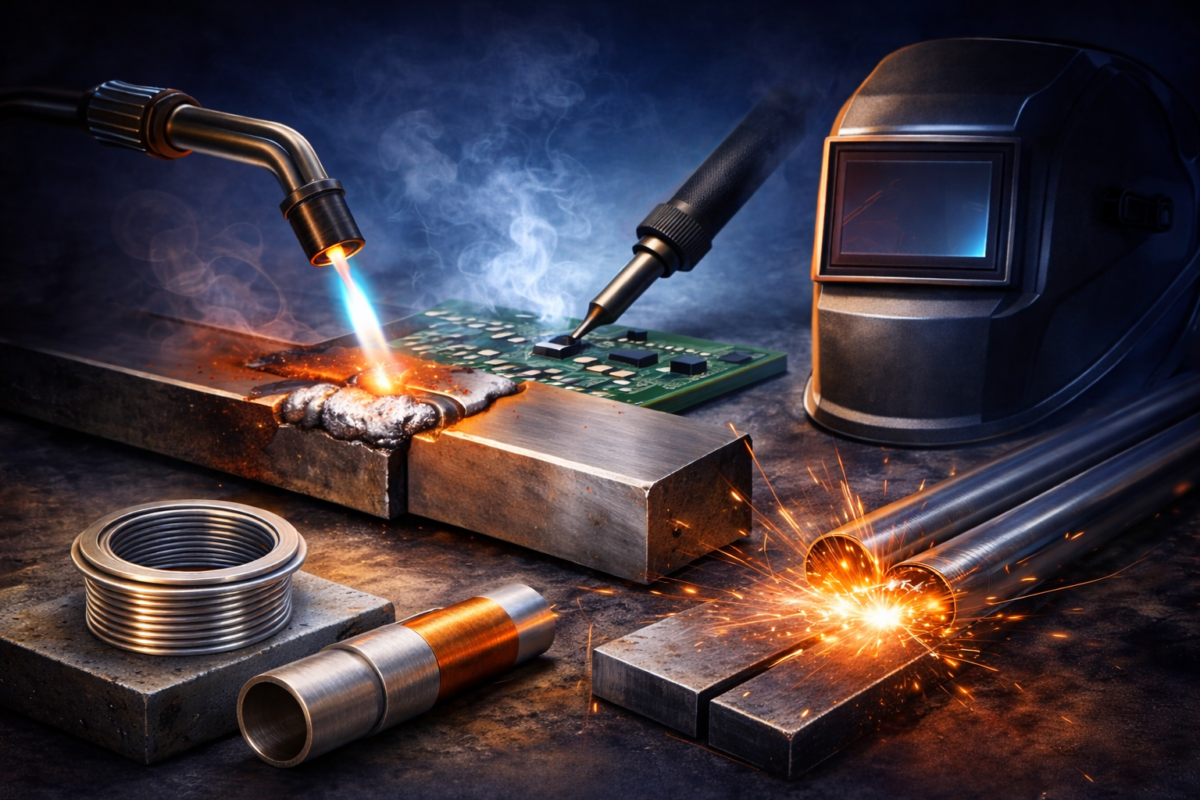
Welding can be defined as a joining process where the base metals are heated until they melt and fuse. Once cooled, the joint becomes part of the original material.
It is commonly used in construction, automotive frames, pipelines, and heavy machinery.
What Is Brazing?
Brazing joins metals using a filler metal without melting the base materials. The filler melts and flows into the joint through capillary action.
It is often used to join thin metals or dissimilar materials.
What Is Soldering?
Soldering is a low-temperature joining method that uses a filler metal to bond parts together without melting the base metals.
It is widely used in electronics, plumbing, and light repairs. Soldered joints are not designed to carry heavy loads. This is why Soldering is not the same as Welding, even though both involve filler material.
Side-By-Side Comparison: Brazing vs Soldering vs Welding
Here is a side-by-side comparison table for better understanding.
| Features | Welding | Brazing | Soldering |
| Base Metal Melts | Yes | No | No |
| Temperature Level | Very high | Medium | Low |
| Joint Strength | Very high | Medium | Low |
| Best For | Structural joints | Dissimilar metals | Electronics & light work |
How Laser Technology Impacts Brazing vs Soldering vs Welding
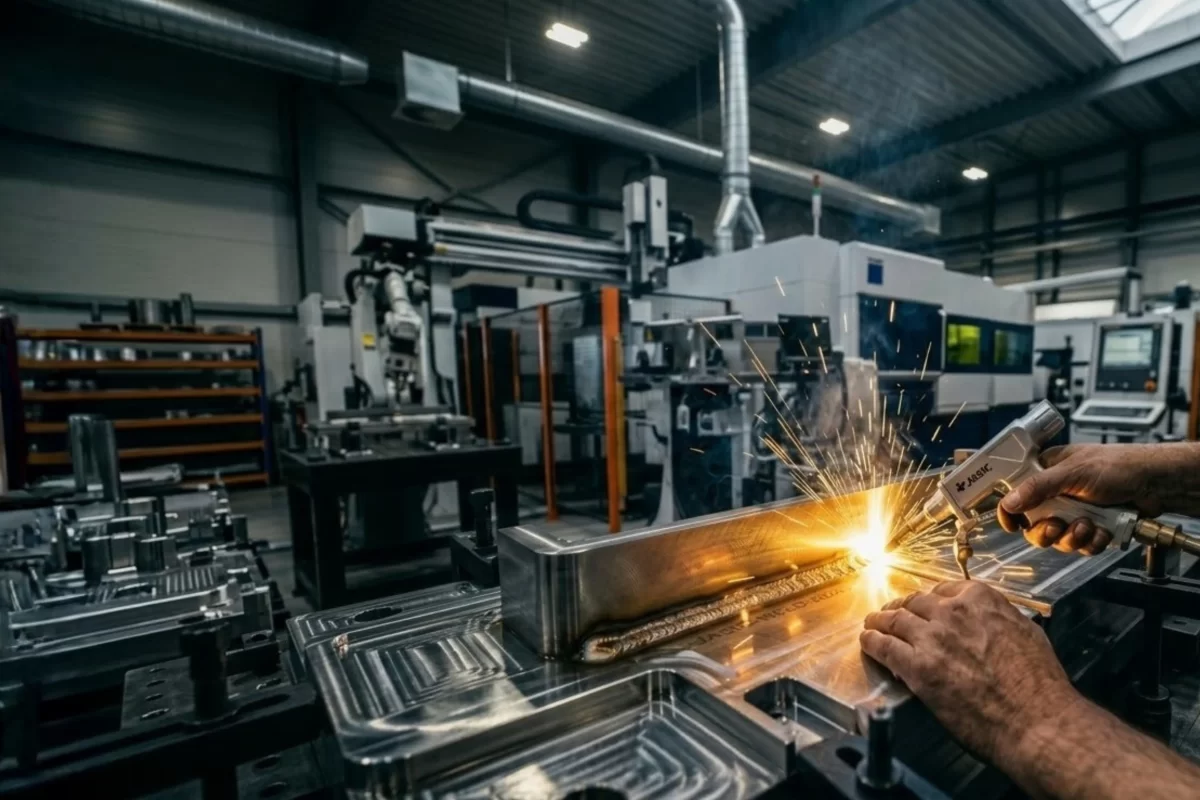
Laser technology has changed how Brazing, Soldering, and Welding are performed by replacing broad methods with precise, controlled energy delivery.
Overall impact of laser-based joining
- Uses a focused laser beam instead of open flames or electric arcs
- Makes it easier to join thin, delicate, or dissimilar materials
- Supports automation and high-speed production environments
Laser Welding
- Replaces traditional arc or gas Welding with a concentrated laser beam
- Produces deep, narrow welds at high speeds
- Enables keyhole Welding for strong penetration in a single pass
- Allows Welding of dissimilar metals such as aluminum to steel
- Commonly used in automotive structures, aerospace components, and precision assemblies
Laser Brazing
- Uses laser heat to melt only the filler metal while base metals remain solid
- Causes minimal surface damage
- Creates smooth, clean joints with strong cosmetic quality
- Often eliminates the need for grinding or repainting
- Easily integrated into robotic and continuous production lines
Laser Soldering
- Applies localized, non-contact laser heat to melt solder precisely
- Protects sensitive or miniature components from overheating
- Ideal for electronics, circuit boards, and micro-assemblies
- Well-suited for automated, high-density manufacturing
Equipment and Tools Needed for Each Method
| Method | Main Equipment |
| Welding | Welding machine, electrodes, shielding gas, PPE |
| Brazing | Torch or furnace, filler rods, flux |
| Soldering | Soldering iron, solder wire, flux |
Advantages and Limitations of Each Method
Welding
Advantages
- Strongest joints
- Permanent bonding
Limitations
- Requires skilled operators
- Higher equipment cost
Brazing
Advantages
- Joins dissimilar metals
- Smooth joints
Limitations
- Lower strength than Welding
- Requires precise joint clearance
- Flux cleanup needed
Soldering
Advantages
- Simple and accessible
- Ideal for small components
Limitations
- Weak under stress
- Not structural
- Limited durability
When to Use Each Method
Choosing the wrong method can cause joint failure or material damage.
| Project Requirement | Recommended Method |
| Maximum durability | Welding |
| Joining dissimilar metals | Brazing |
| Small electronic components | Soldering |
How Joint Strength Compares Over Time?
Long-term performance depends on application conditions, not just initial strength.
- Welded joints remain stable under sustained load.
- Brazed joints tolerate expansion between different metals.
- Soldered joints perform best in low-stress environments.
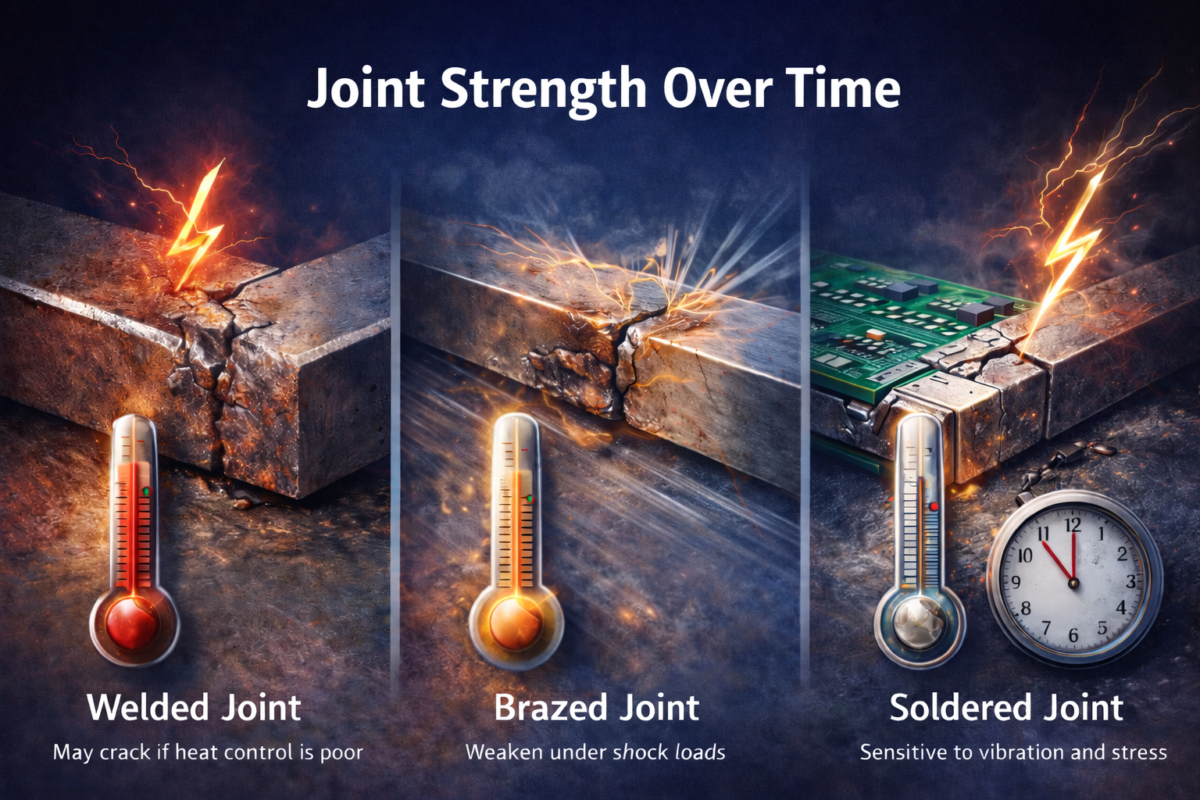
In general strength ranking: Welding > Brazing > Soldering (for load-bearing capacity).
Safety Considerations for Each Method
Safety equipment is mandatory regardless of the method.
- Welding: Requires eye protection, ventilation, and heat shielding
- Brazing: Flux fumes require airflow and gloves
- Soldering: Some solders release harmful vapors, so ventilation is essential
Final Words For Brazing, Soldering, And Welding
Brazing, soldering, and welding are all effective metal joining methods, but they serve very different purposes. Welding delivers the highest strength by fusing base metals together, making it ideal for structural and heavy-duty applications. Brazing offers a strong, clean bond without melting the base materials, making it suitable for joining dissimilar metals and for precision assemblies. Soldering operates at the lowest temperatures and is best suited for electronics and light-duty connections.
Instead of thinking about which process is better, the real question is what the joint needs to handle. Load requirements, material compatibility, heat sensitivity, surface finish expectations, and production environment all influence the right choice. When strength is the priority, welding stands out. When control, flexibility, or minimal heat impact matters more, brazing or soldering may be the smarter option.
Frequently Asked Questions
Can you braze and weld the same metals?
Yes. Many metals can be both brazed and welded, depending on strength and heat requirements.
Does Soldering create a permanent joint?
Yes, but the joint is not suitable for high stress or load-bearing applications.
Is Soldering the same as Welding?
No, Soldering and Welding are different joining processes. In Soldering, a filler material bonds the parts together without changing the original metal pieces. In Welding, the base metals are fused together to form a single continuous piece.