

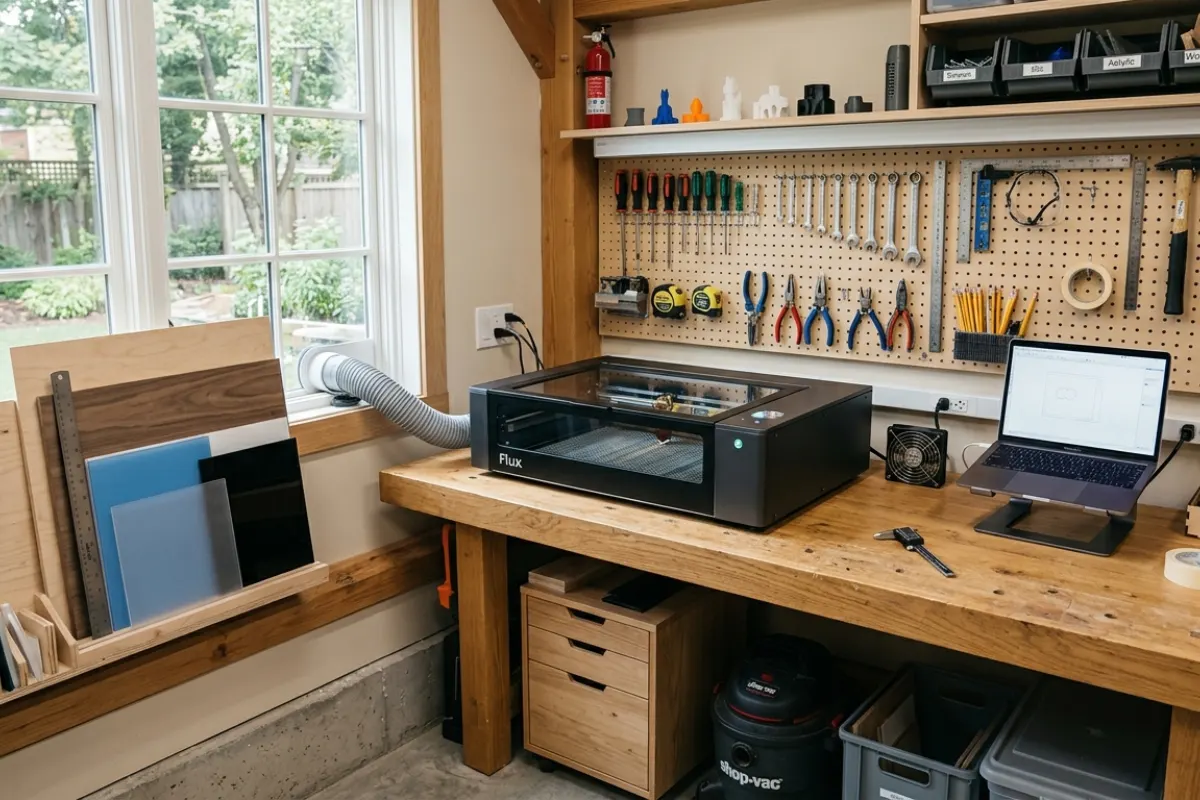
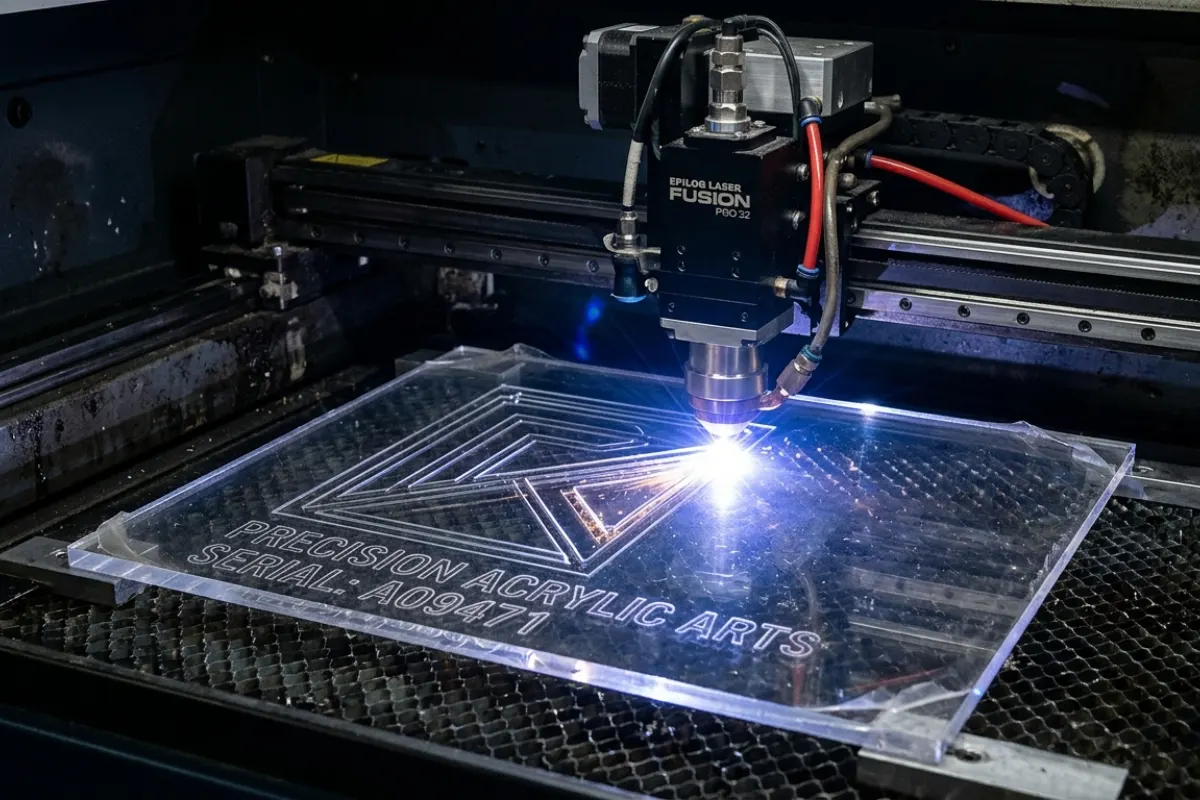
The best laser cutter for home use is one that fits your space, budget, and the projects you plan to create. For most users, that means a compact CO2 laser with enough power to cleanly cut wood and acrylic, paired with easy-to-use software and built-in safety features.
As more hobbyists and garage-based businesses turn to laser cutting, machines have become smarter, safer, and easier to set up at home.
In this guide, you’ll learn which type fits your goals, how much power you really need, what to budget, and which features matter most before you buy.
Table Of Contents
What Types of Laser Machines Are Suitable For Home Use?
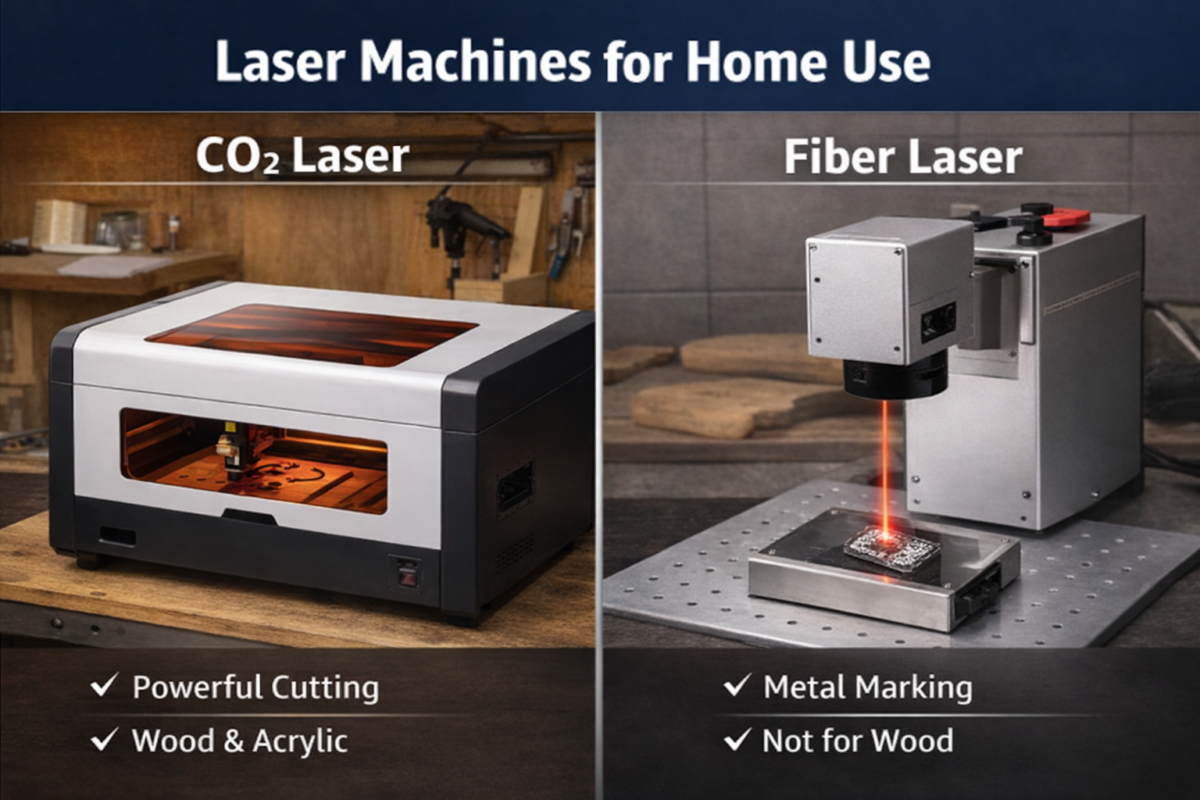
For home cutting projects, compact CO2 Laser Cutting Machines and small Fiber Lasers are the most realistic options. You can make a choice depending on what materials you plan to cut and how often you’ll use them.
Here’s how they compare for cutting specifically:
Compact CO2 Lasers (40W–60W)
Best for: Serious cutting at home
- Cleanly cuts 4–8mm wood, depending on the power
- Excellent for acrylic cutting
- Faster and more consistent results
- Enclosed models fit well in garages or workshops.
Small Fiber Lasers
Fiber lasers are designed for metal marking, not cutting wood or acrylic. For home cutting purposes, they are rarely required.
| Fun Fact: Not long ago, CO2 lasers were massive systems that took up entire rooms in industrial facilities. Today, a compact version can sit comfortably in a home garage or workshop, delivering the same core technology in a fraction of the size. |
Read more: 4 Popular Types of Laser Cutting Machines You Should Know
What Materials Can You Realistically Cut At Home?
Not all materials are equally practical for home laser cutting, so the table below breaks down what you can realistically cut and what limitations to expect.
| Material | Realistic At Home? |
| Wood | Yes |
| Acrylic | Yes |
| Leather | Yes |
| Stainless Steel | Very Limited |
| Mild Steel | Not Practical Without Industrial Setup |
Space, Power, And Ventilation Requirements
Besides asking what is the best laser cutter for home use, you must also consider where and how you set it up. Most buyers underestimate these factors, but even compact CO2 lasers need careful planning to run safely and efficiently at home.
Here’s what to keep in mind:
Power Load Requirements
- Most home laser cutters (40W–80W CO2) run on standard household outlets
- Check the machine’s wattage and your home’s electrical capacity
- Higher-power machines may require a dedicated circuit
Fume Extraction
- Cutting acrylic, wood, or coated materials produces fumes
- Always use a vented enclosure or external fume extractor
- Proper airflow keeps your workspace safe and odor-free
Cooling Systems
- CO2 lasers generate heat and may need fans or water-cooling systems
- Never block vents; overheating can damage the machine
Fire Risks
- Keep flammable materials away from the laser
- Never leave a cutting session unattended
- A small fire extinguisher nearby is a smart precaution
Noise Levels
- CO2 lasers with fans or exhaust systems can be louder. Consider placement if in shared spaces
| Pro Tip: Always measure your workspace before buying a home laser cutter. Leaving extra room around the machine for ventilation, maintenance, and material handling makes setup safer and keeps your cutting sessions hassle-free. |
Read more: How Does Fiber Laser Cutting Machine Work?
When A Home Laser Is Not Enough
Even the best laser cutter for home use has its limits. Home systems excel at small-scale projects, but there are situations where they just can’t keep up.
At this stage, businesses and serious makers usually upgrade to industrial Fiber Laser Cutters for reliability, higher output, and consistent precision, delivering results that home setups simply can’t match.
Cutting Thick or Hard Metals
- Cutting 3mm or thicker stainless steel is beyond most home CO2 lasers.
- Fiber or industrial systems are needed for clean, consistent metal cuts.
Daily or High-Volume Production
- Hobby machines aren’t built for continuous, heavy-duty use.
- Frequent cutting can quickly wear out components.
High-Precision Industrial Tolerances
- Projects requiring extremely tight tolerances or fine detail may exceed the capabilities of a home laser.
- Industrial machines maintain accuracy over long runs.
Large Sheet Sizes
- Home laser beds are compact.
- Cutting large panels or multiple sheets at once often isn’t feasible.
Read more: Where Can You Find The Best Laser Cutting Machine Price in India?
Home vs Industrial Laser Cutters In 2026
While home laser cutters are excellent for small projects, industrial machines offer higher performance and durability when volume, speed, or material thickness matters. Here’s a quick comparison:
| Feature | Home Laser Cutter | Industrial Laser Machine |
| Speed | Slower, suited for hobby projects | Fast, optimized for continuous production |
| Cutting Thickness | Light to medium materials (wood, acrylic, thin metals) | Can handle thick metals and large panels |
| Automation | Manual setup, limited automation | Fully automated processes and repeatable jobs |
| Cooling Systems | Fans or basic water cooling | Advanced water or chiller-based systems |
| Power Stability | Standard household outlets | Dedicated circuits with stable, high-power output |
| Lifespan | Designed for intermittent use | Built for continuous, long-term industrial operation |
Final Thoughts!
Here’s how you can pick a machine that matches your needs and setup for the best results in 2026.
- Home laser cutters: Ideal for creative projects, small-scale production, and safe operation at home.
- Compact CO2 machines: Provide enough power to cut wood, acrylic, and light metals efficiently.
- Industrial laser systems: Necessary for high-volume production, thicker materials, and precise industrial tolerances.
- Key takeaway: Match your machine to your goals, workspace, and materials to maximize efficiency and results.
- For serious businesses: Investing in an industrial system ensures higher output, superior cut quality, and long-term scalability.
Read more: Benefits of buying a laser cutting machine from an Indian Manufacturer
Frequently Asked Questions
1. Do home laser cutters require special software?
Yes, most come with beginner-friendly software compatible with common file formats like SVG, DXF, and PDF. However, some advanced features may require additional programs.
2. How much space is needed for a home laser cutter?
A small desktop laser can fit on a standard workbench, but allow extra room for ventilation, maintenance, and safe material handling.
3. Are replacement parts easy to find for home laser cutters?
Yes, most popular home models have widely available replacement parts, including laser tubes, lenses, and belts.
4. Can I run a home laser cutter continuously?
No, home machines are designed for intermittent use. Continuous, high-volume operation can overheat components and reduce lifespan.
5. Do I need special power requirements for a home laser cutter?
It depends. Compact CO2 lasers typically run on standard household outlets. Higher-wattage machines may require a dedicated circuit.
6. Can I cut glass with a home laser cutter?
Yes, most CO2 home lasers can engrave glass, but cutting thick glass is not recommended due to the risk of breakage.