

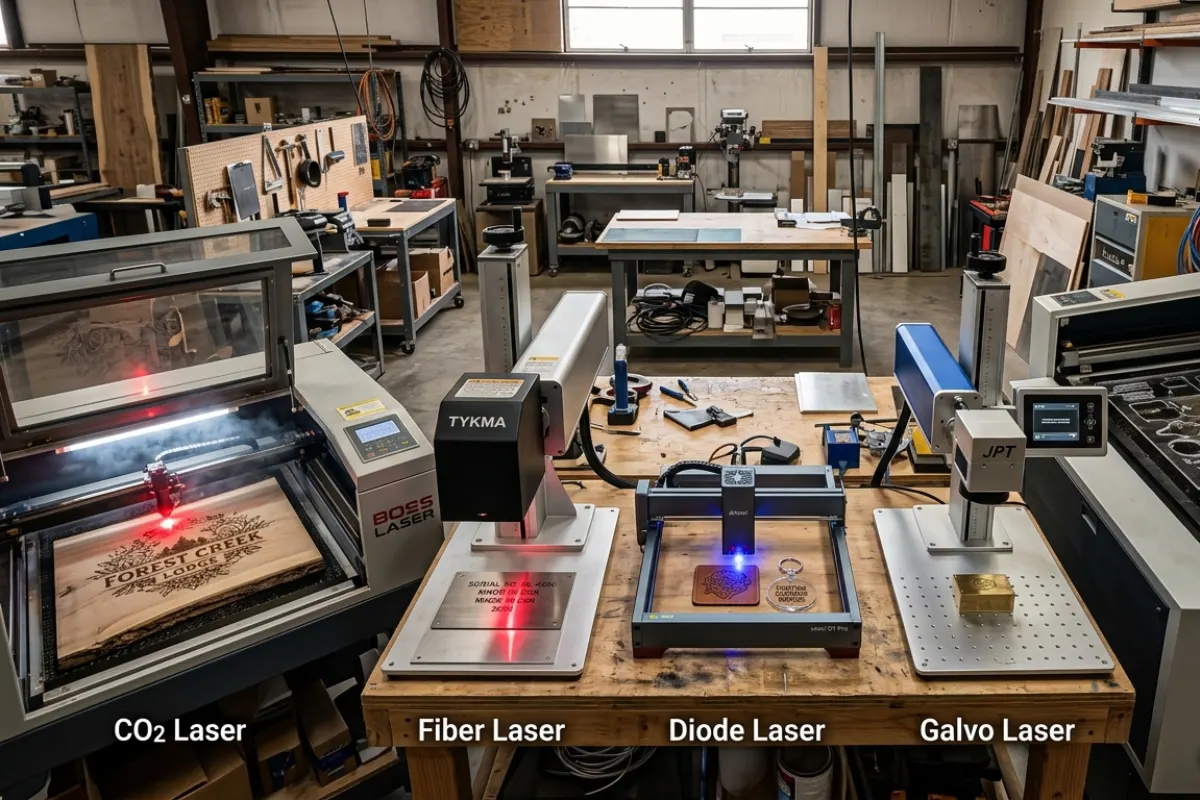
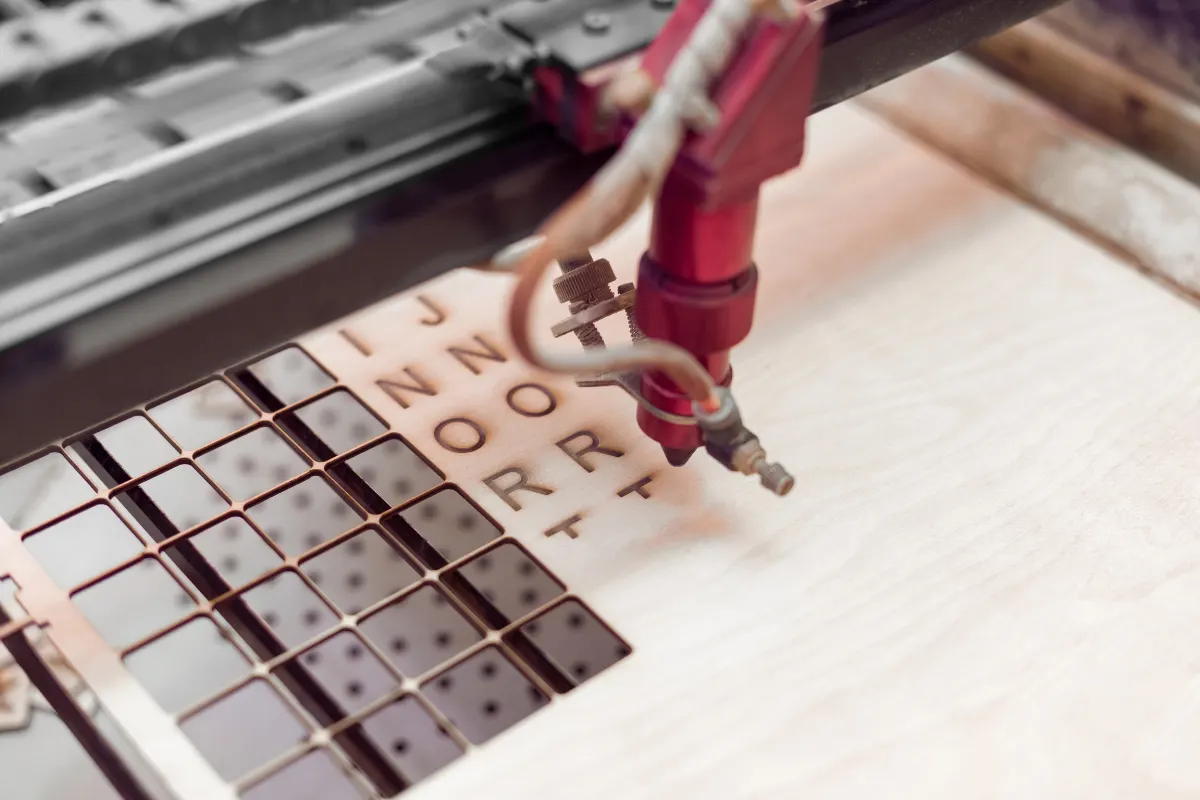
The most common types of laser engraving machines include fiber lasers for metals and hard plastics, CO2 lasers for wood, acrylic, and glass, and UV lasers for delicate or high-precision materials. Each technology removes material differently, whether through surface ablation, deep engraving, or fine etching, depending on the depth and finish required.
In this guide, we’ll break down how each type works, where it performs best, and what to look for if you’re searching for the best laser engraver for beginners.
Table Of Contents
What Is Laser Engraving?
Laser engraving is a process that uses a focused beam of light to remove material from a surface. The laser vaporizes, burns, or melts the material to create permanent, precise, and often deep marks.
Here’s what that means in practical terms:
- Material is removed, not added: The laser cuts into the surface instead of printing on top of it.
- Contactless process: No physical tool comes into contact with the material, so there’s no tool wear.
- Permanent results: The marks won’t fade, peel, or rub off easily.
- High precision: Fine details, small text, serial numbers, logos, and intricate patterns are possible.
| Pro Tip:Engraving quality often improves dramatically with proper focus adjustment. Even a slight change in focal distance can affect edge sharpness and depth consistency, so dialing in the correct focus before running a full job can make a striking difference in the final result. |
What Are The Different Types Of Laser Engraving Machines?
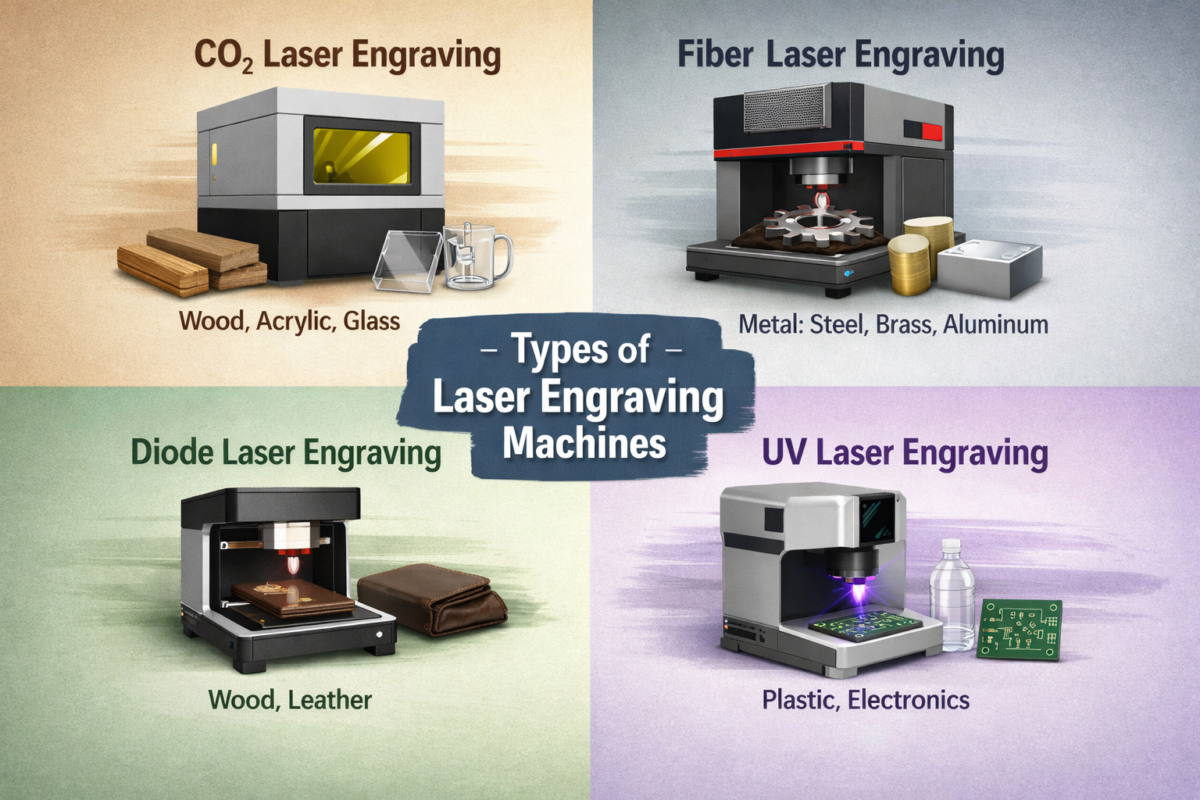
Laser engraving machines are categorized by the type of laser source they use, such as CO2 or fiber. Each type is built to handle specific materials and applications, making them suitable for different engraving needs.
CO2 Laser Engraving
CO2 Laser Engraving Machine is widely used for non-metal materials and is a popular choice for general fabrication work.
Best for:
How it works:
CO2 lasers use a gas-filled tube to generate an infrared beam that efficiently absorbs into organic and non-metal materials.
Strengths:
- Versatile across many non-metal surfaces
- Smooth, polished edges on acrylic
- Strong detail capability
Limitations:
- Not suitable for engraving bare metals without special coatings
Read more: Laser Engraving For Leather: Techniques For Different Leather Types
Fiber Laser Engraving
Fiber lasers are the go-to solution for metal engraving and industrial marking.
Best for:
- Stainless steel
- Aluminum
- Brass
- Copper
- Some hard plastics
How it works:
A solid-state fiber optic system generates a high-intensity beam that reacts well with metals, producing sharp, permanent marks.
Strengths:
- High speed and precision
- Excellent for deep engraving
- Durable markings ideal for serial numbers and industrial parts
Limitation:
- Smaller working area in many standard galvo-style machines
UV Laser Engraving
UV lasers are known for their ‘cold marking’ process, which reduces heat impact on the material.
Best for:
- Plastics
- Glass
- Medical components
- Electronics
Strengths:
- Minimal heat-affected zone
- Ultra-fine detailing
- Clean results on delicate materials
Limitation:
- Lower average power, so deep engraving on thick materials is slower
Note: UV systems are commonly used in applications where precision and surface integrity matter most.
Materials Compatible With Laser Engraving
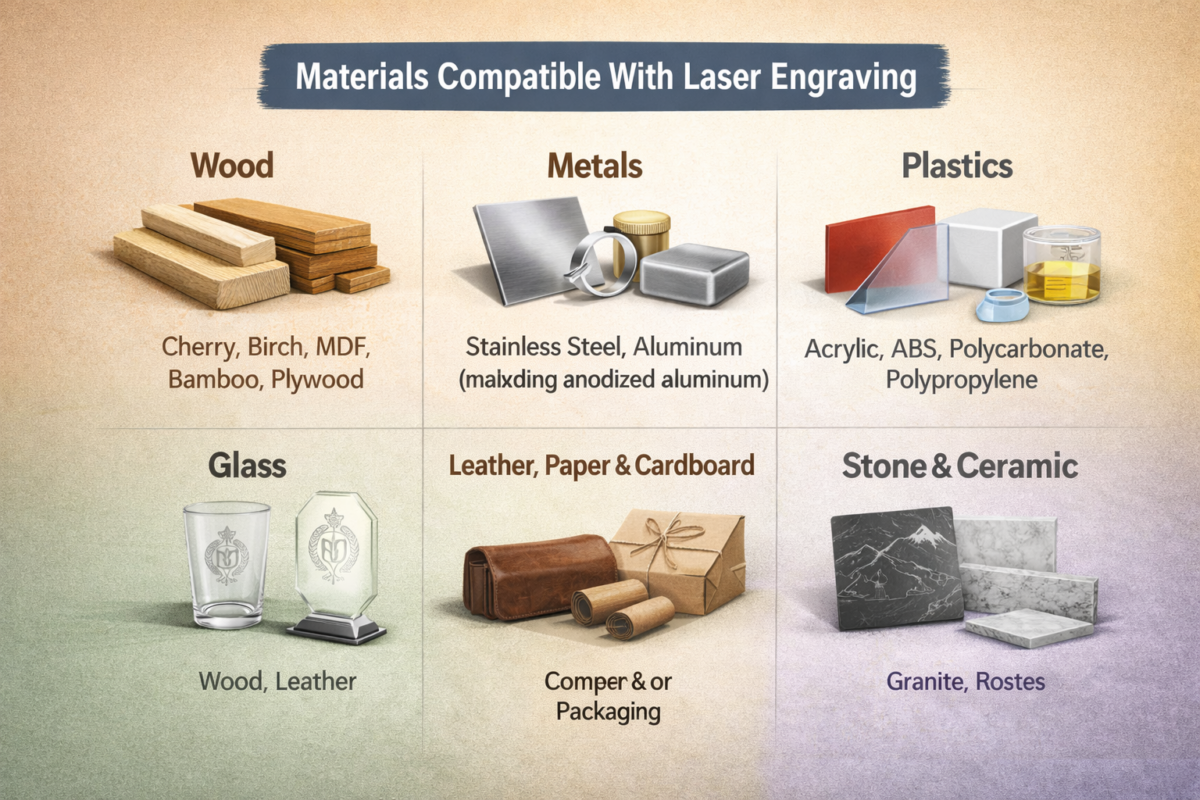
Laser engraving works on a wide range of materials, including wood, plastic, glass, and leather. However, the type of laser engraving method used often depends on the material itself. Choosing the right combination ensures clean results and strong contrast.
Here’s a quick breakdown:
Wood
All common woods engrave well, including:
CO2 lasers are typically used for wood, producing sharp detail and natural contrast.
Metals
Best handled by fiber lasers. Common metal options include:
- Stainless steel
- Aluminum (including anodized aluminum)
- Brass
- Titanium
- Tungsten
- Precious metals
Plastics
Acrylic is one of the most popular plastics for engraving. Other compatible types include:
- ABS
- Polycarbonate
- Polypropylene
Glass
Standard glass can be engraved cleanly with CO2 lasers, often used for awards, drinkware, and decorative items.
Read more: How Lasers Create Tactile Textures and Engraving on Glass Surfaces?
Leather, Paper & Cardboard
These organic materials respond well to CO2 lasers, making them common in custom goods and packaging.
Stone & Ceramic
Granite, slate, marble, and ceramic tiles can also be engraved, typically using CO2 lasers for surface marking.
Read more: Laser Engraving For Water Bottles, Mugs, Cups, And Glasses: Everything You Need To Know
Choosing The Best Laser Engraver For Beginners
The best laser engraver for beginners is one that’s easy to set up, simple to operate, and powerful enough for common materials without being overwhelming.
To help you choose the right option, here’s a quick checklist covering the main types of laser engraving and which settings or machine styles may suit your needs best:
- Wattage: Lower wattage (Entry-level CO2) is ideal for learning. High-wattage machines are more powerful but can be harder to control at first.
- Budget: Entry-level machines are priced lower and are suitable for hobby use. Industrial systems are better left for later upgrades.
- Software Compatibility: Look for machines that support beginner-friendly software with clear design tools and file import options (SVG, DXF, etc.).
- Safety Features: Enclosures, emergency stop buttons, and proper ventilation support safer operation.
- Ease of Setup: Pre-assembled or minimal-assembly machines reduce frustration and help you get started faster.
Read more: Top Trends In Laser Cutting And Engraving In 2026
Frequently Asked Questions
1. What is the difference between laser engraving and laser etching?
Laser engraving removes more material and creates deeper marks, while laser etching typically affects only the surface layer for lighter, shallower markings.
2. Can one laser engraver work on all materials?
No. Different laser types are designed for specific materials, so one machine may not perform equally well across metals, wood, plastics, and glass.
3. Which laser engraving type is best for industrial use?
Fiber lasers are commonly used in industrial settings due to their speed, precision, and ability to mark metal components.
4. Does laser engraving weaken the material?
Shallow engraving generally does not significantly weaken materials, but deep engraving may affect structural strength depending on thickness and depth.
5. How deep can laser engraving go?
Depth depends on the laser type, power level, and material. Some systems can only engrave surface marks, while others can make deeper cuts.
6. Is laser engraving suitable for small, detailed designs?
Yes. Laser engraving is widely used for fine text, serial numbers, barcodes, and intricate patterns due to its precision.
7. What factors affect engraving quality?
Material type, laser power, speed settings, focus accuracy, and machine calibration all influence the final result.