

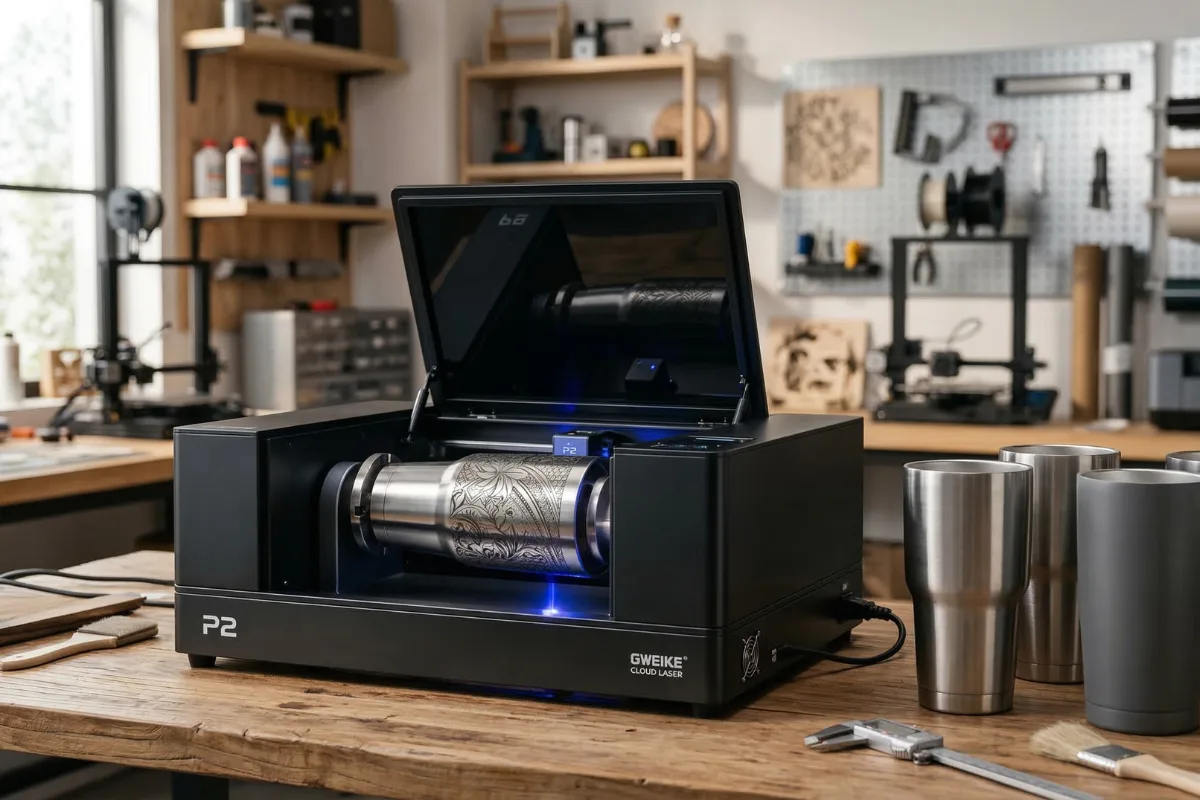
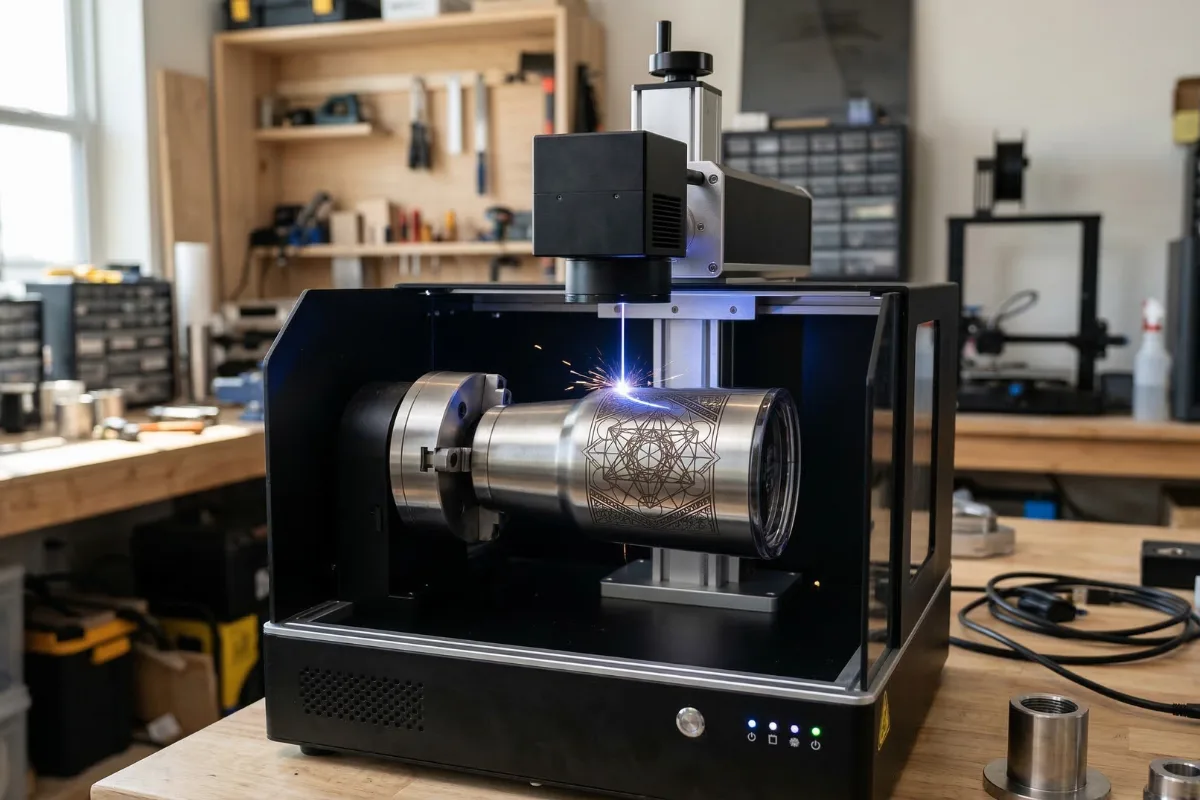
If you’re customizing a few powder-coated stainless steel tumblers at home, a mid-range CO2 laser with a rotary attachment is usually more than enough. If you’re engraving large batches for a business, you’ll want a more powerful, production-ready machine that can handle higher speeds and longer run times. So, the best laser engraver for tumblers ultimately comes down to your workload and expectations.
With personalized drinkware becoming increasingly popular for gifts, events, and branding, choosing the right machine matters more than ever.
In this guide, you’ll discover the best laser for engraving tumblers based on different needs and budgets.
Table Of Contents
- Types Of Laser Engravers For Tumblers
- What To Look For In The Best Laser Engraver For Tumblers
- Materials Suitable For Laser Engraving Tumblers
- How To Engrave Tumblers With A Laser Engraver
- Advantages Of Laser Engraving Tumblers
- Best Laser Engraver For Tumblers: In A Nutshell
- Frequently Asked Questions
Types Of Laser Engravers For Tumblers
Choosing the right laser engraver for tumblers comes down to the material you’re working with and the production level you need.
Fiber Laser For Tumblers
A Fiber Deep Laser Engraving Machine is built for direct metal engraving.
- Ideal for stainless steel tumblers
- Operate at around 1064 nm, optimized for metal surfaces
- Deliver precise, deep, and permanent marks
- Great for logos, branding, and detailed designs
- Fast and efficient for higher production needs
CO2 Laser For Tumblers
A CO2 laser for tumblers is the most common choice for small businesses and hobbyists.
- Best for powder-coated tumblers
- Removes the outer coating to reveal the stainless steel underneath
- Works well for logos, names, and detailed designs
- More budget-friendly than fiber systems
- Widely compatible with rotary attachments
Read more: 3 Special Features of Prakash Glass Laser Engraving Machine
What To Look For In The Best Laser Engraver For Tumblers
The best setup for engraving on tumblers combines the right laser source, a reliable rotary attachment, and enough power to handle your workload efficiently.
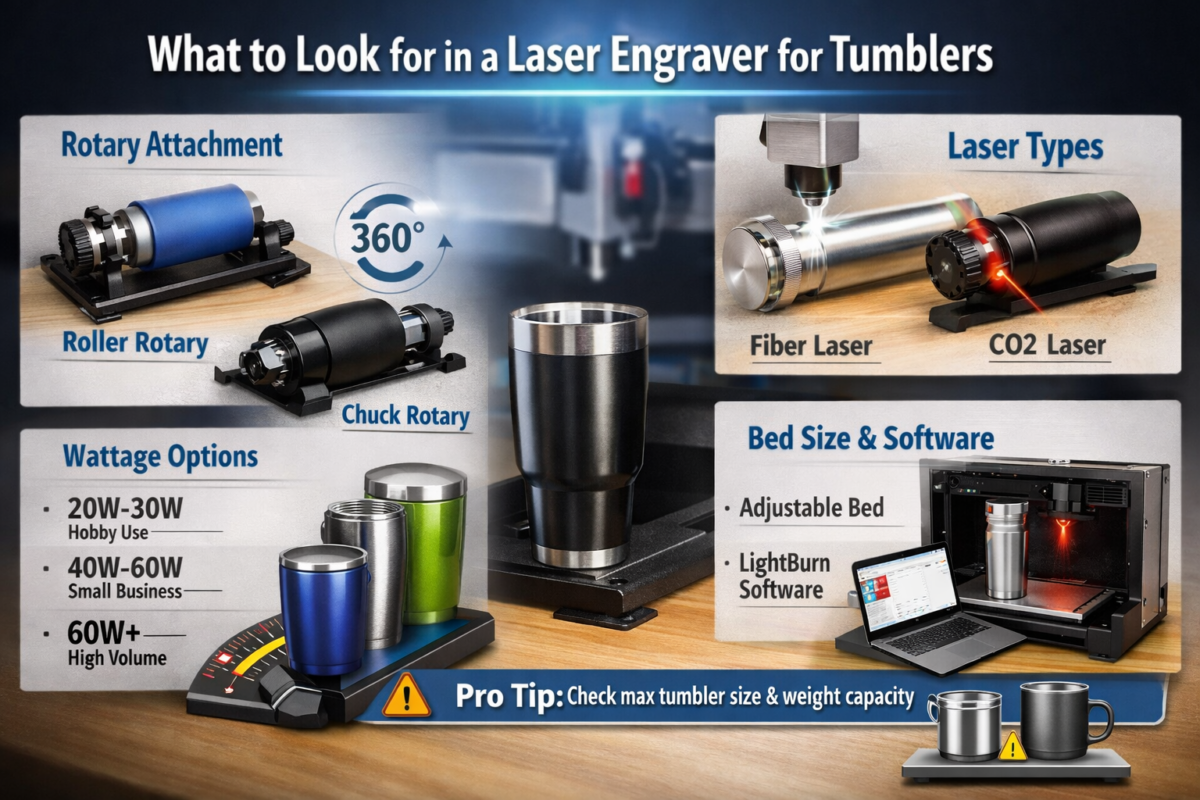
Rotary Attachment Compatibility (Must-Have)
Tumblers are cylindrical, so they must rotate while the laser stays at a fixed focus point.
- A laser engraver with a rotary attachment is essential for 360-degree marking
- Roller rotary: Simple and works for most standard tumblers
- Chuck rotary: Better grip and precision, ideal for tapered designs
- Not every machine supports a rotary tool. Always check compatibility first
Laser Source: Fiber vs CO2
- Fiber laser: Best for direct metal engraving on stainless steel
- CO2 laser: Ideal for removing powder coating to reveal metal underneath
Choose based on whether you’re engraving bare metal or coated surfaces.
Wattage Settings
The best wattage for laser engraving tumblers depends on volume:
- 20W–30W: Light hobby use
- 40W–60W: Small business production
- 60W+: High-volume jobs
More power means faster engraving and not necessarily deeper cuts.
Bed Size & Software
- Ensure enough clearance for taller tumblers
- Confirm software compatibility (like LightBurn)
- Autofocus can save setup time
| Pro Tip:Check the maximum rotary diameter and weight limit before buying. Some insulated or oversized tumblers are heavier than expected, and a weak rotary can affect alignment and engraving quality. |
Read more: 5 Laser Engraving Business Ideas For Quick Profits In 2025
Materials Suitable For Laser Engraving Tumblers
Now that you know the machines, let’s break down which materials are actually suitable for laser engraving tumblers.
- Powder-Coated Stainless Steel: Most popular; coating removes cleanly with CO2 lasers
- Bare Stainless Steel: Ideal for fiber laser engraving
- Aluminum Drinkware: Engraves well with fiber lasers
- Anodized Aluminum: Produces a sharp contrast when engraved
- Glass Tumblers: Compatible with CO2 lasers (requires lower power)
- Ceramic-Coated Tumblers: Laser removes surface coating for visible designs
Once you’ve identified the right material for your tumbler, the next step is understanding how to engrave it properly for clean, professional results.
Read More: Laser Engraving For Water Bottles, Mugs, Cups, And Glasses: Everything You Need To Know
How To Engrave Tumblers With A Laser Engraver
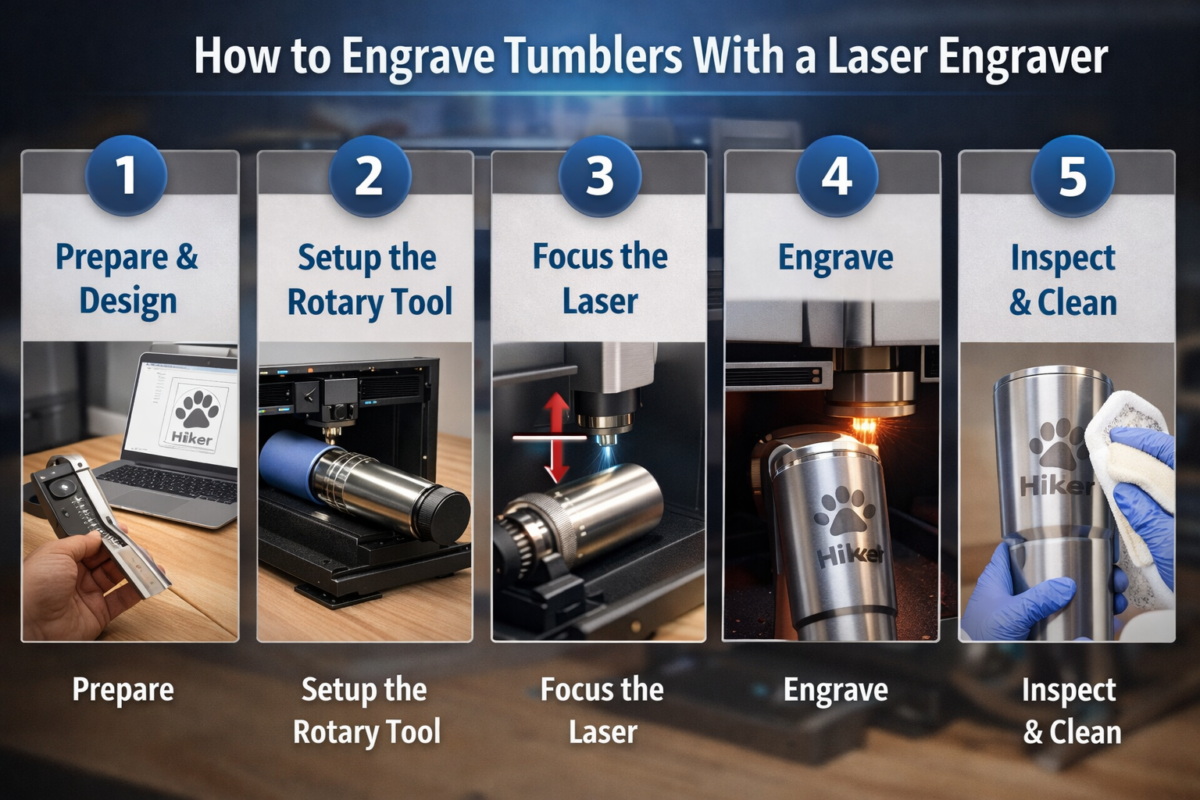
Here’s a step-by-step process for laser engraving tumblers. Follow these for clean, consistent results.
1. Prepare The Tumbler And Design
- Measure the diameter with calipers to ensure accurate scaling in your software.
- Create or import your design: Upload your SVG or AI file into LightBurn or your preferred software.
- Surface prep: Powder-coated tumblers usually don’t need masking. For raw stainless steel, apply a marking spray or, if needed, high-temperature masking tape.
2. Install And Configure The Rotary Tool
- Set up the rotary: Place it on the laser bed and secure it.
- Position the tumbler: Make sure it sits level and parallel to the laser head.
- Enter diameter settings: Input the tumbler’s diameter into your software so rotation stays aligned with the laser path.
3. Focus The Laser
- Adjust the Z-axis: Set the laser head to the exact surface height of the tumbler.
- Check clearance: If the tumbler has a handle, ensure it rotates freely. A longer lens (like 2.5″) can help with extra space.
4. Set Power And Run The Job
- Adjust settings:
- For powder-coated tumblers on a 60W CO2 laser, try around 85–95% power and 250–400 mm/s speed.
- Fiber laser settings will vary based on material and finish.
- Run a frame test: Confirm the design fits within the engraving area.
- Start engraving: Watch to ensure the rotary spins smoothly.
5. Clean The Finished Tumbler
- Remove residue: Wipe the surface with isopropyl alcohol, a Magic Eraser, or a degreaser to remove soot or smoke marks.
Advantages Of Laser Engraving Tumblers
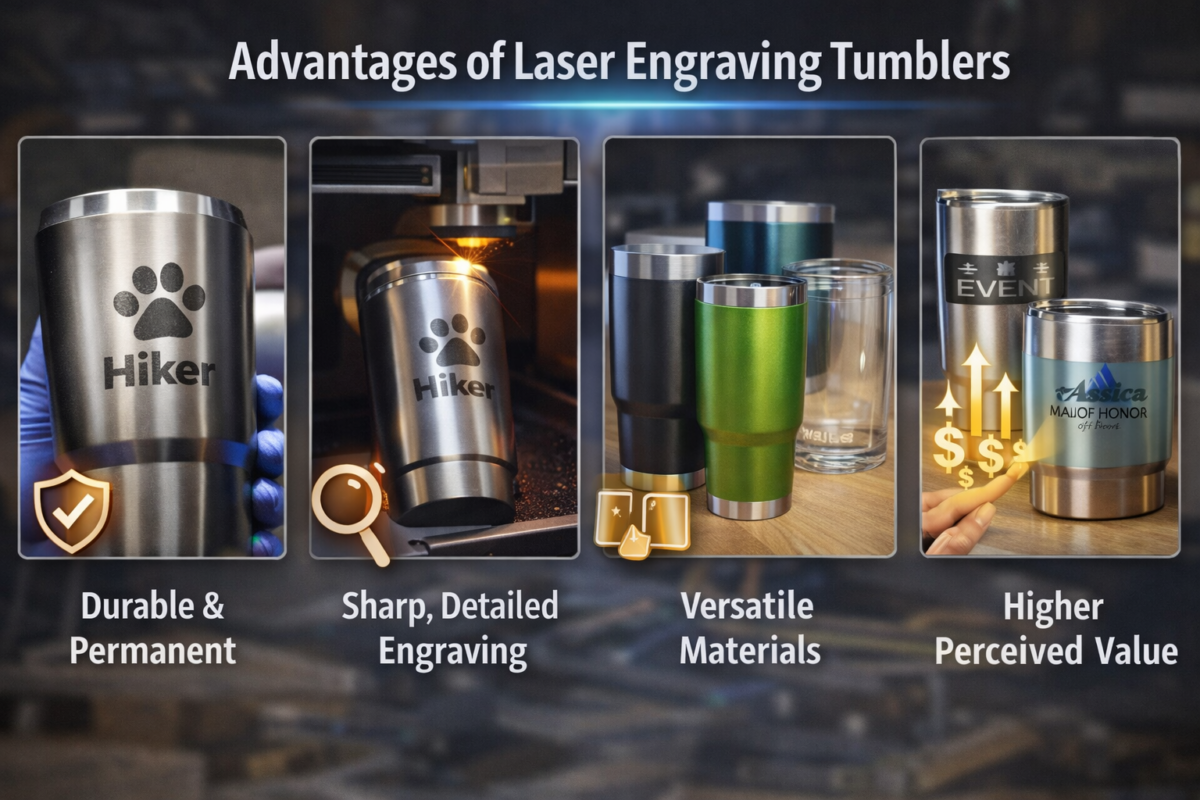
Laser engraving tumblers offers long-term value, clean results, and strong customization flexibility.
- Permanent & Durable: Designs are etched into the surface, making them scratch-resistant and dishwasher-safe.
- Sharp Detail: Handles fine lines, small text, and detailed logos with consistent quality.
- Material Flexibility: Works on stainless steel, powder-coated finishes, glass, and select plastics.
- Strong Customization Appeal: Ideal for personalized gifts, events, and branded merchandise.
- Cleaner Process: No inks, solvents, or vinyl involved.
- Higher Perceived Value: Engraved tumblers look professional, allowing businesses to price accordingly.
Read more: How To Make Laser Engraving Darker: Expert Tips & Techniques
Best Laser Engraver For Tumblers: In A Nutshell
The best laser engraver for tumblers depends on your material and production volume.
- Fiber lasers are ideal for direct metal engraving on stainless steel.
- CO2 lasers work best for powder-coated tumblers.
- A reliable rotary attachment is essential for clean 360° results.
- Higher wattage improves speed, not just depth.
- Matching the right machine to your goals ensures a smoother workflow and better output.
Explore our entire range of machines here.
Frequently Asked Questions
1. Can you engrave tumblers without a rotary attachment?
Technically, yes, but only in small sections. For full-wrap or accurate cylindrical engraving, a rotary attachment is highly recommended.
2. Do all tumblers engrave the same way?
No. Results vary depending on material, coating type, thickness, and surface finish. Always test settings before running production jobs.
3. How long does it take to engrave a tumbler?
Most standard designs take 1–5 minutes, depending on laser power, speed settings, and design complexity.
4. Can you engrave colored tumblers?
Yes. Most colored tumblers are powder-coated, and CO2 lasers remove the outer layer to create contrast.
5. Is laser engraving on tumblers food-safe?
Yes, when engraving only the exterior surface. The laser does not affect the interior drinking surface.
6. Can beginners start a tumbler engraving business?
Yes. Many small businesses start with mid-range CO2 machines and scale up as demand grows.