

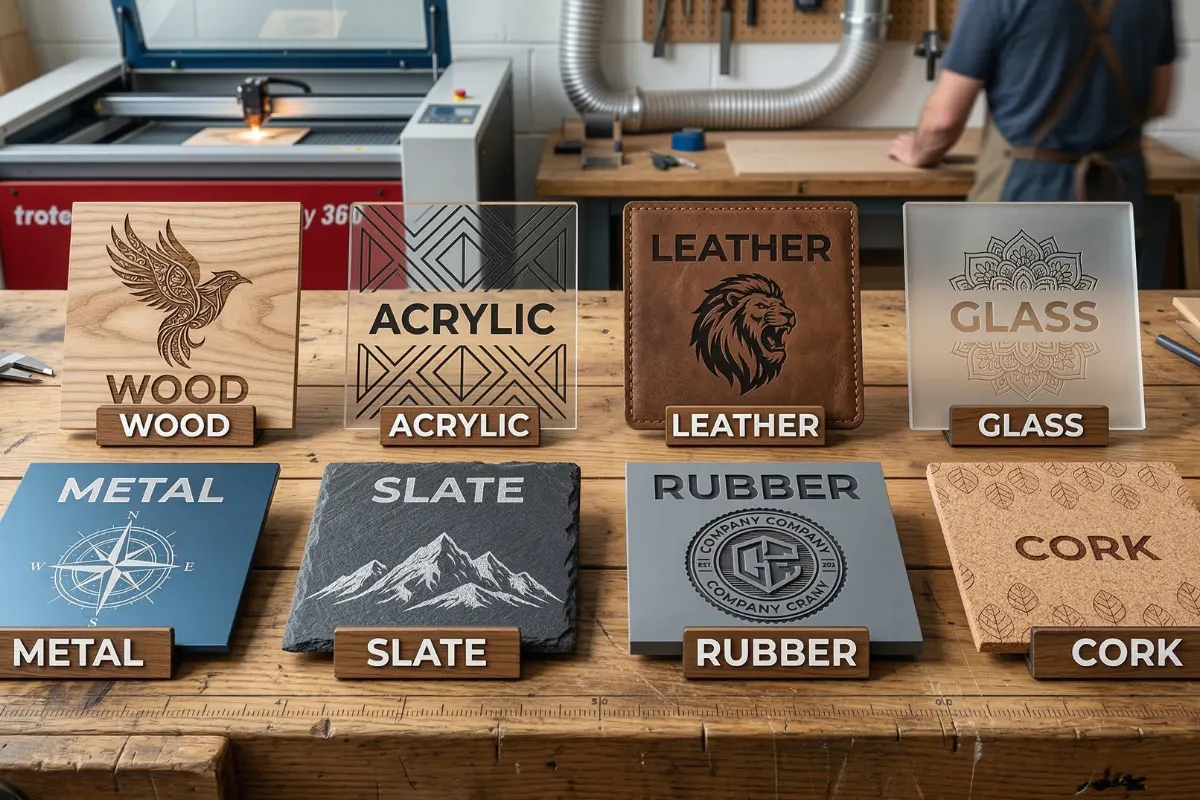
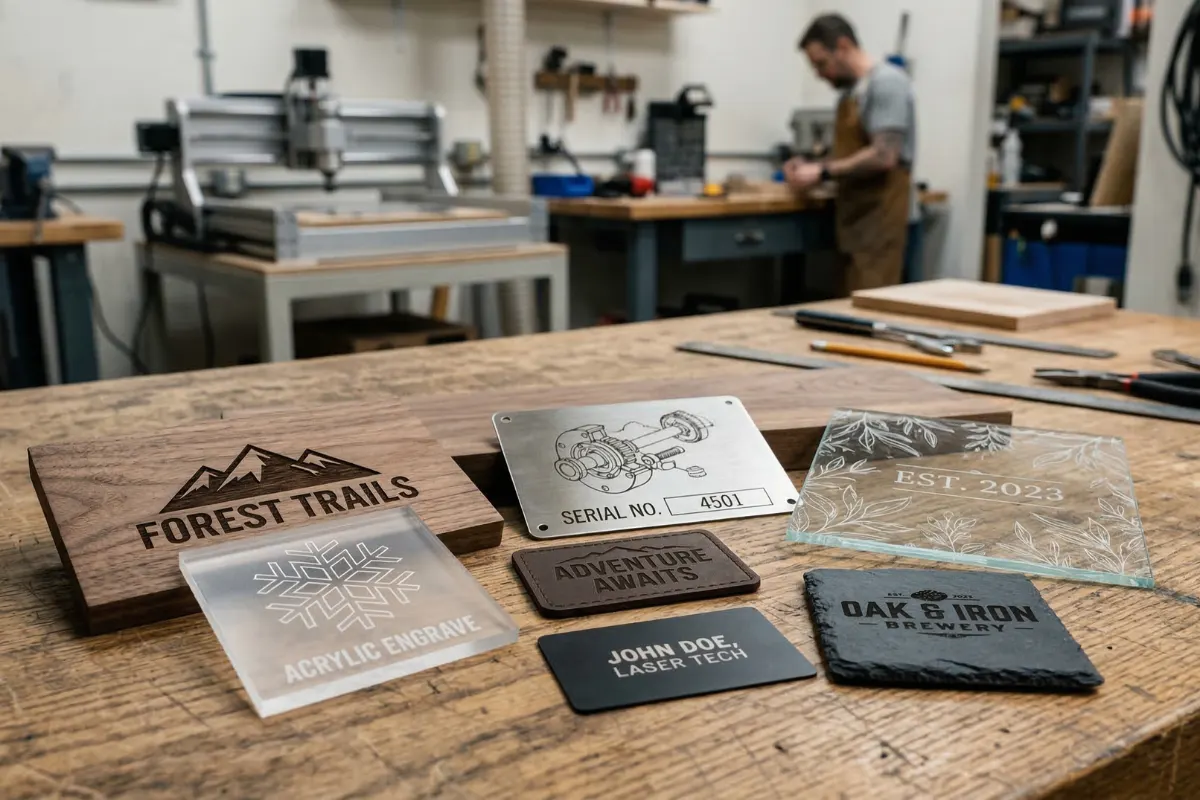
Choosing the right laser engraving materials directly impacts engraving quality, equipment longevity, safety, and production efficiency. A laser does not simply burn a design; it transfers concentrated energy that interacts with a material’s chemical composition, reflectivity, density, and thermal conductivity.
Whether you’re creating hobby projects or manufacturing products for sale, understanding how different materials for laser engraving behave under various laser wavelengths helps you achieve predictable, professional results. This guide covers compatibility, material science fundamentals, sourcing strategies, thickness considerations, troubleshooting, and safe selection practices.
Table Of Contents
- What Are Laser Engraving Materials?
- The Material Science Behind Engraving Performance
- Laser Type Compatibility Matrix
- How To Select Materials Based on Project Goals
- Visual Effects & Surface Outcomes
- Thickness & Color Considerations
- Expanded Material Coverage
- Safe Material Identification & Risk Awareness
- Where To Source Laser Engraving Materials
- Cost & Supply Considerations
- Common Beginner Mistakes
- Troubleshooting Guide
- Safe Material Testing Workflow
- Which Materials Perform Best Overall?
- Conclusion
- Frequently Asked Questions
What Are Laser Engraving Materials?
Laser engraving materials are surfaces that absorb focused laser energy in a controlled manner, producing permanent surface changes without hazardous byproducts.
Materials respond to laser energy through:
- Carbonization – Wood, leather
- Melting & vaporization – Acrylic and some plastics
- Oxidation/surface marking – Metal
- Micro-fracturing – Glass, stone
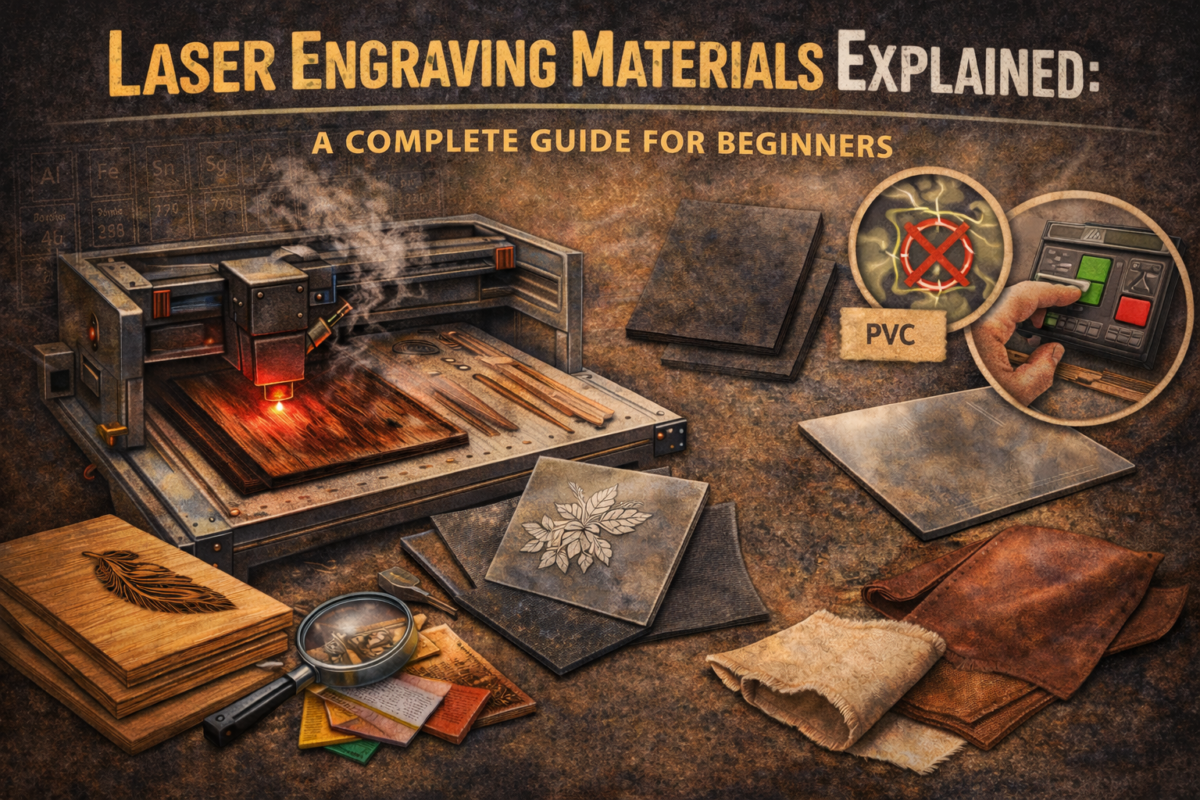
The Material Science Behind Engraving Performance
Beyond simple compatibility, four physical properties influence engraving results. Understanding these characteristics allows better adjustment of speed, power, and pass count.
1. Reflectivity:
Highly reflective materials (such as polished metals) reflect laser energy, reducing efficiency and requiring either specialized wavelengths or surface treatments.
2. Thermal Conductivity:
Materials that dissipate heat quickly (such as certain metals) require different settings than those that retain heat (such as wood).
3. Density:
Denser materials often require slower speeds or multiple passes for deeper engraving.
4. Hardness:
Surface hardness affects engraving sharpness and achievable depth.
Laser Type Compatibility Matrix
Material performance depends on wavelength compatibility. The table below will compare the different machines: Diode Laser, CO2 Laser, and Fiber Lasers:
| Material | Diode Laser | CO2 Laser | Fiber Laser | Engraving Result | Cutting | Key Notes |
| Solid Wood | Yes | Yes | No | Strong visibility | Yes | Excellent starter material |
| Baltic Birch | Yes | Yes | No | Consistent finish | Yes | Minimal internal voids |
| Cast Acrylic | Limited (dark only) | Yes | No | Frosted effect | Yes | Clear acrylic limited on diode |
| Extruded Acrylic | Limited | Limited | No | Softer detail | Yes | Lower clarity than cast |
| Anodized Aluminum | Yes | Yes | No | Surface marking | No | Removes coating only |
| Stainless Steel | No (spray needed) | Limited (spray needed) | Yes | Deep engraving | No | Fiber optimized |
| Glass | Limited | Yes | No | Frosted surface | No | Use lower power settings |
| Slate | Limited | Yes | No | Lightened surface | No | Popular for décor |
| Natural Fabric | Limited | Yes | No | Surface darkening | No | Monitor for burning |
| Laser-Safe Rubber | Limited | Yes | No | Stamp engraving | Yes | Verify composition first |
| Ceramic | Limited | Yes | No | Surface marking | No | May require coating |
Selection Of Materials Based on Project Goals
Material selection should consider outcome expectations rather than only machine type.
For strong visibility
Darker woods and coated metals typically provide bold contrast.
For fine detail
Uniform-density materials such as MDF and cast acrylic deliver sharp line clarity.
For outdoor durability
Metal and stone surfaces withstand environmental exposure better than organic materials.
For photo engraving
Smooth, consistent surfaces such as painted tile, cast acrylic, and certain hardwoods produce better grayscale results.
Visual Effects & Surface Outcomes
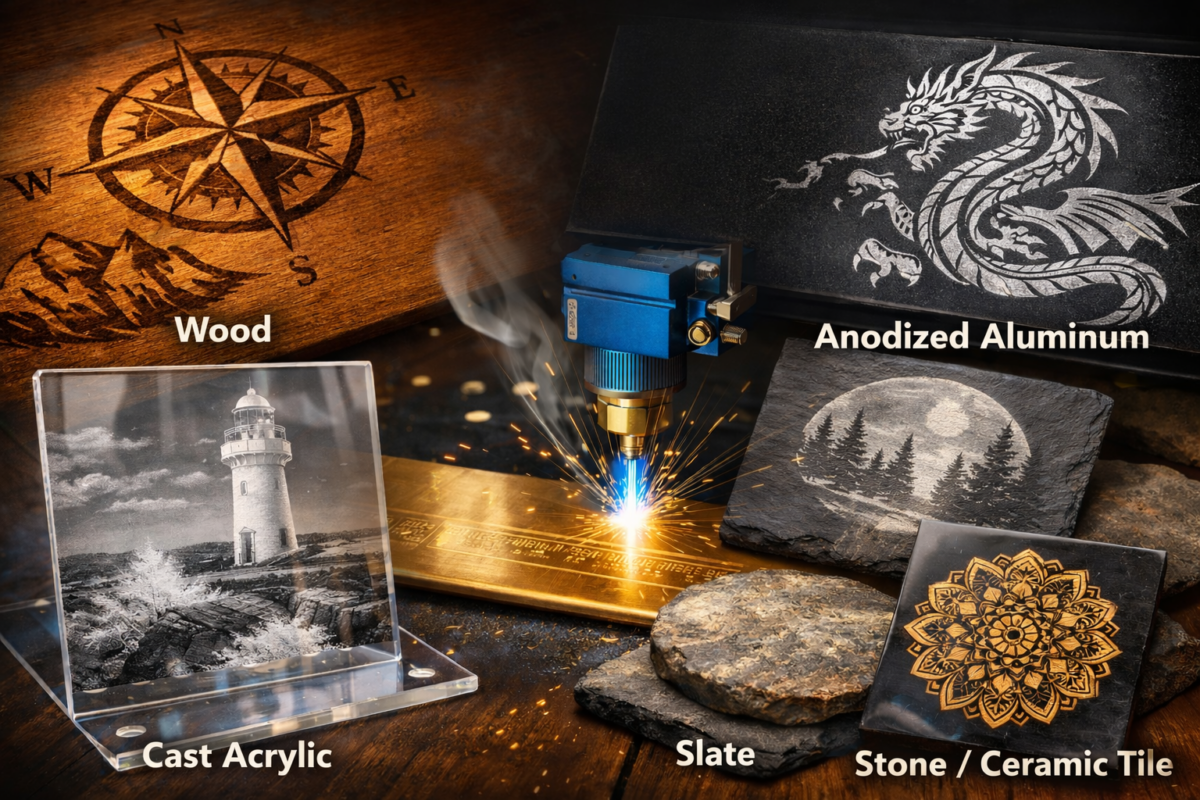
Different materials create distinct aesthetic results. Color and thickness influence visibility. Darker backgrounds often increase perceived contrast.
- Wood: Natural grain enhances organic appearance
- Cast acrylic: Frosted white contrast against a clear or colored background
- Stone: Lightened surface against dark base
- Metal (fiber engraved): Permanent depth with darkened oxide finish
Thickness & Color Considerations
Material thickness impacts both cutting ability and engraving behavior.
General recommendations:
- Wood: 3–6mm for clean cuts on mid-range CO2 systems
- Acrylic: 3–5mm is common for signage
- Glass: 3–10mm glass can be engraved well with lower power
Color selection affects contrast:
- Dark wood produces more visible engraving than light pine
- Black anodized aluminum offers stronger visual clarity than silver
Expanded Material Coverage
Beyond core materials, additional options include. Material composition should always be confirmed before engraving synthetic surfaces.
Natural fabric
Cotton and denim can be engraved with CO2 systems, though flame monitoring is essential.
Laser-safe rubber
Used for stamp production; composition must be verified.
Two-layer engraving plastics
Common for signage, engraving reveals a contrasting base layer.
Paper & cardboard
Suitable for light engraving and cutting projects.
Safe Material Identification & Risk Awareness
Certain materials pose hazards when laser-engraved.
Avoid:
- PVC
- Vinyl
- Fiberglass
- Unknown composite plastics
Risk Awareness:
- Potential risks include the release of toxic gases and corrosion of optical components.
- Ventilation and fume extraction systems significantly reduce exposure risk.
- Fire supervision is recommended when engraving flammable materials such as fabric or thin wood.
Where To Source Materials For Laser Engraving?
Material procurement impacts consistency and cost control. Sourcing reliable suppliers for laser engraving materials ensures quality and predictable results. Bulk purchasing reduces cost per unit but requires proper storage to prevent warping or moisture absorption.
Options include:
- Dedicated laser material suppliers
- Local hardwood distributors
- Industrial plastic vendors
- Wholesale marketplaces
- Repurposed or reclaimed materials (verified safe)
If you want to buy reliable and precision-focused Laser Engraving Machines, Prakash Laser is one of the best options in the industry.
Cost & Supply Considerations
Material pricing varies by quality and supplier. Evaluating scrap rates and surface consistency improves profitability.
| Material | Relative Cost | Scrap Risk | Production Suitability |
| MDF | Low | Low | Practice & prototypes |
| Baltic Birch | Medium | Moderate | Retail products |
| Cast acrylic | Medium | Low | Signage |
| Coated Aluminum | Medium | Very Low | Tags & nameplates |
| Stone | Medium | Low | Décor items |
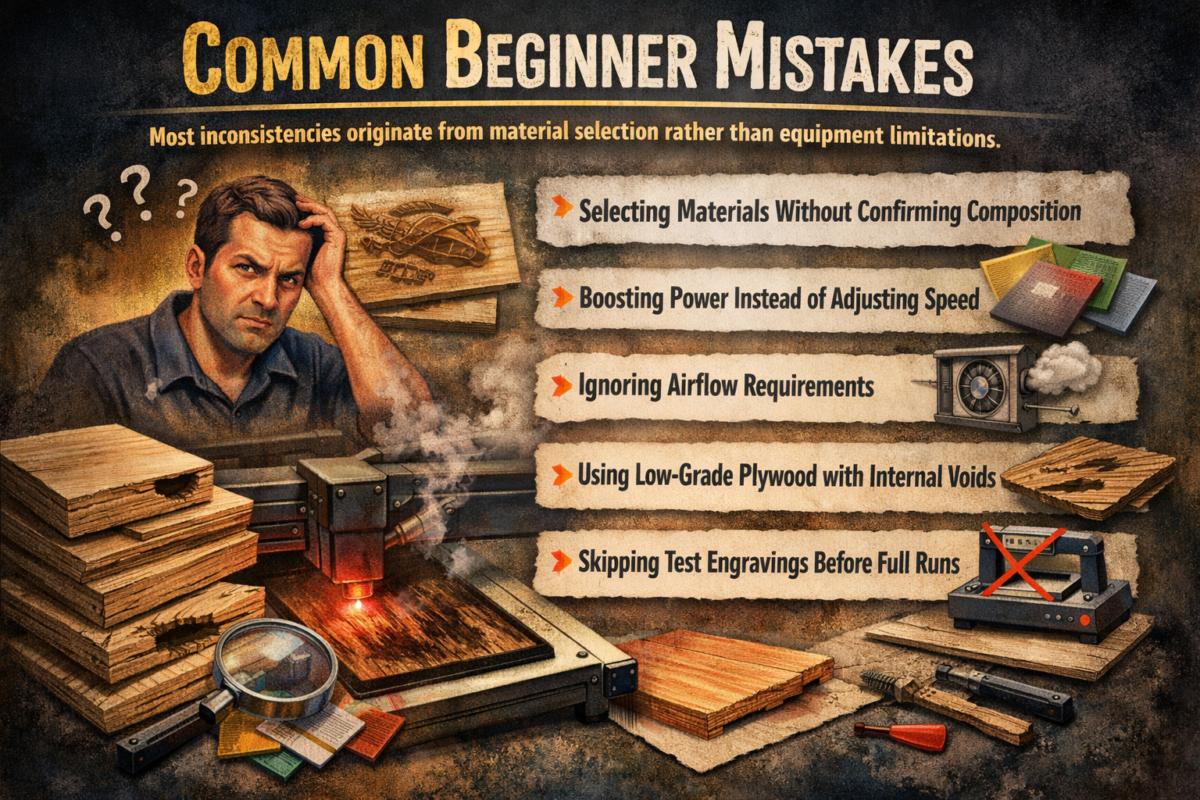
Common Beginner Mistakes
Most inconsistencies originate from material selection rather than equipment limitations.
- Selecting materials without confirming the composition
- Prioritizing power increases instead of adjusting speed
- Ignoring airflow requirements
- Using low-grade plywood with internal voids
- Skipping test engravings before full runs
Troubleshooting Guide
Acrylic Softening
Cause: Extruded material reacting to heat.
Fix: Use cast acrylic and increase movement speed.
Surface Darkening Too Much
Cause: Excessive heat retention.
Fix: Increase speed or reduce power slightly.
Fine Details Not Crisp
Cause: Improper focal distance.
Fix: Re-adjust focus height.
Uneven Depth
Cause: Inconsistent material density.
Fix: Upgrade to higher-grade stock.
Safe Material Testing Workflow
Maintaining a settings log improves repeatability. Before production runs:
- Confirm material composition
- Begin at lower power settings
- Test a small sample area
- Monitor smoke behavior
- Adjust incrementally
- Record parameters
Which Materials Perform Best Overall?
Performance depends on visual goals, durability requirements, and workspace setup. Material behavior varies based on surface preparation and environmental conditions.
For contrast-heavy designs:
- Dark hardwood
- Coated aluminum
- Slate
For precision detail:
- Cast acrylic
- MDF
- Fiber-engraved metal
For longevity:
- Metal
- Stone
- Acrylic
Conclusion
Choosing the right laser engraving materials is the key to achieving precision, durability, and the exact visual effect you want. By understanding how your machine interacts with different surfaces, testing new materials carefully, and selecting based on contrast, thickness, and purpose, you can ensure every project turns out clean and professional.
Start smart, experiment safely, and let your laser bring your ideas to life with confidence and creativity.
Frequently Asked Questions
1. What materials can you laser engrave?
Wood, acrylic, leather, glass, stone, coated metals, and certain verified plastics. Compatibility depends on laser wavelength and material composition.
2. What are reliable beginner materials?
Baltic birch, plywood, and cast acrylic provide consistent engraving performance.
3. Why does Acrylic soften instead of engraving cleanly?
Acrylic responds to heat differently from cast material and may lose definition under high-energy conditions.
4. Which materials should be avoided?
PVC, vinyl, fiberglass, and unidentified plastics are due to toxic or corrosive emissions.
5. What materials work well with diode lasers?
Darker woods, leather, cardboard, and coated metals effectively absorb blue diode wavelengths.
6. Which materials are cost-effective for resale products?
Coated aluminum and stone surfaces often combine durability with strong visual impact.
7. What are the best laser engraving materials for beginners and professionals?
The best laser engraving materials depend on your machine and project goals. Common choices include Baltic birch plywood, cast acrylic, anodized aluminum, and slate, as they offer predictable engraving results, good contrast, and durability for a variety of projects.