

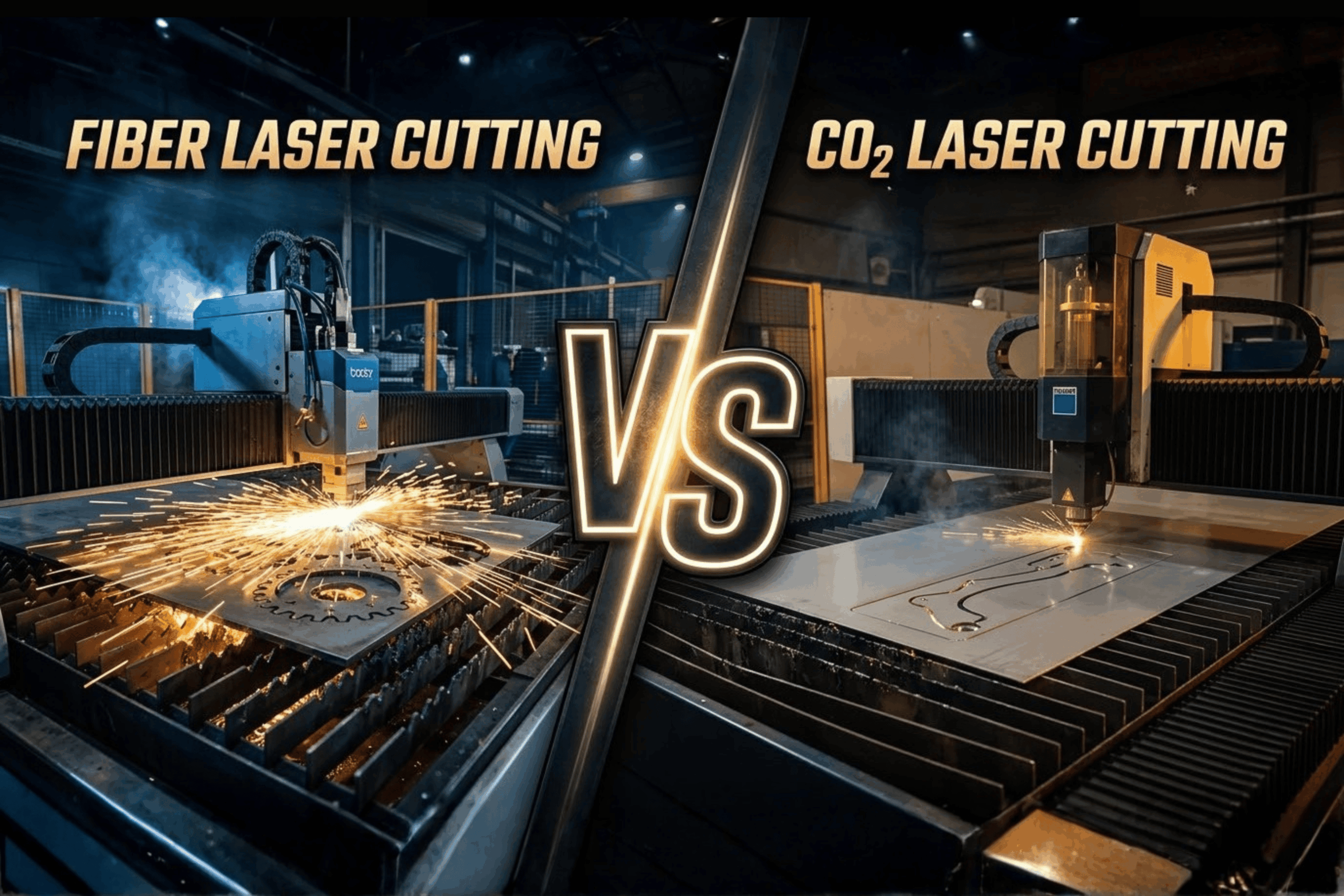
Fiber lasers are better for fast, high-precision metal cutting, while CO2 laser machines are better suited for non-metal materials such as wood, acrylic, leather, and plastics.
That’s the main difference to keep in mind when comparing a Fiber Laser vs CO2 Cutting Machine, especially since speed, cost, and maintenance can vary quite a bit between the two.
In the sections ahead, we’ll look at these differences more closely so you can see which option better fits your requirements.
Table Of Contents:
- What Is A Fiber Laser Cutting Machine?
- What Is A CO2 Laser Cutting Machine?
- Fiber Laser vs CO2 Cutting Machine: Key Differences!
- Pros And Cons Of Fiber Laser vs CO2 Cutting Machine
- How To Choose Between Fiber Laser And CO2 Cutting Machines
- Final Thoughts On Fiber Laser vs CO2 Cutting Machine
- Frequently Asked Questions
What Is A Fiber Laser Cutting Machine?
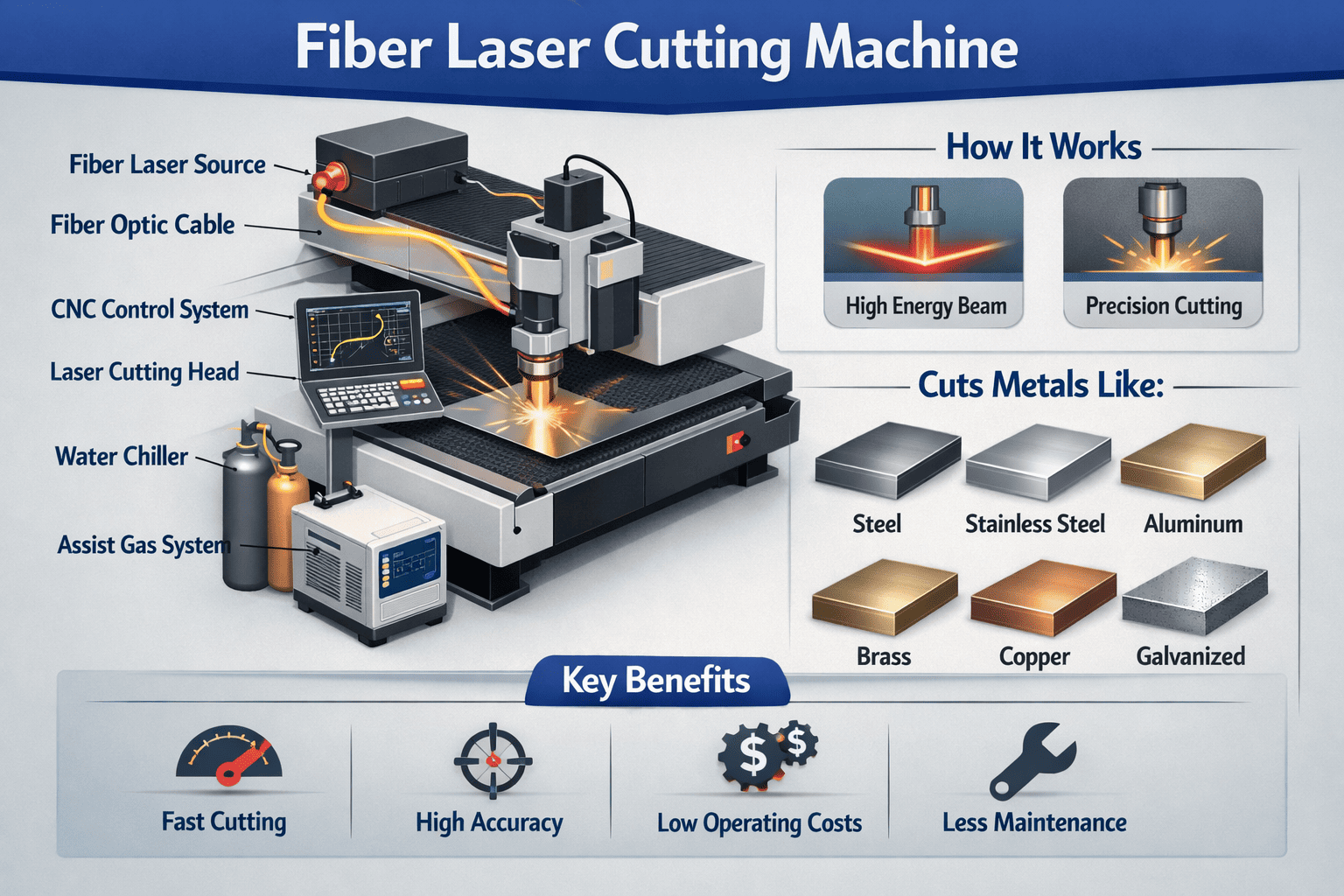
A Fiber Metal Laser Cutting Machine is designed for fast, precise cutting of metal sheets and components. It uses a CNC-controlled system to follow programmed paths, which helps produce clean, consistent cuts across various industrial applications.
How Fiber Laser Cutting Technology Works
Fiber laser technology uses a solid-state laser source to generate the beam. That beam is then delivered through fiber optic cables directly to the cutting head, where it is focused onto the metal surface. Because the beam has a high energy density, it can cut metal with high accuracy and clean edges.
Key Components Of A Fiber Laser Cutting Machine
- A fiber laser source to generate the laser beam
- Beam delivery system to transfer the beam through fiber optics
- Laser cutting head with nozzle and lenses
- Motion and drive system to move the cutting head
- CNC control system to manage cutting paths and settings
- Water chiller to maintain a stable operating temperature
- Assist gas system to support the cutting process
- Machine frame to provide strength and stability
Metals That Can Be Cut
- Mild steel
- Stainless steel
- Aluminum
- Brass
- Copper
- Galvanized steel
Maximum Cutting Thickness
| Power | Mild Steel | Stainless Steel | Aluminum |
|---|---|---|---|
| 1.5 kW | 8–10 mm | 4 mm | 4 mm |
| 2 kW | 12–14 mm | 6 mm | 6 mm |
| 3 kW | 16 mm | 8 mm | 8 mm |
Key Advantages Of Fiber Laser Cutting Machines
- Fast cutting speed
- High precision
- Clean and repeatable results
- Lower operating costs
- Less maintenance than older CO2 systems
- Strong performance for a wide range of metal cutting jobs
What Is A CO2 Laser Cutting Machine?
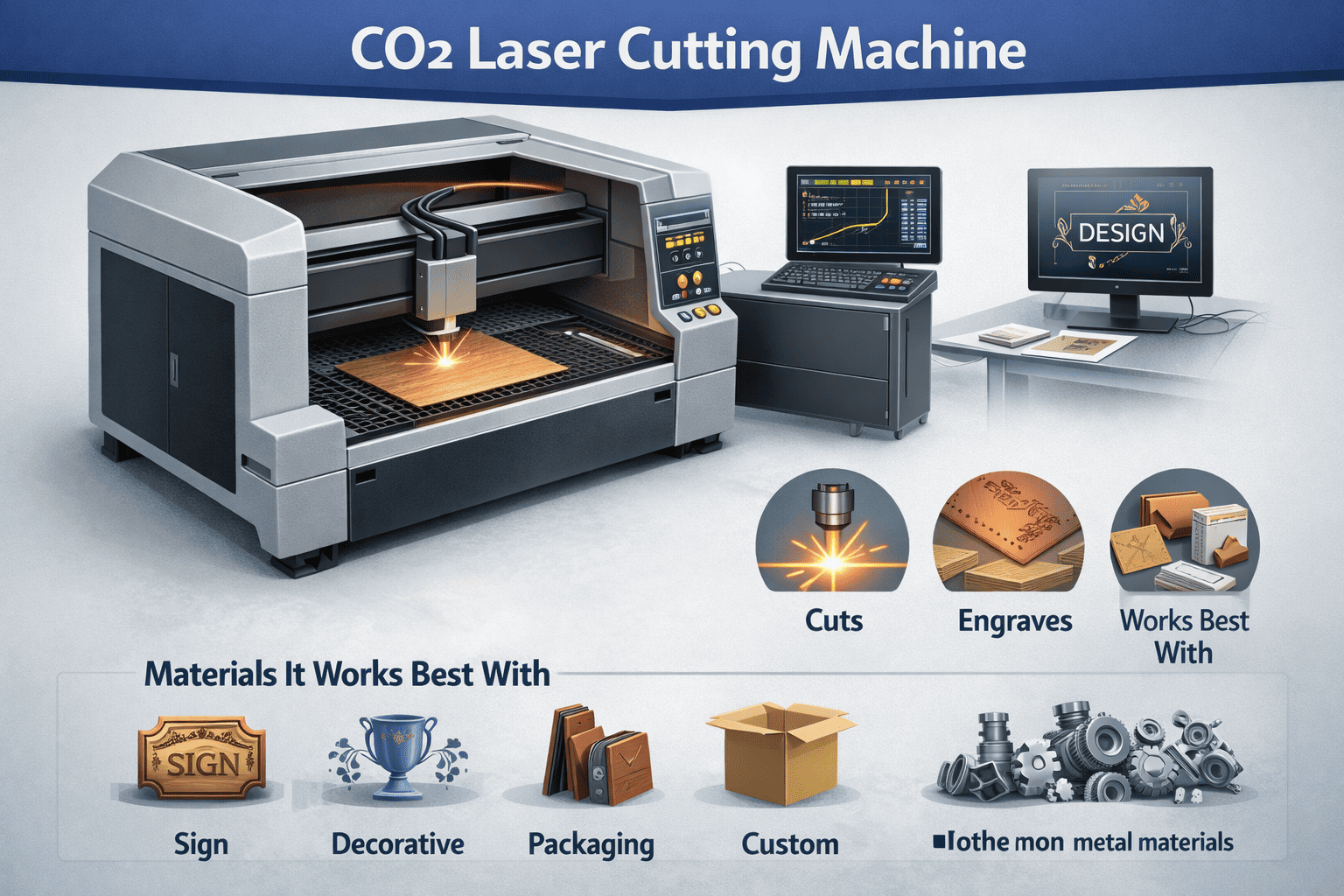
A CO2 Laser Cutting Machine is a CNC-controlled system that uses a high-powered gas laser to cut or engrave different materials with high precision. It is commonly used for non-metal materials where clean cuts and detailed finishing matter.
How It Works
- Uses a gas-based laser system to generate the beam
- Follows programmed cutting paths through CNC control
- Directs the laser onto the material surface for cutting or engraving
- Handles detailed shapes and patterns with good precision
Materials It Works Best With
Why Many Businesses Use It
- Suitable for both cutting and engraving
- Useful for sign-making, decorative work, packaging, and custom fabrication
|
Quick Note: |
Fiber Laser vs CO2 Cutting Machine: Key Differences!
To make the comparison easier to understand, the table below highlights the main differences between a fiber vs CO2 laser cutter.
| Factor | Fiber Laser Cutting Machine | CO2 Laser Cutting Machine |
|---|---|---|
| Main Material | Best for metals such as steel, stainless steel, aluminum, brass, and copper | Best for non-metals such as wood, acrylic, leather, plastic, and similar materials |
| Wavelength | 1.07 – 2.08 µm | 10.6 µm |
| Speed (Thin) | Faster on thin metal sheets | Typically slower for thin metals |
| Precision | Delivers clean, sharp cuts on metal parts | Works well for detailed cutting and engraving on non-metals |
| Energy Efficiency | Uses less power during operation | Consumes more power compared to fiber systems |
| Maintenance | Needs less upkeep because it has fewer moving parts and no mirror alignment | Needs more regular maintenance due to mirrors, optics, and gas-related parts |
| Initial Cost | Usually higher upfront | Usually lower upfront |
| Operating Cost | Lower over time | Higher over time |
| Lifespan | Generally longer service life | Usually shorter service life than fiber systems |
Pros And Cons Of Fiber Laser vs CO2 Cutting Machine
Fiber lasers are better for fast metal cutting and lower running effort, while CO2 lasers are better for handling a wider range of non-metal materials. The right choice depends on what you plan to cut most often.
Fiber Laser Pros And Cons
Pros
- Fast cutting speed
- Uses less energy
- Needs less maintenance
Cons
- Higher upfront cost
- Not the best fit for most non-metal materials
CO2 Laser Pros and Cons
Pros
- Works well on many non-metal materials
- Better suited for cutting and engraving tasks
Cons
- Needs more regular maintenance
- Slower for metal cutting
How To Choose Between Fiber Laser And CO2 Cutting Machines
When comparing Fiber vs CO2 laser cutting for metal sheets, fiber is usually the better choice for speed, lower upkeep, and stronger long-term value. CO2 is the better fit if your work focuses more on non-metal materials or thicker cutting jobs.
Choose Fiber Laser If
- Your work material involves steel, aluminum, or brass
- You want faster cutting and less downtime
- You prefer a machine with lower maintenance needs
- You want better long-term value for metal-focused work
Choose CO2 Laser If
- You mostly work with wood, acrylic, plastics, or leather
- You need a machine for cutting as well as engraving
- Your jobs involve very thick materials
- You want more flexibility across different non-metal applications
Once you know which machine suits your work, the next step is seeing what you can create with it. Our article, 10 Most Profitable Laser Cut Products That Rule The Market, covers laser-cut products with strong market demand.
Final Thoughts On Fiber Laser vs CO2 Cutting Machine
By now, the difference between a Fiber Laser vs CO2 Cutting Machine should be easier to understand. Both have their own strengths, so the right choice depends on your materials, workload, and cutting needs.
Moreover, it’s always worth investing in a quality machine, as that can directly affect consistency, cutting performance, and overall results.
If you want to compare the two options further, Prakash Laser offers both technologies and can arrange a demo based on your requirements. Contact us today and let us take care of your industrial needs.
Check out our machines in action on our YouTube channel.
Frequently Asked Questions
1. Why is Fiber Laser Cutting faster than CO2?
Fiber lasers operate at shorter wavelengths and deliver energy more efficiently to metal surfaces. This allows the beam to cut thin metal sheets much faster than CO2 systems.
2. What materials cannot be cut by a Laser Cutter?
Some materials are not suitable for laser cutting, such as PVC, polycarbonate, and certain reflective or coated surfaces. These materials can produce harmful fumes or do not respond well to the laser beam.
3. Can a fiber laser cut copper?
Yes, fiber lasers can cut copper. Their wavelength is well absorbed by copper, allowing the beam to cut it more effectively than many other laser types.
4. Should the cost for machines be judged only by the machine price?
No. A better comparison considers upfront price, electricity use, maintenance, consumables, and the expected payback period together.
For more details, read: Calculating ROI and Running Costs For A 3kW Fiber Laser Cutting Machine.
5. Which machine is better for beginners: fiber or CO2?
Neither machine is universally ‘better’ for beginners. The right choice mainly depends on the materials you plan to work with.
If you are new to laser cutting, it’s also important to understand basic safety practices. Read: 10 Important Safety Precautions For Laser Cutting.
6. Which machine is better for small workshops?
The better option depends on the type of jobs the workshop handles. Metal-focused work may suit fiber better, while mixed or non-metal work may suit CO2.
7. Which machine is better for custom design work?
CO2 machines are often a better fit for custom work involving engraving, patterns, and non-metal materials. Fiber is better suited for the precision cutting of metal parts.
8. Which machine is more suitable for mixed-material jobs?
CO2 lasers can process mixed materials, especially non-metals such as wood, acrylic, plastics, leather, fabric, and rubber. These materials absorb the CO2 laser wavelength well, allowing clean and detailed cuts.
One thought on “Fiber Laser vs CO2 Cutting Machine: Which Is Better?”
Comments are closed.