

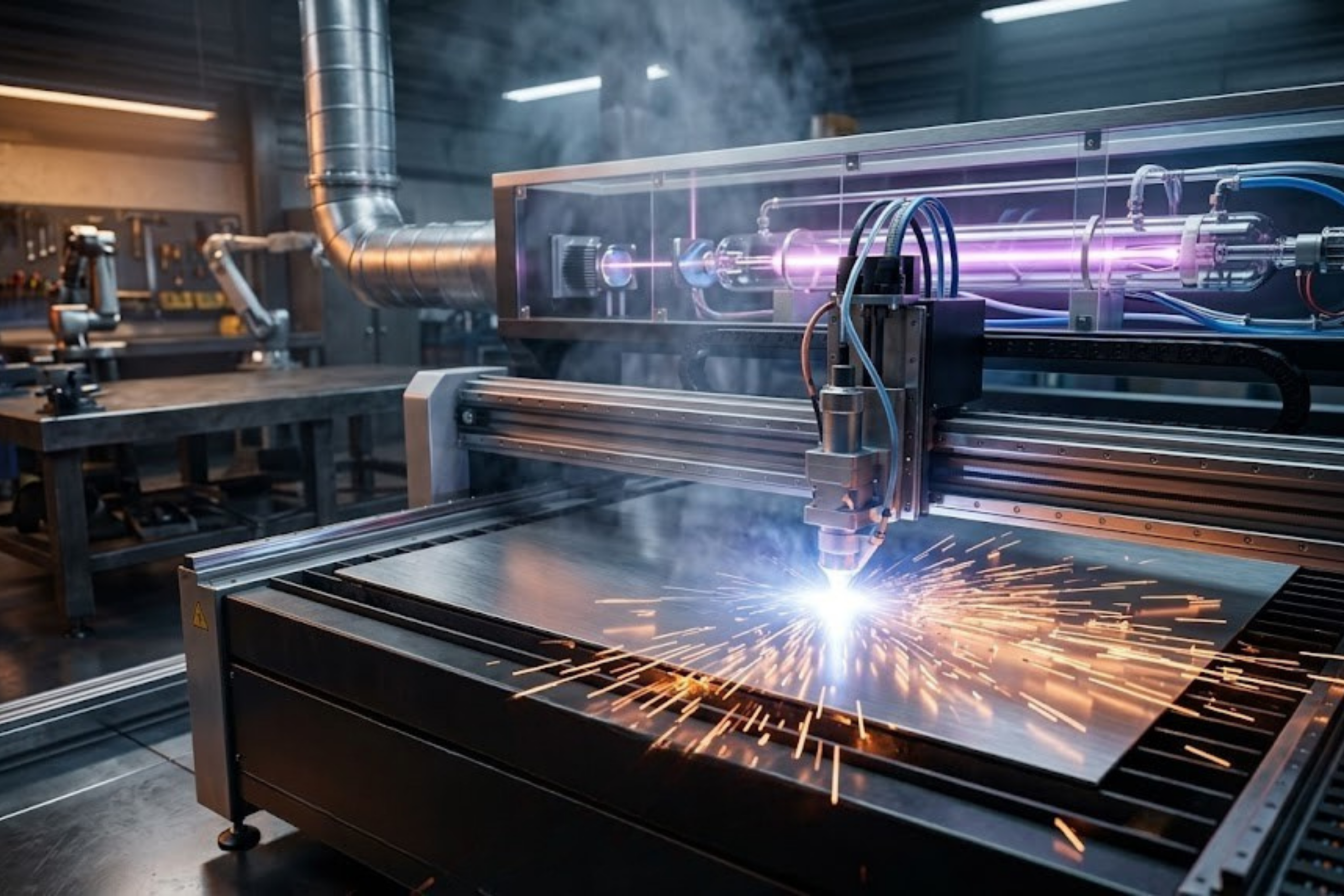
A CO2 laser tube is the core component that determines how efficiently a laser cutter or engraver performs over time. Understanding the factors that affect the CO2 laser tube lifespan is essential for anyone looking to maintain consistent output.
While every laser tube has a finite working life, the actual lifespan can vary widely based on operating conditions, usage patterns, and maintenance practices. Knowing what influences longevity helps set realistic expectations and allows better control over performance from the very first hour of operation.
Table Of Contents
- Lifespan Expectations Of A CO2 Laser Tube
- Key Factors That Influence CO2 Laser Tube Lifespan
- 7 Practical Tips For The Longevity Of A CO2 Laser Tube Lifespan
- Early Warning Signs Of An Aging CO2 Laser Tube
- Frequently Asked Questions
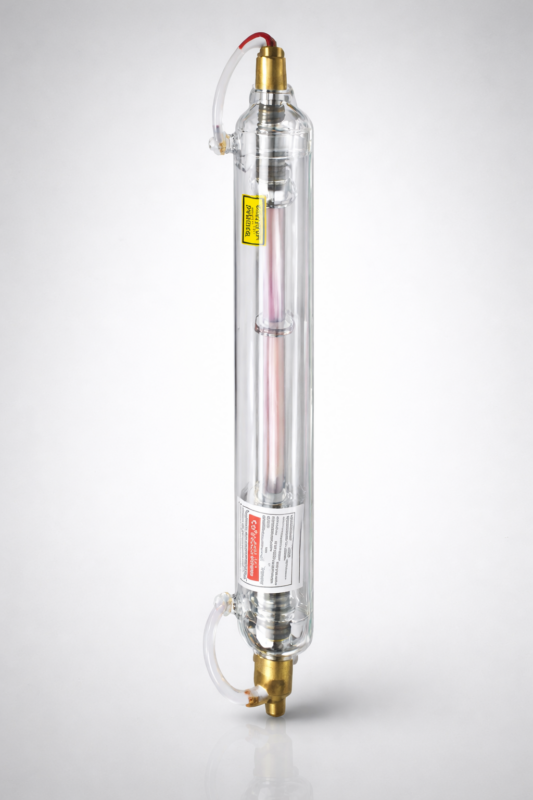
Lifespan Expectations Of A CO2 Laser Tube
The CO2 laser tube lifespan typically ranges from 1,000 to 10,000 operating hours, or about 2–3 years with moderate use. Actual longevity depends on several practical factors:
- Cooling system: Water temperature must stay below 25 °C (77 °F), using distilled water only.
- Operating power: Running above 80% power significantly shortens tube life.
- Usage frequency: Moderate, consistent use extends lifespan; constant high-power work reduces it.
- Tube quality: Higher-quality tubes generally last longer than standard stock options.
Key Factors That Influence CO2 Laser Tube Lifespan
1. Engraving-only use & poor cooling
- Engraving uses less power than cutting and creates less strain.
- Poor cooling or dirty optics can still shorten life.
2. Poor beam alignment
- Misaligned beams waste energy at mirrors and lenses.
- The tube compensates by working harder, which speeds up internal wear.
3. Ambient room temperature
- High room temperatures reduce the cooling system efficiency of the CO2 laser glass tube.
- Higher temperatures increase thermal stress during prolonged tasks.
7 Practical Tips For The Longevity Of A CO2 Laser Tube Lifespan
Extending the CO2 laser tube life depends on consistent care, proper operation, and preventive maintenance. The following practical tips focus on simple, effective steps to help maintain stable performance over time.
- Proper cooling — the most critical element Adequate cooling is the foundation of laser tube longevity, as excess heat is the leading cause of premature wear.
- Keep cooling water below 25°C (77°F) to prevent overheating and internal gas breakdown
- Use distilled water only to avoid mineral buildup and uneven heat transfer
- Keep your optical path clean A clean optical path ensures efficient energy transfer from the tube to the work surface.
- Clean mirrors and lenses regularly to maintain efficient beam transfer
- Dirty optics reduce output and force the tube to work harder
- Optimize power and operating settings
- Operate at 70–80% power for most jobs to reduce internal stress
- Avoid extended full-power operation whenever possible
- Storage and idle period care
- Store unused tubes in a cool, dry location away from vibration
- Rotate the tube occasionally during extended idle periods
- Smart usage habits for a longer lifespan
- Allow proper warm-up and cool-down cycles
- Avoid rapid on-and-off power cycling
- Follow a regular maintenance and inspection routine
- Inspect cooling lines, pumps, and electrical connections regularly
- Check alignment and output to catch issues early
- Knowing when replacement is necessary
- Watch for persistent power loss, poor cuts, or unstable beam behavior
- Replace the tube when performance does not recover after maintenance, follow tube replacement guide for safe handling.
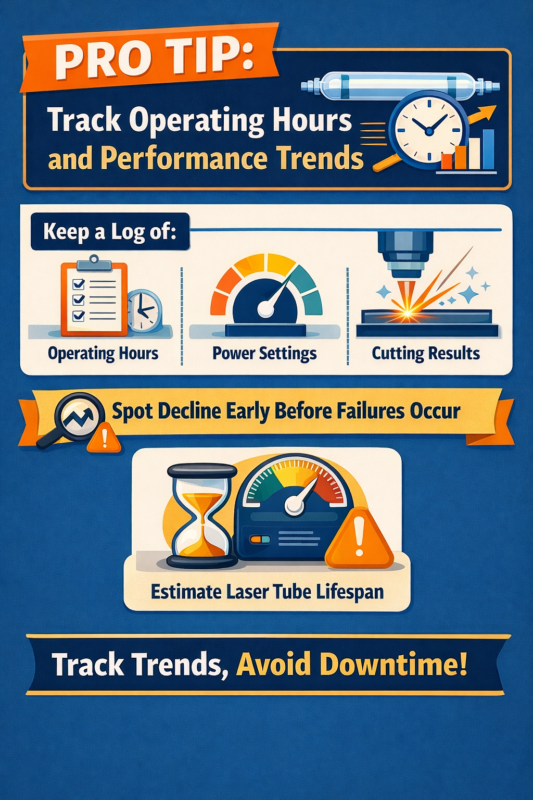
Early Warning Signs Of An Aging CO2 Laser Tube
Understanding these early warning signs will help you extend the CO2 laser tube lifespan.
1. Decreased cutting and engraving power
- Higher power or slower speeds are needed to achieve the previous results
- Engraving appears faded, shallow, or less detailed
2. Physical and visual changes in the tube
- Glow shifts from bright pinkish-purple to pale pink or white
- Brown or orange discoloration appears inside the tube
3. Inconsistent beam quality
- Beam flickers or fluctuates during operation
- Test fires show fuzzy or multi-dot patterns instead of a clean round spot
4. Other warning signs
- Longer warm-up times or failure to reach the expected power
- Tubes exceeding 3,000 hours or 5–8 years are often near the end of life
Final Tips For Maximizing The CO2 Laser Tube Lifespan
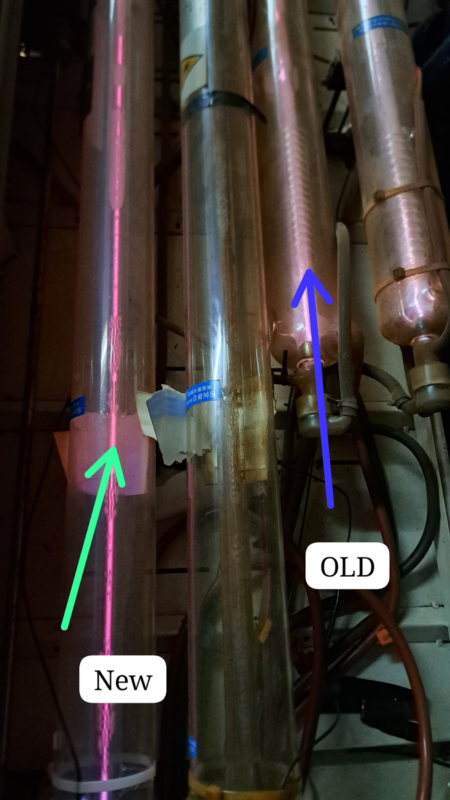
Maintaining a lengthy CO2 laser tube lifespan requires consistent cooling, controlled power use, and regular maintenance. Keep water temperature below 25°C (77°F), avoid frequent full-power operation, and ensure optics and alignment remain clean and stable. Moderate, steady workloads place less strain on internal components than continuous high-intensity cutting.
Monitoring operating hours and performance changes helps plan timely replacements, preventing unexpected downtime and protecting overall laser system efficiency.
Frequently Asked Questions
1. What is the average CO2 laser tube lifespan?
The average CO2 laser tube lifespan ranges from 1,000 to 10,000 operating hours, depending on tube quality, cooling efficiency, and power usage habits.
2. How long is the CO2 laser tube’s shelf life if it’s not in use?
The CO2 laser tube shelf life is usually 6 to 24 months when stored correctly in a cool, dry environment.
3. What factors affect laser cutter tube life the most?
Cooling performance, operating power levels, usage frequency, and overall tube quality have the most significant impact on laser cutter tube life.
4. Can running a CO2 laser tube at full power reduce its life?
Yes, frequent 100% power operation accelerates internal wear and can significantly shorten the lifespan of a CO2 laser tube.
5. How do I know when my CO2 laser tube is nearing the end of its lifespan?
Common signs include power loss, poor cutting results, faded engraving, and unstable or flickering beam output.
6. Does frequent on-and-off cycling affect CO2 laser tube lifespan?
Yes, frequent power cycling causes thermal stress, reducing stability and shortening the overall CO2 laser tube lifespan.
7. Can proper maintenance really extend laser cutter tube life?
Yes, regular cleaning, proper cooling, and routine inspections can significantly extend the life of laser cutter tubes.
8. Is replacing a CO2 laser tube based on hours better than waiting for failure?
Yes, tracking hours and replacing the tube early helps avoid downtime and maintains consistent laser performance.
Read To Know More:
- Understanding The Differences: Glass vs Metal CO2 Laser Tubes
- Why Is Water Temperature The Single Most Important Factor For CO2 Laser Tube Lifespan?
- How Can A Double Head CO2 Laser Improve Your Plywood Cutting?
- How Laser Cutters Are Revolutionizing Learning In Schools And Colleges?
- CO2 Laser Cutting Machine With Roll Feeder Explained
One thought on “How To Extend The Life Of Your CO2 Laser Tube: Tips For Longevity”
Comments are closed.