

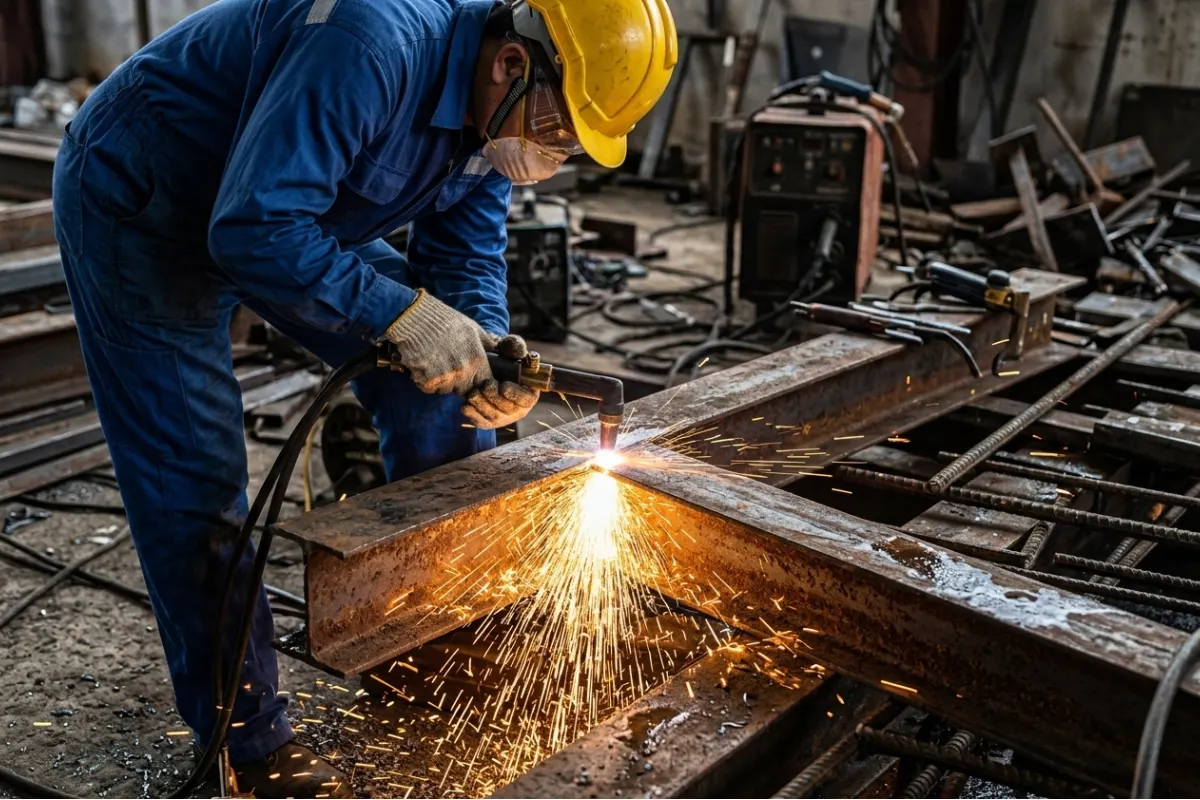
Metal fabrication turns raw metal into finished parts through cutting, shaping, joining, and surface finishing. It is used to produce strong, accurate components across many industries.
This guide answers questions like “What is metal fabrication?” and breaks down the 6-step metal fabrication process, showing how different types of metal work are used in real-world applications.
Table of Contents
- What Is Metal Fabrication?
- The Complete 6-Step Metal Fabrication Process
- Types Of Metal Work Used In Fabrication
- How To Choose The Right Metal Fabrication Method?
- Applications Of Metal Fabrication
- Advantages Of Metal Fabrication
- Challenges In Metal Fabrication
- Final Thoughts On Metal Fabrication
- Frequently Asked Questions
What Is Metal Fabrication?
Metal fabrication is the process of cutting, shaping, and assembling metal into functional parts. It includes planning, metal fabrication design, material fabrication, forming, joining, and finishing.
Metal fabrication work follows a step-by-step approach to create parts that meet size, strength, and design needs. It is used in industrial, commercial, and everyday products.
The Complete 6-Step Metal Fabrication Process
The metal fabrication process follows clear steps to ensure accuracy and consistency.
Step 1: Metal Fabrication Design
The process starts with metal fabrication design. Engineers create drawings or CAD models.
This step defines:
- Dimensions
- Shape
- Bend points
- Joining areas
Good design helps avoid production errors.
Step 2: Material Selection
Material selection is an important part of material fabrication.
Common materials include:
- Steel
- Stainless steel
- Aluminum
- Copper
- Brass
The right material supports cutting, shaping, and joining.
Step 3: Cutting the Metal
Metal is cut into required shapes and sizes.
Common methods:
- Laser cutting
- Plasma cutting
- Waterjet cutting
- Shearing
Accurate cutting is important in the sheet metal fabrication process because it improves part fit.
👉 Read more: Metal Laser Cutting: Everything You Need to Know
Step 4: Metal Forming and Shaping
Cut parts are shaped into final forms.
Common processes:
- Bending
- Rolling
- Stamping
This stage is important in sheet metal fabrication, where flat sheets are turned into usable parts.
Step 5: Welding and Assembly
Parts are joined to build the final structure.
Common methods:
- MIG welding
- TIG welding
- Spot welding
- Mechanical fasteners
This step is important in custom metal fabrication projects.
Step 6: Finishing and Surface Treatment
Finishing improves durability and surface quality.
Common methods:
- Powder coating
- Galvanizing
- Polishing
- Anodizing
Finished parts are ready for use after this stage.
Types Of Metal Work Used In Fabrication
| Metal Work | Function | Importance |
| Cutting | Divides metal into parts | Ensures correct size |
| Forming | Shapes metal | Creates structure |
| Welding | Joins parts | Adds strength |
| Machining | Refines parts | Improves accuracy |
How To Choose The Right Metal Fabrication Method?
The right method depends on the part and its purpose.
- For precise shapes: laser or waterjet cutting
- For shaping: bending and rolling
- For joining: welding or fasteners
- For high accuracy: machining
- For lightweight parts: sheet metal fabrication
Applications Of Metal Fabrication
Metal fabrication work is used in many industries:
- Construction: beams, railings, frames
- Automotive: panels, brackets, chassis parts
- Aerospace: precision components
- Industrial machinery: frames and equipment parts
- Consumer products: enclosures and furniture frames
Many projects need custom metal fabrication to meet specific requirements.
Advantages Of Metal Fabrication
- Flexible design options
- Strong and durable parts
- Supports custom production
- Efficient with modern machines
Challenges In Metal Fabrication
- Material waste during cutting
- Need for high accuracy
- Multiple steps for complex parts
- Skilled workers required
Final Thoughts On Metal Fabrication
Metal fabrication is an important process in modern manufacturing. It helps produce strong and accurate parts for different industries.
Each step in the metal fabrication process contributes to quality and performance. With the right approach, businesses can improve efficiency and achieve reliable results in metal fabrication.
See Real Fabrication Results & Get a Demo
Looking to improve cutting accuracy and production speed?
- View real fabricated parts in the sample gallery
- Check industries served and past client work
- Request a live demo of fiber laser cutting machines
Advanced fiber laser systems help reduce cutting time, improve edge quality, and support consistent output in sheet metal fabrication.
Frequently Asked Questions
1. What is metal fabrication used for?
It is used to make parts for buildings, machines, and equipment.
2. What materials are used in metal fabrication?
Steel, stainless steel, aluminum, copper, and brass.
👉 Read more: Stainless Steel Laser Cutting Guide
3. What is the sheet metal fabrication process?
It includes cutting, shaping, joining, and finishing metal sheets.
4. What is custom metal fabrication?
It means making parts based on specific designs and requirements.
5. What is the difference between metal fabrication and machining?
Metal fabrication includes cutting, forming, and joining. Machining focuses on removing material to improve accuracy.
6. What is sheet metal fabrication used for?
It is used to make panels, enclosures, brackets, and lightweight components.
7. What tools are used in metal fabrication work?
Common tools include laser cutters, press brakes, welding machines, rollers, and drilling machines.