

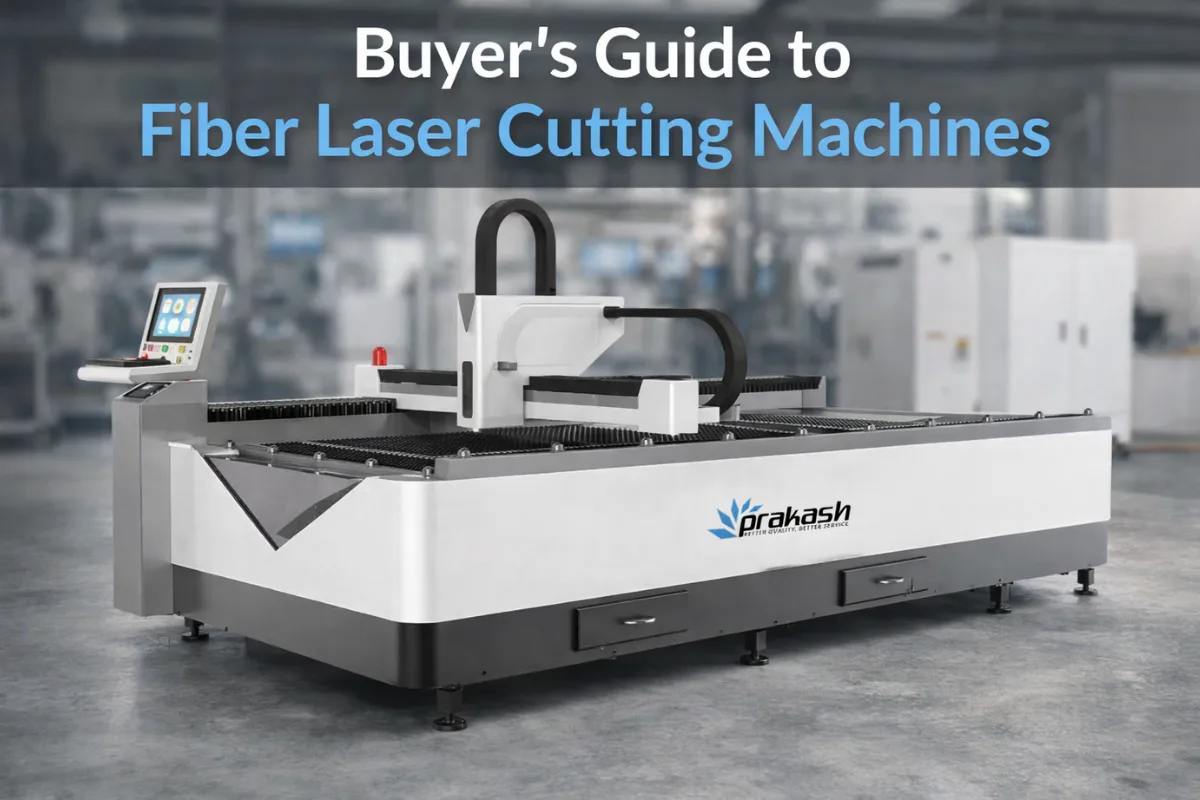
Are you looking to choose the right Fiber Laser Cutting Machine? Picking the right one is not only about choosing a power range. Material thickness, bed size, brand reliability, cutting speed, and precision all need to match the kind of work you handle every day.
This Fiber Laser Cutting Machine buying guide breaks down everything that matters, from machine specifications and workflow to pricing, so that you can choose with confidence.
Table of Contents:
- What Really Is A Fiber Laser Cutting Machine?
- Start With Understanding Your Production Needs
- Which Fiber Laser Cutting Machine Specs Matter Most?
- Fiber Laser Cutting Machine For Small vs Large Industry
- Fiber Laser Cutting Machine Price: What Affects The Total Cost?
- How To Choose a Fiber Laser Cutting Machine?
- Common Mistakes To Avoid
- Final Thoughts On Fiber Laser Cutting Machine Buying Guide
- Frequently Asked Questions
What Really Is A Fiber Laser Cutting Machine?
A Fiber Laser Cutting Machine is a metal-cutting machine that uses a focused laser beam to cut materials such as steel, aluminum, and copper at high speed with clean, precise accuracy.
Here are some more details:
- It uses fiber-optic technology to deliver the laser beam directly to the cutting head.
- It works well for metal cutting, especially when clean edges and detailed shapes matter.
- It cuts fast and precisely, which helps reduce extra finishing work.
- It is energy efficient, so it uses power more effectively than many older cutting systems.
- It needs less maintenance, which can help reduce downtime over time.
👉 Want a clearer picture of how it all comes together? Take a look at: How Does a Fiber Laser Cutting Machine Work?
Fiber Laser Cutting Machine Specifications
| Parameter | Range |
|---|---|
| Laser Power | 1kW – 12kW |
| Laser Wavelength | 1070 – 2080mm |
| Cutting Area | 1500 × 3000 mm / 2000 × 4000 mm |
| Positioning Accuracy | ±0.03 mm |
| Maximum Cutting Speed | 100–140 m/min |
| Cooling System | Industrial Water Chiller |
Start With Understanding Your Production Needs
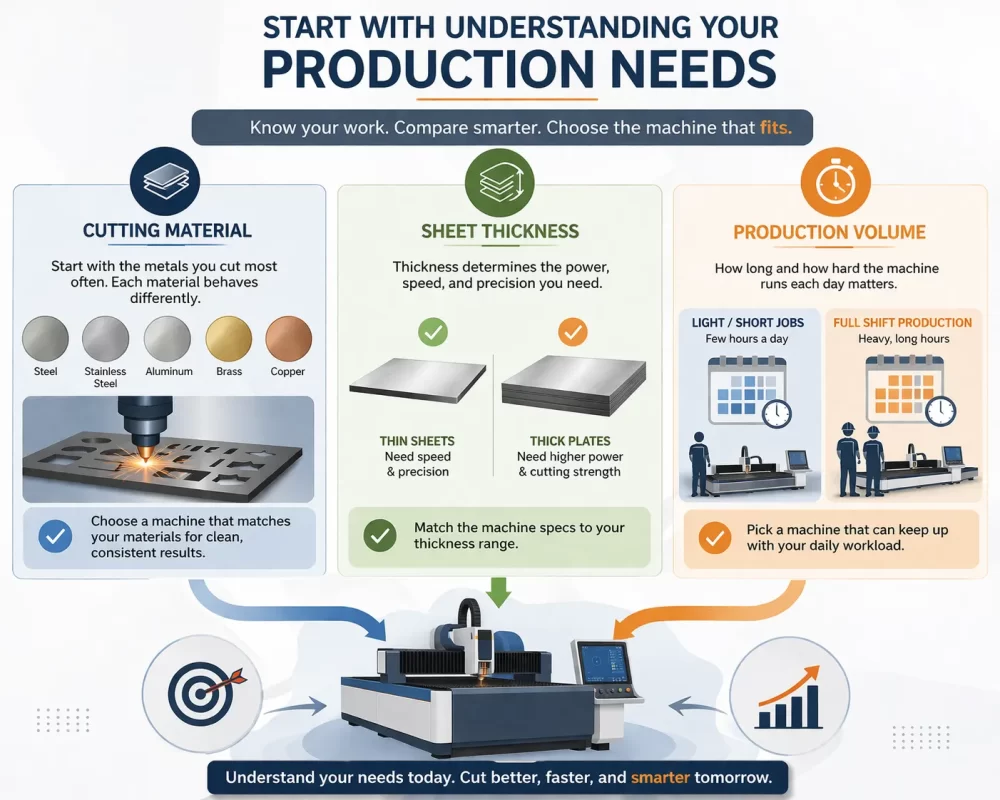
Before comparing wattage or price, look at the kind of work the machine needs to handle every day. That gives you a clearer way to compare options and helps you buy Fiber Laser Cutting Machine equipment that actually fits your workload.
Cutting Material
Start with the metals you cut most often. Steel, stainless steel, aluminum, brass, and copper all cut differently. The best Fiber Laser Cutting Machine for metal should be compatible with your materials and deliver clean, consistent results.
Sheet Thickness
Thickness plays a big role in machine selection. Thin sheets require speed and precision, while thicker plates require greater cutting strength. That is why machine specifications matter when comparing the options.
Production Volume
Think about how long the machine will run each day. A machine for light jobs will not suit full-shift production. This is where the Fiber Laser Cutting Machine for small vs large industry needs becomes easier to compare.
Once you’ve mapped out what your production actually demands, it becomes much easier to understand the machine behind it all.
Which Fiber Laser Cutting Machine Specs Matter Most?
While buying a Fiber Laser Cutting Machine, focus on the specs that affect cutting ability, speed, accuracy, and daily performance.
Laser Power And Cutting Capacity
Laser power (1.5 kW, 2 kW, or 3 kW) affects cut thickness, speed, and edge finish. Lower power suits thin sheets, mid-range power handles mixed jobs, and higher power is better for thicker plates and heavier workloads.
Working Area And Table Size
Table size decides the sheet size the machine can handle. Standard sizes suit common jobs, compact tables fit smaller spaces, and larger tables offer more flexibility for bigger production work.
Cutting Speed, Acceleration, And Edge Quality
Speed improves output, but cut quality matters too. Good accuracy keeps cuts clean, while higher acceleration helps with detailed shapes and faster changes in direction.
Laser Source, Cutting Head, And Controller
These core parts affect cutting consistency, machine stability, and ease of operation. Better overall system quality usually means smoother day-to-day performance.
Chiller, Air Compressor, And Exhaust Requirements
These support systems help the machine run properly. Cooling manages temperature, air support improves cutting, and exhaust helps control fumes.
Fiber Laser Cutting Machine For Small vs Large Industry
The right machine size depends on your current production demands and future growth plans. This quick comparison makes it easier to see which setup fits you better.
| Factor | Small Workshops And Job Shops | Medium And Large Industry |
|---|---|---|
| Footprint | Compact machine size suits limited floor space | A larger setup needs more installation space |
| Power Range | Lower power is enough for lighter and thinner sheet work | Higher wattage is better for thicker materials and faster output |
| Entry Cost | Lower initial investment | Higher upfront cost, but better for large volume work |
| Ease Of Operation | Simpler for smaller teams and routine jobs | Better suited for trained operators and higher production demands |
| Bed Size | Standard or compact table sizes work well | Larger bed sizes support bigger sheets and batch processing |
| Automation | Basic setup is often enough | Exchange tables and automation features help reduce downtime |
| Throughput | Suitable for short runs and moderate daily work | Better for full shift production and higher output |
| Best Fit | Small fabrication shops, job work, custom orders | Heavy production, repeated orders, industrial cutting |
| When To Scale Up | When orders increase, or capacity feels limited | When handling thicker plates, larger sheets, or expanding operations |
👉 Laser technology supports multiple production setups. See why it has become a practical advantage across industry verticals. Read: Laser Technology – A Boon in Disguise for Most Industry Verticals.
Fiber Laser Cutting Machine Price: What Affects The Total Cost?
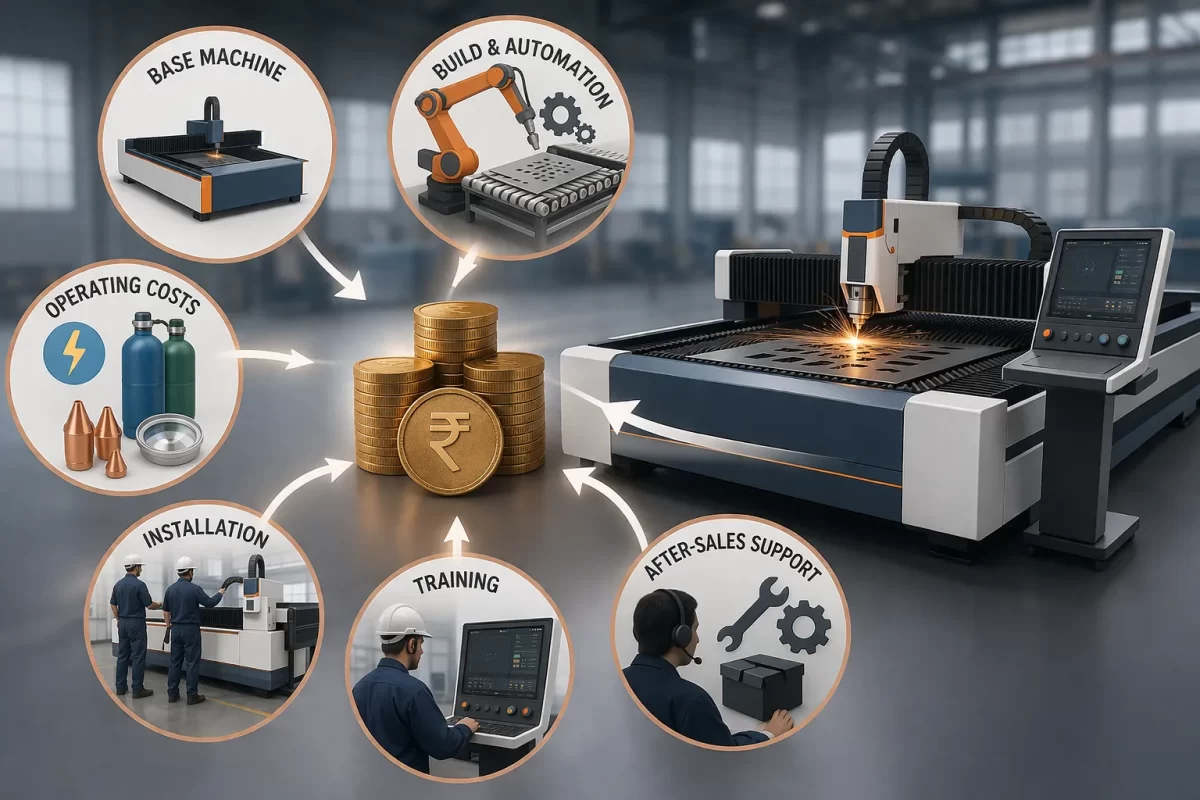
If you plan to buy a Fiber Laser Cutting Machine, the quoted price is only one part of the total cost. The final machine price in India depends on the machine’s power, table size, level of automation, component quality, brand value, support, and long-term running costs.
Base Machine Price vs Actual Setup Cost
The starting price changes based on laser power, bed size, and machine structure. Higher-wattage, larger working areas, and dual-table setups usually cost more.
Core Build and Automation
Machines with stronger construction, better internal components, and added automation often come at a higher upfront cost.
Operating Cost, Consumables, and Maintenance
The machine price is not the only cost to consider. Electricity use, assist gases like nitrogen or oxygen, and replaceable parts such as nozzles and protective lenses all add to the total cost over time.
Installation, Training, and After-Sales Support
Support services also affect pricing. Installation assistance, operator training, faster service response, and access to spare parts may increase the purchase cost, but they can reduce delays and maintenance issues later.
Industry Insight:
In the industry, machine-buying decisions are often shaped as much by delivery timelines as by specifications. Faster installation and shorter lead times can be critical when production expansion is time-sensitive.
How To Choose a Fiber Laser Cutting Machine?
Here’s a quick recap of the main points to keep in mind before making your choice.
- ✔️ Check the metals and the thickness range you cut most often
- ✔️ Choose laser power based on daily job requirements
- ✔️ Match the table size to your sheet size and floor space
- ✔️ Compare speed, accuracy, and edge finish together
- ✔️ Look at workflow features that can save setup time
- ✔️ Consider support, training, and spare parts availability
- ✔️ Think about future production needs before making the final choice
💡Pro Tip: 7 Questions To Ask The Supplier
- What materials and thickness range can this machine handle well?
- What is included in the quoted price?
- Which power range and table size do you recommend for my work?
- What after-sales support do you provide?
- What does the warranty cover?
- How easy is the machine to operate and maintain?
- Can you show sample cutting results?
Common Mistakes To Avoid
These are some common mistakes that can affect machine performance, cost, and long-term value.
- ❌ Choosing based only on price and ignoring overall machine fit
- ❌ Picking wattage without checking your actual material thickness and job type
- ❌ Overseeing sales support, spare parts, and service response
- ❌ Ignoring floor space, power setup, and operator requirements
- ❌ Paying for features you may not need right now
- ❌ Choosing a machine that fits current work but limits future growth
Final Thoughts On Fiber Laser Cutting Machine Buying Guide
Ready To Choose The Right Fiber Laser Cutting Machine?
If you’re planning to invest in a Fiber Laser Cutting Machine, working with the right manufacturer can make all the difference. Prakash Laser offers advanced technology, practical machine design, and dependable support to help you match the right setup to your production needs.
- Get expert guidance based on your material, thickness, and daily workload
- Compare machine configurations that fit your space and workflow
- Request a demo or sample cutting to evaluate real performance
- Understand complete pricing, including setup and support
👉 Connect with Prakash Laser today to find a Fiber Laser Cutting Machine that fits your requirements and supports your next stage of growth.
Frequently Asked Questions
1. What should I consider before buying a Fiber Laser Cutting Machine?
Check the material type, thickness range, power, table size, production needs, floor space, and after-sales support.
2. How do I choose the right power for a fiber laser machine?
Choose power based on the metal thickness and daily workload. Lower power suits thin sheets, while higher power is better for thicker materials and faster output.
3. What is the average lifespan of a Fiber Laser Cutting Machine?
A well-maintained machine can last many years, while the laser source typically lasts around 100,000 hours.
4. Is a Fiber Laser Cutting Machine suitable for small businesses?
Yes, it can be a good fit for small businesses if the machine’s size, power, and budget align with the type of work being handled.
5. What factors affect fiber laser cutting quality?
Cutting quality depends on power, speed, focus, material type, material thickness, gas support, and machine accuracy.
6. Can a Fiber Laser Cutting Machine cut thick metal sheets?
Yes, but the thickness it can handle depends on the machine’s power and the type of metal being cut.
7. How much maintenance does a fiber laser machine require?
It usually needs less maintenance than many other cutting systems, but regular cleaning, inspection, and part checks are still important.