

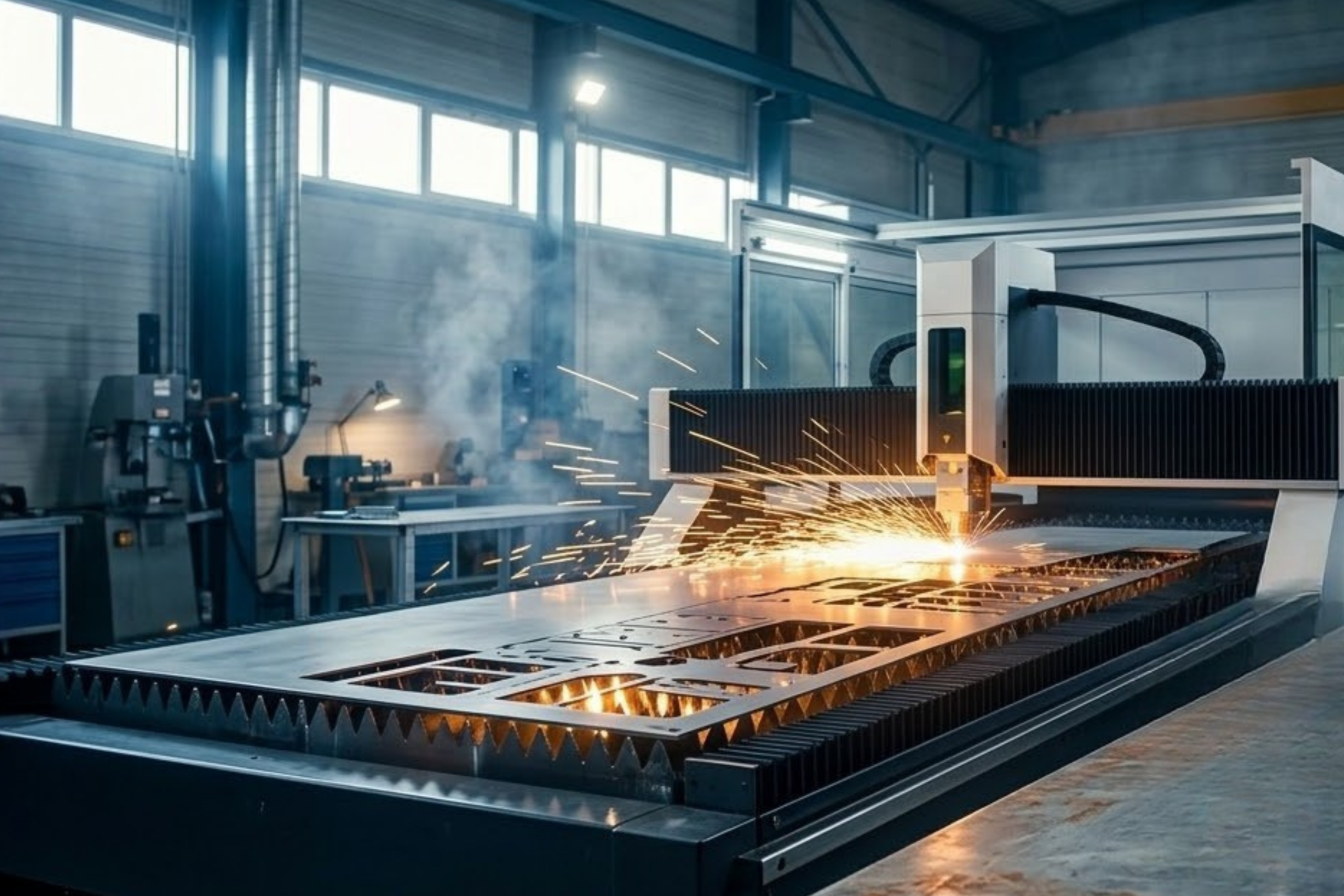
Fiber Laser Cutting Machine price in India generally goes into lakhs, with the final cost depending on factors such as laser power, table size, machine configuration, and added features.
Smaller entry-level models and larger industrial systems naturally fall into different cost brackets, so there is no one-price-fits-all answer. Even commonly used 1.5kW to 3kW machines can vary in overall cost based on cutting capacity, build quality, and production requirements.
In this guide, we’ll look at the main factors that influence total cost, how to evaluate the investment properly, maintenance-related considerations, and why requesting a machine-specific quote is the better way to make the final buying decision.
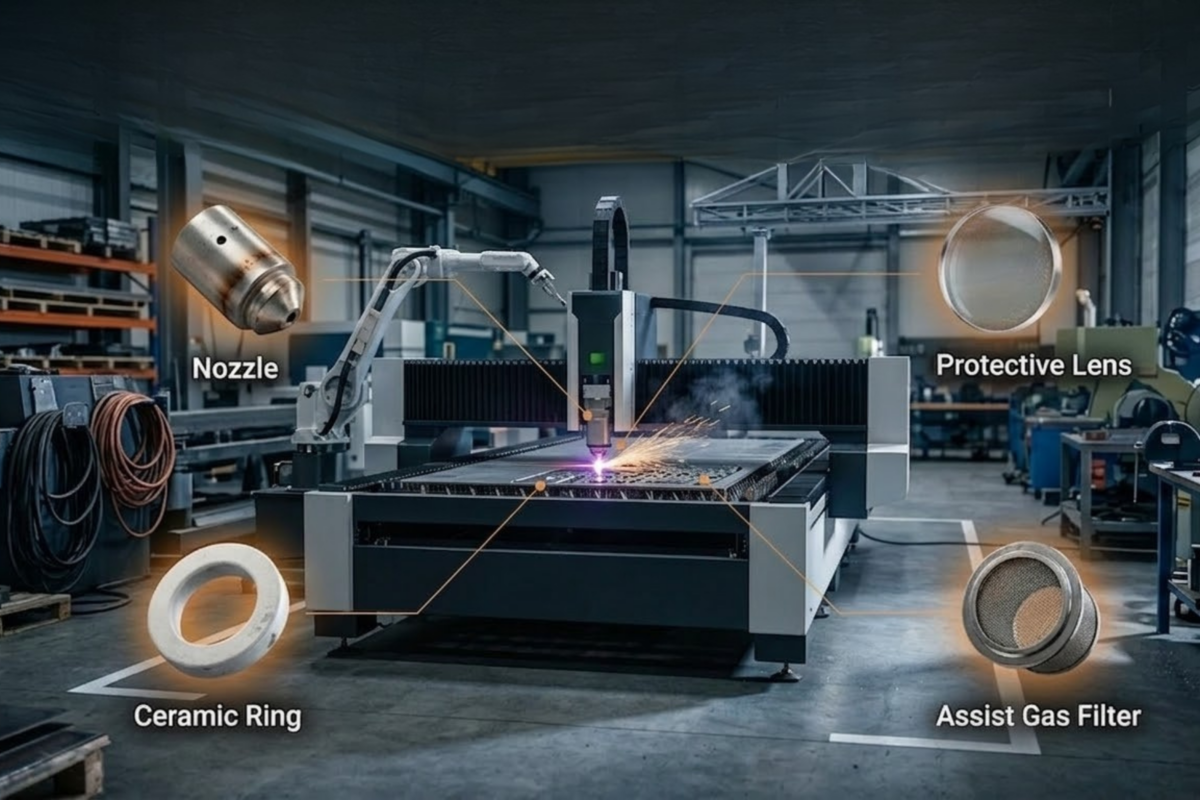
Table Of Contents
- Why Fiber Laser Cutting Machine Prices Vary In India
- What Is Usually Included in the Machine Price?
- How Table Size Affects Fiber Laser Cutting Machine Cost
- How Custom Configurations Influence Machine Price
- Fiber Laser Cutting Machine Price In India: Running Costs
- Consumables And Parts That Need Periodic Replacement
- How To Evaluate Fiber Laser Machine Price The Right Way
- Choose The Right Fiber Laser Cutting Solution For Your Needs
- Frequently Asked Questions
Why Fiber Laser Cutting Machine Prices Vary In India
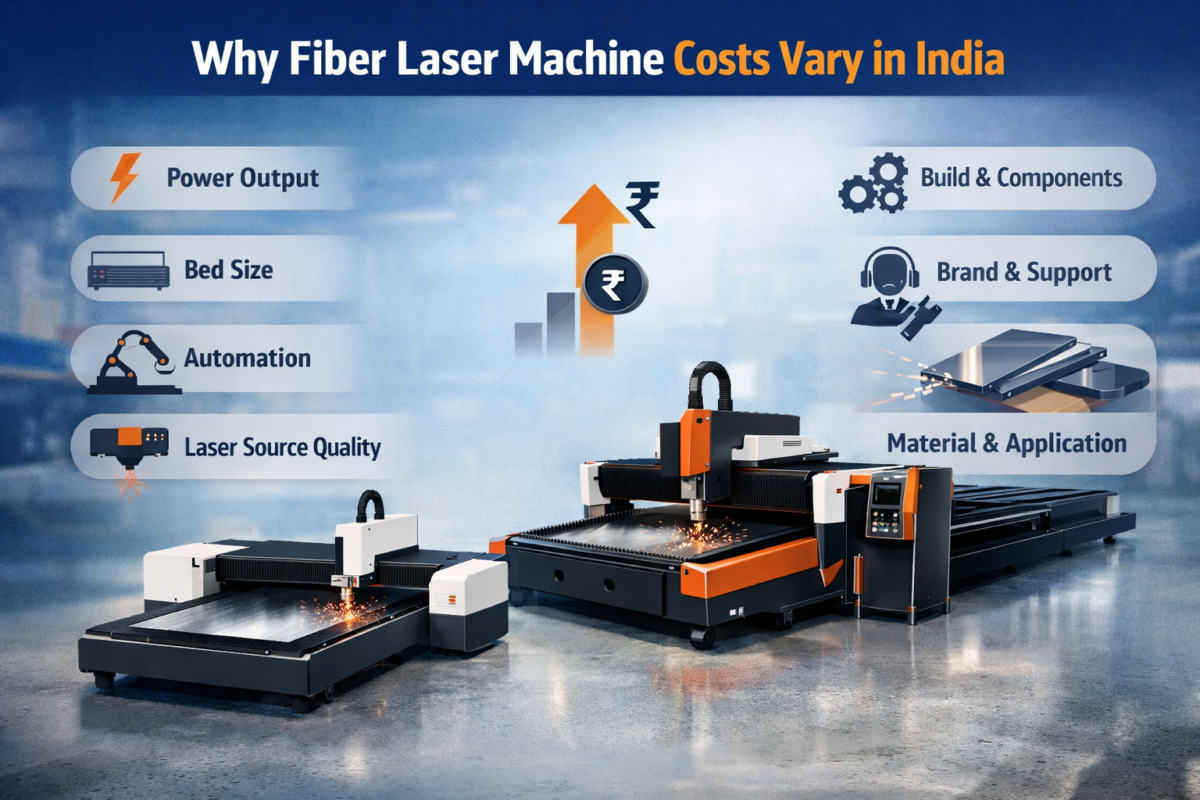
The cost of Fiber Laser Machine in India varies because different machines are built to meet different production needs. A model meant for basic sheet cutting will naturally be priced differently from one designed for faster output, thicker metals, or more demanding industrial work.
Here are the main reasons prices vary:
- Power output: Machines with lower power are generally suited to lighter cutting tasks, while higher-power models are built for faster cutting speeds and thicker materials. As power increases, cost usually increases too.
- Bed size: Larger bed sizes increase the price because they require a larger machine frame, longer guide rails, and a stronger CNC structure.
- Automation level: A standard single-table machine usually costs less than a machine with dual tables, auto-loading, or other production-oriented features.
- Laser source quality: The type and quality of the laser source can affect both cutting performance and machine cost.
- Machine build and components: Better control systems, servo motors, cutting heads, and overall build quality can push the price higher.
- Brand and support: Well-known manufacturers may charge more because they also offer stronger service support, installation, and training.
- Application type: Machines built for thick sheets, reflective metals, or high-speed continuous production are usually priced above simpler entry-level setups.
Learn ‘How Does Fiber Laser Cutting Machine Work?’ to understand the process behind cutting speed, precision, and machine performance.
What Is Usually Included in the Machine Price?
The Laser Cutting Machine price usually includes the main machine system and the basic components needed to start operation. While the exact package may vary by supplier, most machines come with the core setup needed for installation, testing, and regular production use.
What is usually included:
- Machine structure: Bed, frame, CNC controller, and servo motor system
- Laser source: The fiber laser generator, selected according to the machine’s power range
- Cutting head: Often supplied with autofocus functionality on many modern models
- Water chiller: Used to cool the laser source and cutting head during operation
- Software and control system: Operator interface and nesting software for machine control
- Safety features: Enclosed cabinet or other built-in safety elements, depending on the model
- Installation and training: Commonly provided by the supplier as part of the machine package
- Warranty: Usually offered on key machine components for a limited period
Note: In some cases, add-ons such as voltage stabilizers, upgraded software, or extended warranty support may be quoted separately, so buyers should always check what is included before comparing machines.
Before comparing configurations in detail, it helps to review the 4 Popular Types of Laser Cutting Machines You Should Know.
How Table Size Affects Fiber Laser Cutting Machine Cost
Table size directly affects the cost of a Fiber Laser Metal Cutting Machine because larger cutting areas require stronger structures, longer motion components, and more powerful systems to maintain precision across the entire working surface.
As the bed size increases, the machine must handle greater loads and maintain cutting accuracy over a wider area, which naturally raises the overall cost of the machine.
Key reasons why larger table sizes increase cost include:
- Stronger machine frame: Larger working areas require heavier, stiffer frames to prevent vibration and maintain cutting precision. This means more structural steel and stronger manufacturing components.
- Longer guide rails and racks: Bigger tables need longer linear guide rails and rack systems so the cutting head can travel across the entire sheet area smoothly and accurately.
- Higher-power servo motors: A larger fiber laser metal-cutting machine requires higher-power servo motors to move the gantry and cutting head efficiently across the extended bed.
- Larger CNC structure: Bigger machines require a more robust CNC structure and motion-control setup to maintain stability and positional accuracy.
- Exchange table systems: Many larger machines include automatic exchange tables (shuttle tables) to improve production efficiency. These systems add to the machine’s overall complexity and cost.
- Installation and floor space requirements: Larger machines require more factory space and may necessitate additional planning for transport, installation, and setup.
| Quick Insight: Size vs Typical Industry Use Small tables: Often chosen for prototype work, small parts, and workshops with limited floor space.Standard tables: The most widely used option for sheet metal fabrication and general production work.Large tables: Preferred in high-volume manufacturing where larger sheets and continuous cutting cycles are required. |
How Custom Configurations Influence Machine Price
Custom configurations increase the price of an industrial fiber laser cutter because each added feature alters the machine’s capabilities, structure, and production output. That is why a standard metal laser cutting machine and a fully configured production model can differ a lot in overall cost, even when they appear similar at a glance.
Here’s how customization affects price:
- Higher laser power: Moving to a higher-power setup increases machine cost because it changes cutting capacity, speed, and the type of work the machine can handle.
- Exchange tables: Exchange table systems improve workflow and reduce loading time, but they also add to the machine’s mechanical and control requirements.
- Tube-cutting modules: Adding tube-cutting capability turns a standard sheet-focused machine into a more versatile setup, increasing the final machine price.
- Automation systems: Features such as auto-loading and material-handling systems are designed for higher-volume production and increase the initial investment.
- Upgraded components: Better cutting heads, control systems, motors, and supporting parts also affect the final configuration cost.
| Why Businesses Should Request A Customized Quote Final machine cost depends on the exact configuration and production requirements.A customized quote gives a more accurate picture than general market estimates.It helps buyers choose a setup that fits their material type, workload, and business needs. |
Explore Top Trends In Laser Cutting And Engraving In 2026 to see the latest shifts shaping machine features, production planning, and buying decisions.
Fiber Laser Cutting Machine Price In India: Running Costs
The price of a Fiber Laser Cutting Machine in India is only one part of the total investment, as running costs also play a major role in day-to-day operations. On an hourly basis, the cost usually depends on electricity use, assist gas, operator labor, and routine consumables.
Here’s what makes up the running cost:
Assist Gas
This is often the biggest variable expense. Nitrogen-based cutting jobs usually cost more, especially when working on stainless steel, while compressed air is generally the more economical option.
Estimated Hourly Operating Scenarios
| Cutting Scenario | Typical Setup | Estimated Hourly Operating Cost* |
| Light Sheet Cutting | Lower power machine with air assist | Lower operating range |
| Carbon Steel Cutting | Oxygen assist gas with moderate thickness sheets | Moderate operating range |
| Stainless / Aluminum Cutting | Nitrogen assist gas with a higher purity requirement | Higher operating range |
| Continuous Production Runs | Higher power machine with sustained operation | Highest operating range |
*Actual running cost can vary depending on machine power, electricity rates, gas type, material thickness, and production efficiency.
Electricity
Power consumption is usually lower than that of many traditional cutting systems, but the actual cost still depends on machine power, duty cycle, and local electricity rates.
Typical Electricity Consumption By Machine Power
| Machine Power | Approximate Power Consumption | What It Usually Means |
| 1.5 kW | Around 6–8 kW/hour | Suitable for lighter cutting requirements and lower operating load |
| 2 kW | Around 10–12 kW/hour | Common for regular production work with moderate power demand |
| 3 kW | Around 15–18 kW/hour | Better suited for heavier workloads and higher cutting output |
Operator Labor
Labor is one of the most consistent running expenses. The hourly cost can vary based on operator skill, production setup, and whether one operator is handling multiple machines.
Consumables And Maintenance
Routine items such as nozzle tips, protective lenses, and protective covers need periodic replacement and add to the overall operating cost.
Material And Cutting Requirements
Running costs also vary with metal type, sheet thickness, gas choice, and the efficiency with which the machine is used.
Want a more practical cost picture? Read Calculating ROI and Running Costs For A 3kW Fiber Laser Cutting Machine to understand how operating expenses and output can affect long-term value.
Consumables And Parts That Need Periodic Replacement
Certain parts in a Fiber Laser Cutting Machine need periodic replacement because they are exposed to heat, dust, metal particles, and regular production wear. Keeping these consumables in good condition helps maintain stable performance and protects important machine components from avoidable damage.
Common parts that usually need replacement include:
- Nozzles: These can wear out over time and affect gas flow and cut quality.
- Protective lenses: They shield critical optical parts from dust and spatter and need replacement when damaged or contaminated.
- Ceramic rings: These support the nozzle area and may need to be changed as part of routine upkeep.
- Assist gas filters: These help keep gas flow clean and consistent and should be replaced periodically.
In short:
| Component | Inspection Frequency | Expected Life |
| Nozzle | Daily | 1–7 days |
| Protective Lens | Daily | 1–7 days |
| Ceramic Ring | Weekly | 7–15 days |
| Assist Gas Filter | Monthly | 3–6 months |
How To Evaluate Fiber Laser Machine Price The Right Way
To properly evaluate the price of a Fiber Laser Cutting Machine in India, look beyond the quoted machine cost and focus on the total investment over time. A machine may seem competitively priced at first, but the better decision comes from checking how efficiently it will perform in actual production and what it will cost to operate and maintain over the long term.
Here is the right way to evaluate it:
- Calculate Total Cost of Ownership (TCO): This is one of the most important parts of price evaluation. The machine price is only the starting point. The real cost becomes clearer when running expenses and long-term upkeep are included in the comparison.
- Review operational costs closely: Fiber lasers are generally more energy-efficient than CO2 systems, but higher-power machines still consume significant electricity during regular operation. That is why running costs should always be reviewed alongside the initial machine price.
- Include assist gas and consumables in the comparison: Day-to-day cutting cost also depends on assist gas usage and routine replacement parts. These recurring expenses can make a noticeable difference over time, especially in continuous production settings.
- Account for installation-related expenses: The full investment may also include electrical setup, air systems, site preparation, and other readiness requirements at the factory.
- Check supplier support and service response: Long-term value also depends on how quickly the supplier can provide technical support, spare parts, and service assistance when needed. Delays in support can increase downtime and affect production.
- Evaluate based on application and ROI: The right machine is not always the one with the highest specification. It should match production volume, material type, and workload to support better output and practical long-term value.
When the Fiber Laser Cutting Machine price in India is evaluated this way, the buying decision becomes more practical and better aligned with long-term production goals. It also helps avoid spending on specifications or features that may not be necessary for the intended workload.
Looking for the right supplier? Read Where Can You Find the Best Laser Cutting Machine Price in India? to understand how to compare machine configurations and quotes more effectively.
Choose The Right Fiber Laser Cutting Solution For Your Needs
Prakash Laser is an established name in the industry, offering a range of advanced laser technologies for different production needs. The company helps various India-based businesses identify a machine configuration that fits their cutting requirements, operational priorities, and budget.
A demo can be requested before finalising the machine, making it easier to assess whether the selected setup matches actual production needs. And if you’d like a complete price breakdown, you can fill out the form and raise a query. Our team will review your requirements and get back to you with the details. Get in touch with us today.
Fill this form for any query
Prefer a visual guide? Watch our Fiber Laser Cutting Machine For Metals in action for a practical overview of how these machines work and what buyers should know before choosing one.
Frequently Asked Questions
1. Which metals can a fiber laser cutting machine cut?
Most fiber laser cutting machines are used for metals such as carbon steel, stainless steel, aluminum, copper, and brass.
2. Do larger bed sizes increase the cost of a Fiber Laser Cutting Machine?
Yes, larger bed sizes usually increase the machine cost. Standard 3015 machines are generally treated as the baseline, while larger formats such as 4020 and 6020 can cost around 20–40% more, depending on the configuration.
3. Can one machine cut both sheet metal and tubes?
Not always. Standard sheet machines are designed for flat metal sheets, whereas tube cutting typically requires a dedicated tube system or a hybrid sheet-and-tube configuration.
4. Which industries commonly use fiber laser cutting machines?
These machines are widely used in sectors such as automotive, aerospace, sheet metal fabrication, machinery, and architectural metalwork.
5. How long does delivery usually take after placing an order?
Delivery timelines vary by model and customization level. Standard machines may be delivered faster, while custom or automation-heavy setups usually take longer.
6. Can a fiber laser cutting machine be used for mass production?
Yes. Fiber laser cutting machines are commonly used in production environments because they support fast, precise metal cutting and can be configured for higher-throughput operations.