

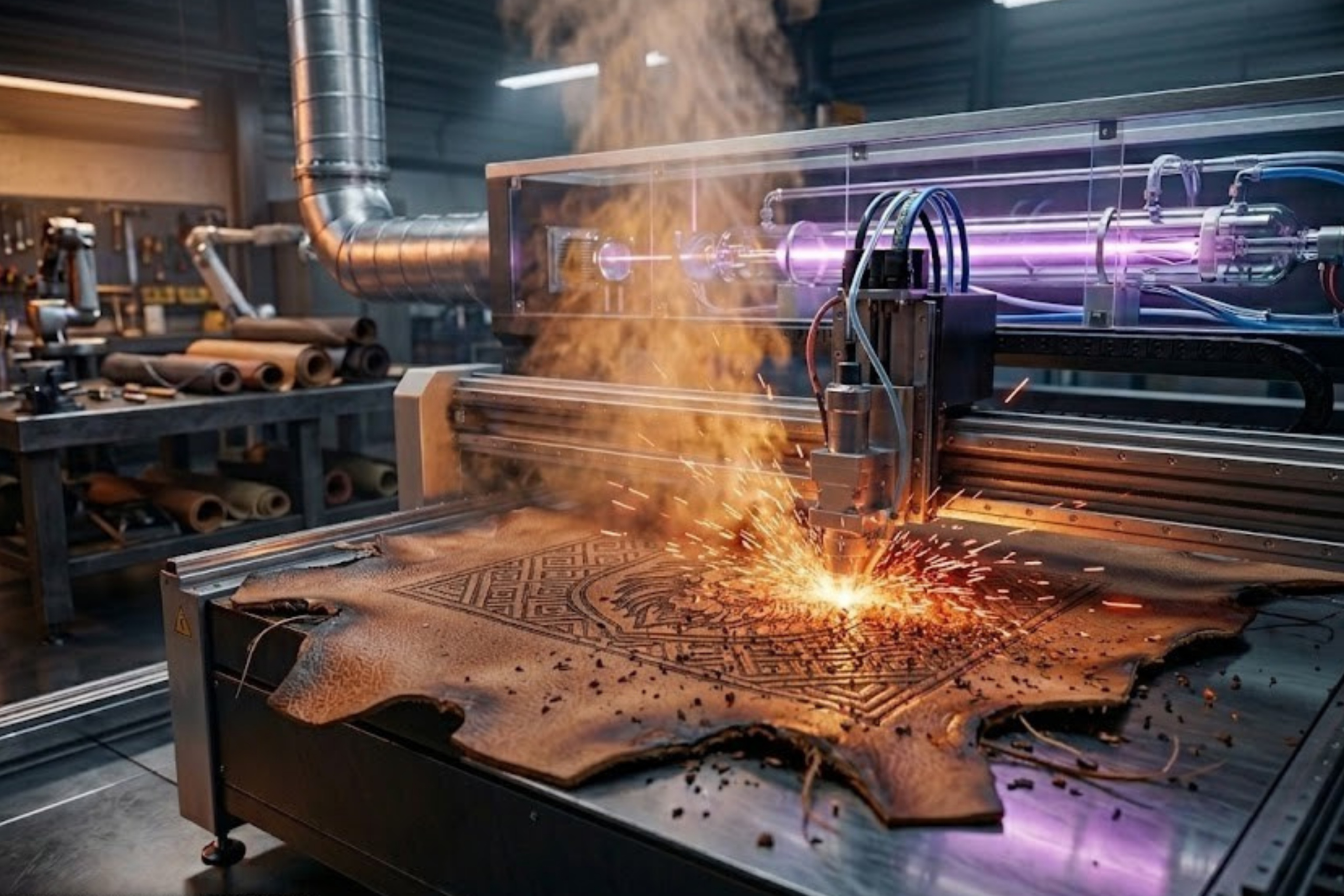
Learning how to engrave leather allows you to add names, initials, logos, or designs to leather items. Leather engraving is used for wallets, belts, journals, bags, and gifts. Different engraving methods work differently, so choosing the right one matters.
This guide explains how to engrave on leather using simple tools, machines, and DIY methods. It also covers safety, mistakes, and how to personalize leather at home.
Table Of Contents
- Can You Engrave Leather?
- How Leather Reacts To Engraving
- Top 10 Methods To Engrave Leather
- Choosing The Best Engraving Method Based On Your Goal
- Common Leather Engraving Mistakes
- Safety First: Is Engraving Leather Toxic?
- Choosing Between Embossing And Engraving
- Final Thoughts On How To Engrave Leather
- Frequently Asked Questions
Can You Engrave Leather?
Yes, you can engrave leather using heat, pressure, or controlled material removal. When learning to engrave leather, start with natural, unfinished leather to make the process easier and more consistent. Understanding how different leather types react helps prevent damage and ensures clean, even engraving results.
Best Leather Types For Your Engraving Projects
Not all leather engraves the same way.
- Vegetable-tanned leather: Best choice for leather engraving
- Chrome-tanned leather: Harder to engrave and may release fumes
- Dyed or coated leather: Can give uneven results
- Faux leather: Needs low heat to avoid melting
Choosing the right leather improves engraving quality and safety.
How Leather Reacts To Engraving?
Leather is made of natural fibers that darken when heated or compressed. Engraving changes the surface texture and color rather than cutting deeply. Too much heat can burn or crack leather.
Uneven fiber density can cause uneven engraving. This is why testing is essential before starting any leather engraving project.
Want to see the Leather Laser Machine in action? Check this video out.
Top 10 Methods To Engrave Leather
1. CO2 laser engraving
CO2 laser engraving is the most precise method for engraving leather. It uses focused heat to darken the leather surface. It is ideal for logos, text, and detailed artwork. This method is widely used for professional leather engraving.
Tools Required:
- CO2 laser engraving machine
- Computer with design software
- Proper ventilation system
- Safety goggles
2. Diode laser engraving
Diode lasers are popular for DIY leather engraving. They work well on light-colored leather. They are slower and less potent than CO2 lasers, but are suitable for small projects.
Tools Required:
- Diode laser engraver
- Computer or controller
- Test leather pieces
- Ventilation fan
3. Pyrography (wood burning)
Pyrography uses a heated tip to burn designs into leather. It offers artistic control but requires steady hands. It is common in handmade leather engraving projects.
Tools Required:
- Pyrography or wood-burning pen
- Heat-resistant surface
- Leather strop or scrap leather
- Protective gloves
4. Hand carving
Hand carving removes the leather surface using sharp tools. It creates deep, tactile designs. This method takes time and skill but offers complete creative control.
Tools Required:
- Leather carving knife or swivel knife
- Cutting mat
- Strop and sharpening tools
- Pattern guides
5. Metal stamp embossing
Metal stamps press letters or symbols into damp leather. This method is commonly used for putting initials on leather. It works best on vegetable-tanned leather.
Tools Required:
- Metal letter or symbol stamps
- Mallet or hammer
- Water sponge
- Solid work surface
6. Heat press engraving
Heat presses apply pressure and heat to imprint designs. This method is helpful for repeated patterns. It offers consistency but limited detail.
Tools Required:
- Heat press machine
- Engraving plate or die
- Temperature controller
- Protective gloves
7. Chemical etching
Chemical etching softens or darkens leather surfaces. It is rarely used due to safety concerns. Careful handling and testing are required.
Tools Required:
- Leather-safe etching chemicals
- Applicator brushes
- Protective gloves and goggles
- Neutralizing solution
8. CNC engraving
CNC machines mechanically engrave leather. They work best on thick leather. Improper settings can cause fibers to tear rather than engrave smoothly.
Tools Required:
- CNC engraving machine
- Cutting or engraving bits
- Workholding clamps
- Design software
9. Writing or marking on leather
Markers, pens, or inks are used for writing on leather. This method is decorative rather than permanent engraving. It is best for temporary designs.
Tools Required:
- Leather markers or pens
- Ruler or stencil
- Scrap leather for testing
- Fixative or sealant (optional)
10. Foil stamping and monogramming
Foil stamping adds metallic designs to leather. It is commonly used for monogramming leather at home. It is decorative and visually appealing.
Tools Required:
- Foil stamping machine or heat press
- Foil sheets
- Metal stamp or die
- Alignment guides
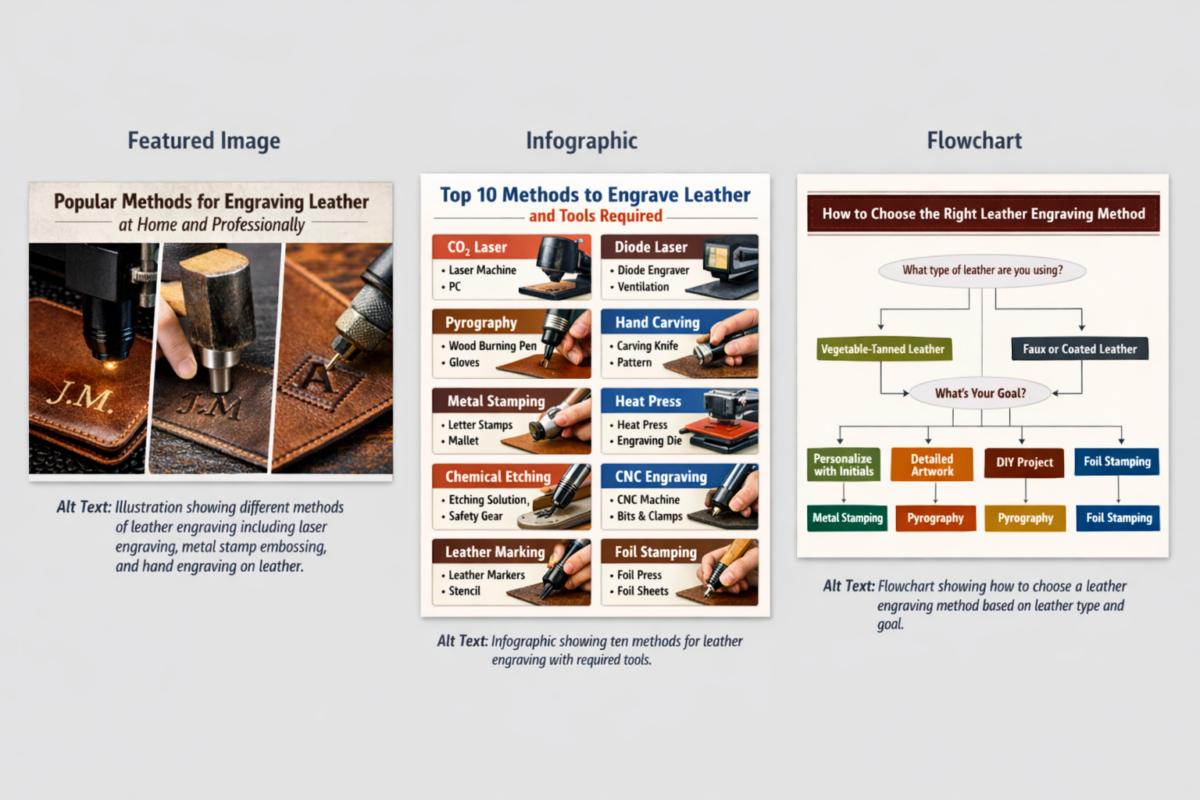
Choosing The Best Engraving Method Based On Your Goal
Different engraving goals require different techniques, and matching the right method to your purpose improves both quality and durability. Reviewing real leather sample projects can also help you understand different leather types and engraving methods.
- Fine detail: CO2 laser engraving
- DIY projects: Diode laser or pyrography
- Initials: Metal stamping
- Decorative finishes: Foil stamping
- Faux leather: Low-power laser engraving
Common Leather Engraving Mistakes
Many beginners face avoidable problems.
- Using the wrong leather type
- Applying too much heat
- Skipping test engravings
- Ignoring proper ventilation
- Rushing the process
Avoiding these mistakes significantly improves leather engraving.
Safety First: Is Engraving Leather Toxic?
Some leathers release fumes when engraved, especially chrome-tanned and faux leather materials, which can produce harmful vapors. When learning how to engrave leather, proper ventilation is essential to maintain a safe workspace.
Wearing protective equipment, such as gloves and safety eyewear, further reduces exposure risks. Testing on scrap leather before engraving final pieces helps you understand how the material reacts and supports safer DIY leather engraving practices.
Choosing Between Embossing And Engraving
Embossing presses leather fibers down without burning. Engraving uses heat or material removal. Embossing creates clean impressions without darkening. Engraving adds contrast and texture to leather goods. The choice depends on design style and durability needs.
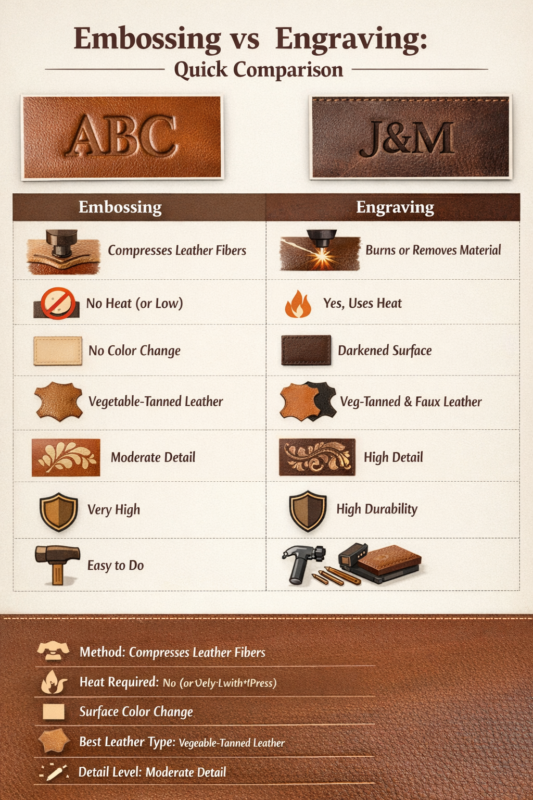
Technique of embossing
- Uses pressure instead of heat to form the design
- Compresses leather fibers to create a raised or recessed impression
- Does not burn or darken the leather surface
- Typically done with metal dies, stamps, or rollers
- Works best on vegetable-tanned leather that holds shape well
Technique of Engraving
- Uses heat (laser) or mechanical tools to remove or burn material
- Creates depth by vaporizing or cutting into the leather surface
- Produces a darker contrast due to the heat reaction
- Ideal for detailed artwork, logos, and fine lines
- Works on various leather types, depending on the method
Final Thoughts On How To Engrave Leather
Leather engraving offers flexible ways to personalize and decorate leather items using different tools and techniques. Each method is best suited to specific leather types, design styles, and skill levels. By understanding how leather reacts to heat and pressure, and by testing settings in advance, you can achieve clean, consistent results while avoiding damage.
Frequently Asked Questions
Can you engrave leather at home?
Yes, you can engrave leather at home with a laser engraver, a stamp, or a pyrography tool. Proper testing and ventilation are essential.
What is the best way to engrave leather?
CO2 laser engraving offers the best precision and consistency. For DIY leather engraving, stamping, and burning, tools are also effective.
Can faux leather be engraved?
Yes, faux leather can be engraved, but it melts easily. Use low power and high speed to prevent surface damage.
Does engraving damage leather?
Proper engraving does not weaken leather. Excessive heat or pressure can cause cracks or discoloration.
Can you emboss leather at home yourself?
Yes, you can emboss leather at home using handheld tools like embossing stamps, a mallet, or a clamp, and apply careful pressure and heat to press your design into the leather.
What is the difference between embossed leather and natural textured leather?
Embossed leather has a pattern pressed into it by heat and pressure, while natural textured leather has its texture from the animal hide itself.
How to etch leather at home?
To etch leather at home, you can use a low-power laser engraver, a pyrography tool, or metal stamping tools. Always test on scrap leather first and work with proper ventilation.
How do you put initials on leather?
If you’re wondering how to put initials on leather, the most common methods include metal letter stamping, laser engraving, embossing, or heat pressing. Vegetable-tanned leather works best because it holds impressions cleanly.
How to engrave faux leather without damaging it?
To learn how to engrave faux leather, use low laser power, high speed, and shallow passes to prevent melting. Always test settings on a scrap piece first, as faux leather reacts quickly to heat.
How do you monogram leather at home?
Learning how to monogram leather at home is simple with the right tools and preparation. You can use metal letter stamps, a low-power laser engraver, or a heat press on vegetable-tanned leather.