

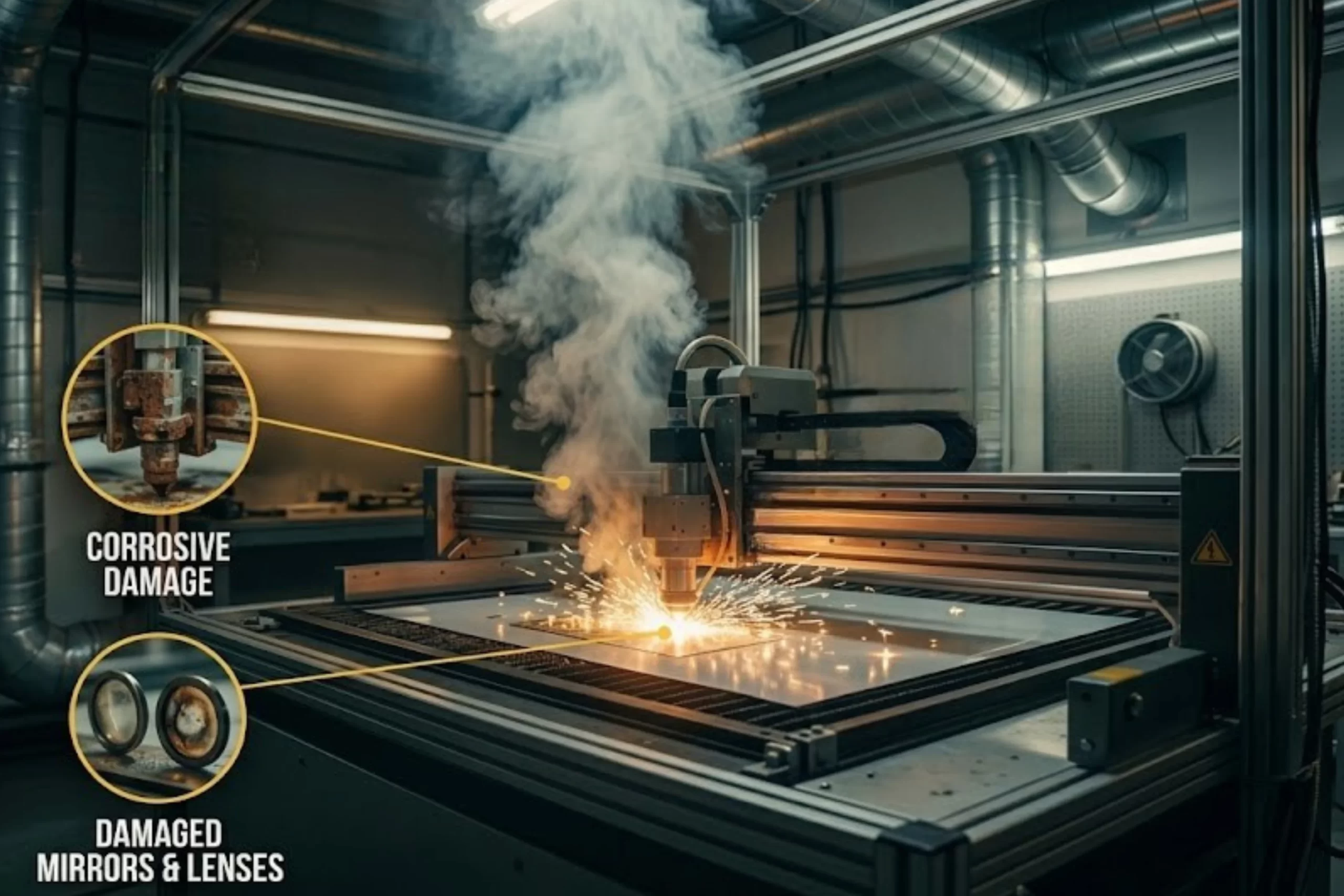
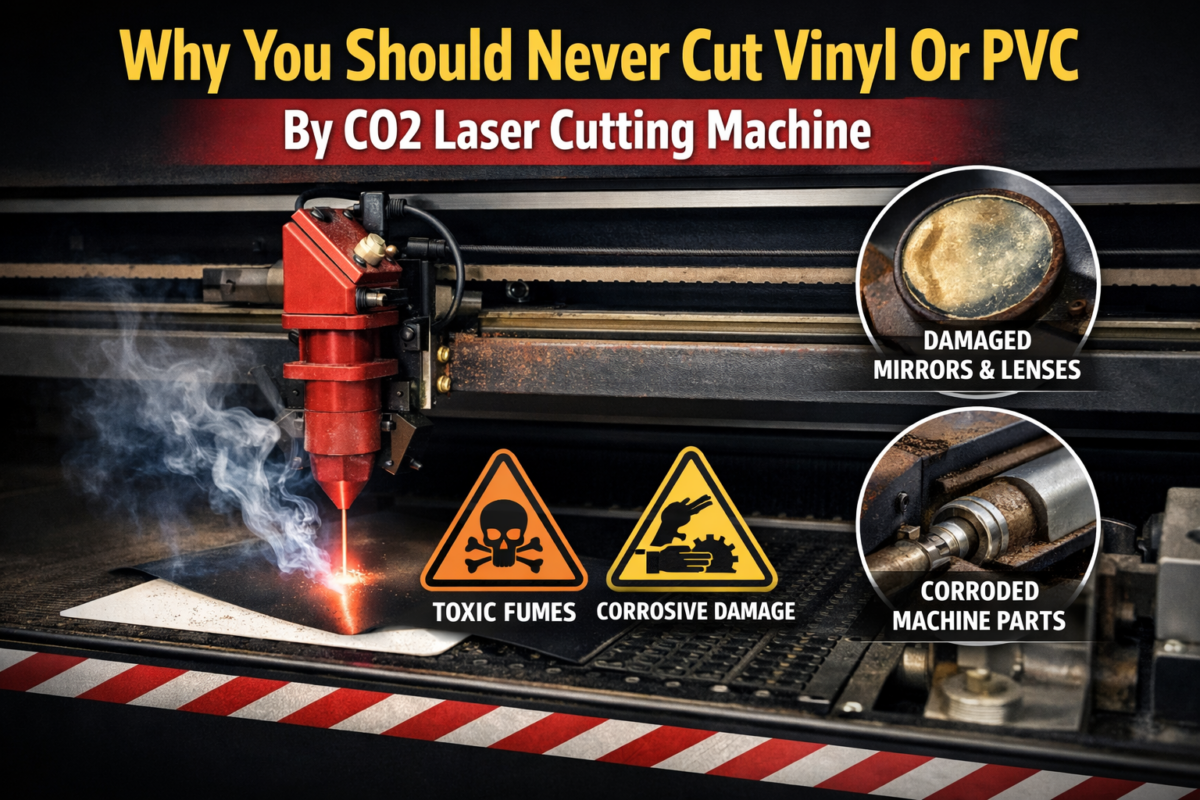
Many beginners try laser cutting vinyl because the material appears thin and easy to process. At first glance, it seems similar to acrylic or other plastic sheets. However, vinyl and PVC behave very differently under strong laser heat. When exposed to a CO2 beam, the material can release chemical byproducts. These byproducts may affect your machine’s internal components over time. This guide explains why attempting to laser cut vinyl or PVC is not recommended.
Table Of Contents
- Can You Laser Cut Vinyl Safely?
- What Is Vinyl and Is It the Same as PVC?
- What Happens When You Try Cutting Vinyl With Laser?
- Why Ventilation Does Not Fully Protect Your Machine
- How PVC Laser Cutting Damages a CO2 Laser Machine
- Why Even Industrial CO2 Lasers Avoid PVC
- Can Diode or Fiber Lasers Cut Vinyl Safely?
- What To Do If You Accidentally Cut Vinyl With A Laser
- Safe Alternatives To Vinyl For Laser Cutting
- Final Takeaway
- Frequently Asked Questions
Can You Laser Cut Vinyl Safely?
A common question is whether you can safely laser cut vinyl with strong ventilation. The answer depends on understanding what vinyl is made of. Most vinyl materials contain PVC, which includes chlorine in its structure. When cutting vinyl with laser equipment, heat triggers chemical changes.
These reactions may release gases inside the machine enclosure. Even small projects can introduce unwanted exposure inside your laser system.
Why do users ask this question?
- Vinyl is affordable and widely available
- It looks similar to other laser-safe plastics
- Online videos may show limited testing
- Product labels sometimes lack clear material details
What Is Vinyl, and Is It The Same As PVC?
Vinyl is a general term often used for flexible plastic materials. In most cases, vinyl refers to polyvinyl chloride (PVC).
People sometimes assume vinyl and PVC are different materials. However, PVC is the base material in most craft vinyl sheets. Understanding this helps answer questions like, “Can you laser cut PVC safely.
What is polyvinyl chloride (PVC)?
- Polyvinyl chloride is a plastic made from chlorine and carbon compounds.
- It is popular because it is durable and cost-effective.
- PVC is used in pipes, flooring, banners, and adhesive sheets.
- When heated to high temperatures, PVC can decompose chemically.
- This chemical reaction is central to concerns about PVC laser cutting.
- Understanding the material helps prevent accidental misuse.
Why does most craft vinyl contain PVC?
- Craft vinyl is flexible because manufacturers add softening agents.
- However, the base material usually remains PVC.
- This chlorine content matters when cutting vinyl with laser systems.
- Heat activates reactions inside the material structure.
- Even thin sheets may still contain chlorine compounds.
- Always review product descriptions before planning PVC laser cutting.
How to identify PVC materials
- Identifying PVC before cutting protects your equipment.
- Some products clearly list PVC in the description.
- Others provide safety data sheets with chemical details.
- If unsure, contact the supplier for confirmation.
- Avoid testing unknown materials inside your laser machine.
Quick identification checklist
- Check the packaging for the PVC label
- Review MSDS or safety sheet
- Confirm with the supplier
- Avoid unlabeled plastics
What Happens When You Try Cutting Vinyl With A Laser?
When users begin cutting vinyl with laser machines, intense heat builds instantly. The laser beam raises the surface temperature within seconds. PVC reacts differently from acrylic under this heat.
During PVC laser cutting, chemical breakdown may begin. Gases may form inside the enclosed workspace. These gases can contact machine components before ventilation removes them.
Release of Hydrogen Chloride (HCl) gas
- When PVC is heated, hydrogen chloride gas may form.
- This gas reacts with the moisture present in the air.
- Inside a laser cutter, moisture can create acidic conditions.
- Acidic environments may gradually affect metal components.
- This is why users hesitate to laser cut vinyl.
- Understanding this reaction clarifies the concern.
Why is chlorine-based gas corrosive?
- Hydrogen chloride can react with water vapor to form acidic compounds.
- Acidic compounds may affect metals and coatings over time.
- Laser cutters contain mirrors, rails, brackets, and fasteners.
- These parts may corrode when exposed to corrosives.
- That is why cutting vinyl with laser systems is discouraged.
- Material chemistry matters more than airflow alone.
Why Ventilation Does Not Fully Protect Your Machine
Ventilation systems gradually remove fumes from the chamber. However, gases may contact optics before full extraction. Internal parts sit close to the cutting surface. Even short exposure can introduce residue.
That is why many ask whether they can safely cut vinyl with a laser cutter. Ventilation reduces risk but does not remove chemical reactions.
| Safety Factor | What It Does | Limitation |
| Ventilation | Removes fumes | Not instant |
| Air Assist | Blows debris away | Does not neutralize gas |
| Filters | Capture particles | Gas may pass first |
How PVC Laser Cutting Damages A CO2 Laser Machine
PVC laser cutting can affect delicate internal components. CO2 laser systems rely on precise optical alignment. They also include metal rails and ventilation ducts.
Corrosive byproducts may slowly interact with these parts. Damage often develops gradually instead of immediately. Understanding this helps users avoid unexpected maintenance costs.
Damage to mirrors and lenses
- Mirrors and lenses focus and guide the laser beam.
- These optical parts require clean surfaces for accuracy.
- Chemical exposure may reduce clarity over time.
- Reduced clarity can affect beam precision.
- Routine cleaning helps, but cannot reverse corrosion.
- Avoiding attempts to laser cut vinyl protects the optics.
Corrosion of rails and bearings
- Rails and bearings allow smooth head movement.
- Metal components may react with acidic residue.
- Corrosion can affect motion accuracy gradually.
- Surface changes may increase mechanical friction.
- Maintenance may become more frequent after exposure.
- Preventing cutting vinyl with laser systems reduces this risk.
Impact on exhaust and ventilation systems
- Exhaust ducts carry fumes outside the cutting chamber.
- Corrosive gases may travel through these ducts.
- Over time, internal surfaces may show wear.
- Filters may require earlier replacement.
- System performance may decline gradually.
- Avoiding PVC laser cutting helps protect airflow systems.
Long-term damage timeline
- Damage from chemical exposure often builds slowly.
- You may not see changes immediately after cutting.
- Optics may lose efficiency over weeks or months.
- Metal parts may show discoloration later.
- Routine inspection helps detect early signs.
- Choosing safer materials reduces long-term uncertainty.

Why Do Even Industrial CO2 Lasers Avoid PVC?
- Industrial facilities follow strict safety guidelines for materials.
- Many manufacturers clearly warn against PVC laser cutting.
- Large machines also contain sensitive optical components.
- Warranty agreements may restrict chlorine-based materials.
- Shared makerspaces often prohibit attempts to laser cut vinyl.
- These policies support long-term equipment protection.
Can A Diode Or Fiber Laser Cut Vinyl Safely?
Some users think changing the laser type solves the issue. Diode and fiber lasers operate at different wavelengths. However, PVC chemistry does not change at high temperatures.
Heating chlorine-based plastics may still trigger reactions. The question, ” Can you laser cut PVC? ” applies across systems. Material composition matters more than beam type.
| Laser Type | Wavelength | PVC Reaction Risk |
| CO2 | Infrared | Present |
| Diode | Visible/Near IR | Present |
| Fiber | Near IR | Present |
What To Do If You Accidentally Laser Cut Vinyl
Accidents can happen with mislabeled materials. Stop the machine immediately if you suspect PVC exposure. Allow ventilation to fully clear the chamber.
Inspect internal components carefully afterward. Record the event for maintenance tracking. Early action may limit long-term impact.
Immediate steps
- Stop operation
- Increase ventilation
- Inspect optics
- Check rails
- Review the material source
Safe Alternatives To Vinyl For Laser Cutting
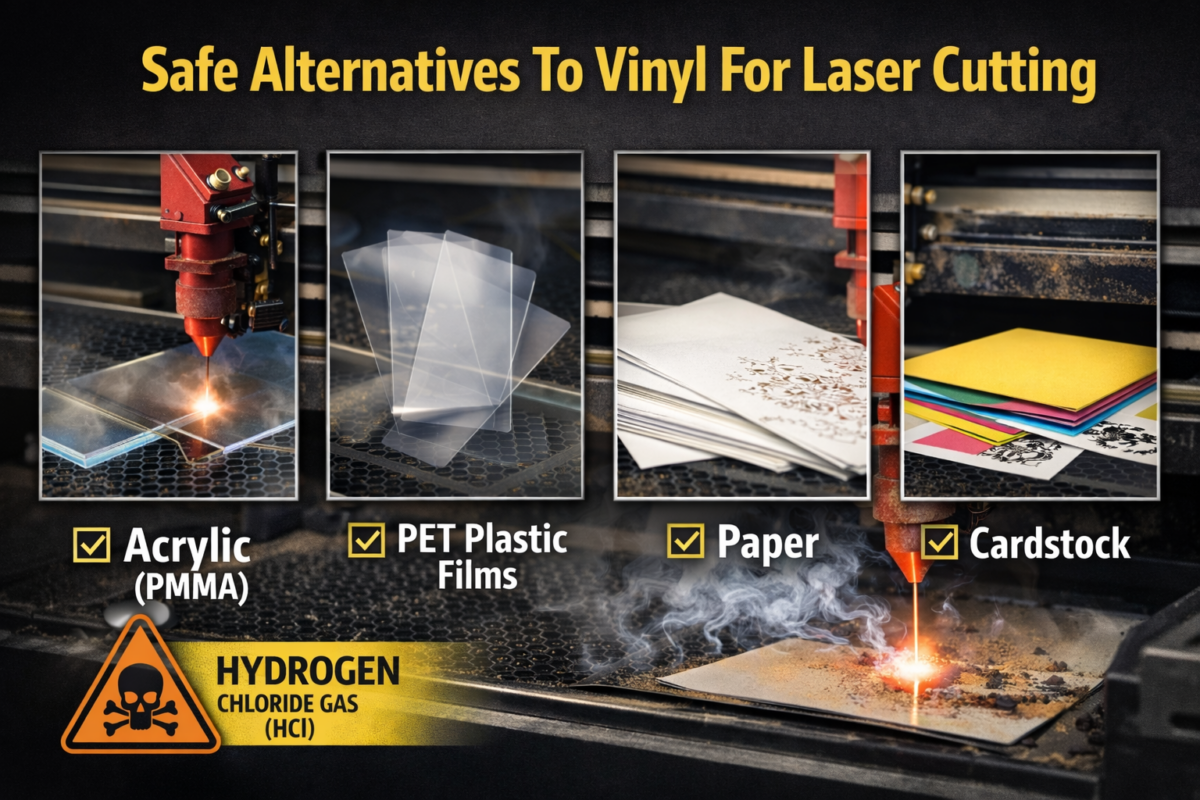
Choosing safer materials protects your equipment. Several plastics and paper products work better with CO2 lasers.
Always confirm the composition before cutting. Avoid chlorine-based plastics whenever possible. Here is a helpful comparison table.
| Material | Chlorine Content | Suitable for Laser |
| Acrylic | No | Yes |
| PET | No | Yes |
| PVC | Yes | Not recommended |
| Paper | No | Yes |
Final Takeaway
Many beginners search for how to laser-cut vinyl without understanding the material risks. PVC contains chlorine, which reacts at high temperatures. These reactions may gradually affect machine components. Ventilation helps remove fumes but does not change chemistry. Choosing safer materials supports long-term equipment reliability. Careful material selection prevents unnecessary maintenance issues.
Frequently Asked Questions
Can you laser-cut vinyl once without problems?
Even a single attempt to laser-cut vinyl may introduce chemical byproducts into the machine. Damage may not appear immediately, but exposure can still occur.
Can ventilation make PVC laser cutting safe?
Ventilation removes fumes gradually but does not change PVC chemistry. Material reaction still occurs during laser-cutting of vinyl.
Can you cut vinyl with a laser cutter if it is labeled craft vinyl?
Many craft vinyl sheets still contain PVC. Always confirm the composition before attempting to cut vinyl with laser equipment.
Can engraving make it safer than cutting vinyl with a laser?
Engraving still applies heat to the surface. If the material contains PVC, reactions may still occur.