

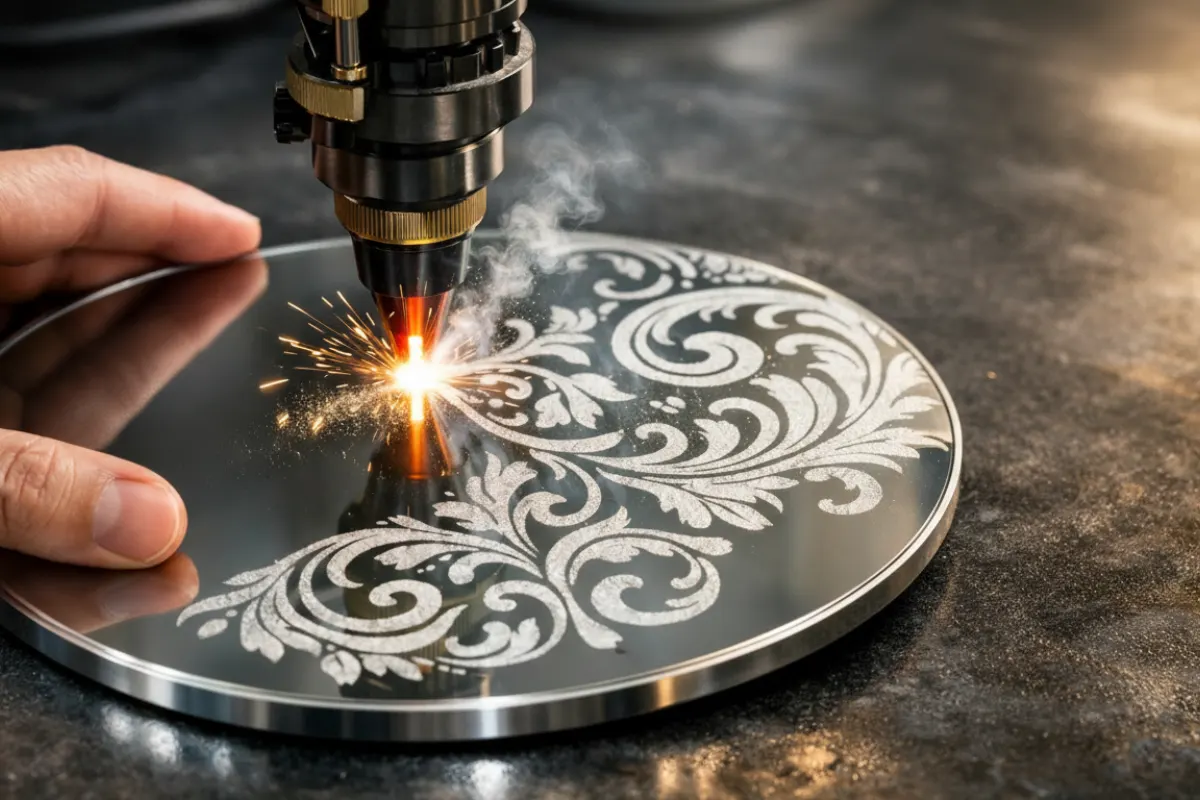
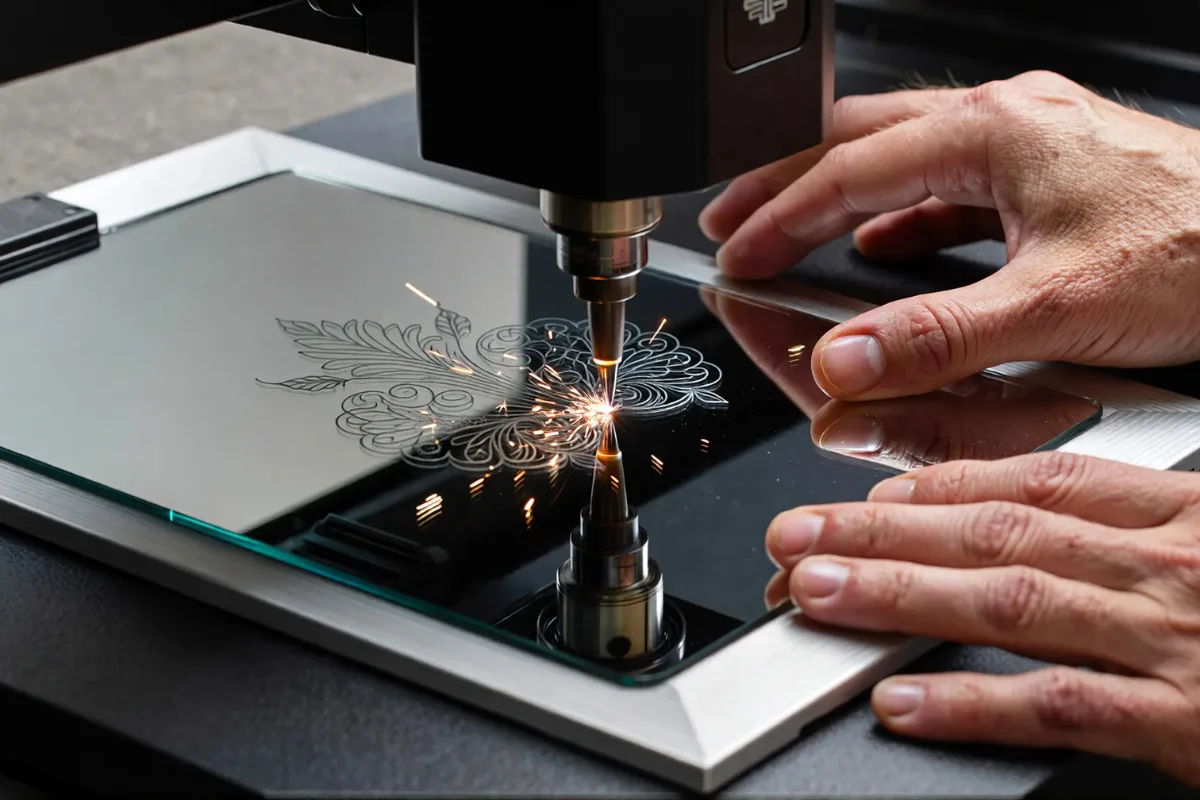
Mirror engraving is the process of etching designs, text, or patterns onto a mirror’s surface to create a sharp contrast and a frosted effect without damaging the glass itself. Used across decorative décor, custom gifts, branding, and signage, it offers a clean and professional finish when done right.
This guide breaks down the main techniques used in mirror engraving, explains how the process works, highlights the machines that deliver consistent results, and outlines best practices. Read until the end.
Table Of Contents
Mirror Engraving Techniques Explained
Mirror engraving can be done in several ways, and each technique affects the final look, depth, and clarity of the design. Knowing how they work helps in choosing the right approach for engraving mirrors.
Backside Laser Engraving
This method is most commonly used and involves placing the mirror face down and engraving from the back. The laser removes the paint and reflective coating rather than the glass itself. This creates clean, transparent designs that stand out especially well when backlit. Plus, this method delivers sharp results with minimal risk of cracking.
Front Surface Laser Engraving
Here, the laser works directly on the glass surface. The result is a frosted, matte look that’s visible from the front. Additionally, during mirror laser engraving, this method requires careful power control and precision to avoid chips or fractures.
Sandblasting
Sandblasting uses a stencil and abrasive pressure to etch the design into the mirror. It’s effective for bold, textured patterns but offers less fine detail compared to laser methods.
Diamond Drag Engraving
This technique uses a diamond-tipped tool to scratch fine lines onto the surface. It’s best suited for delicate designs and light detailing rather than deep or high-contrast engravings.
Mirror Engraving Process: Step-by-Step Guide
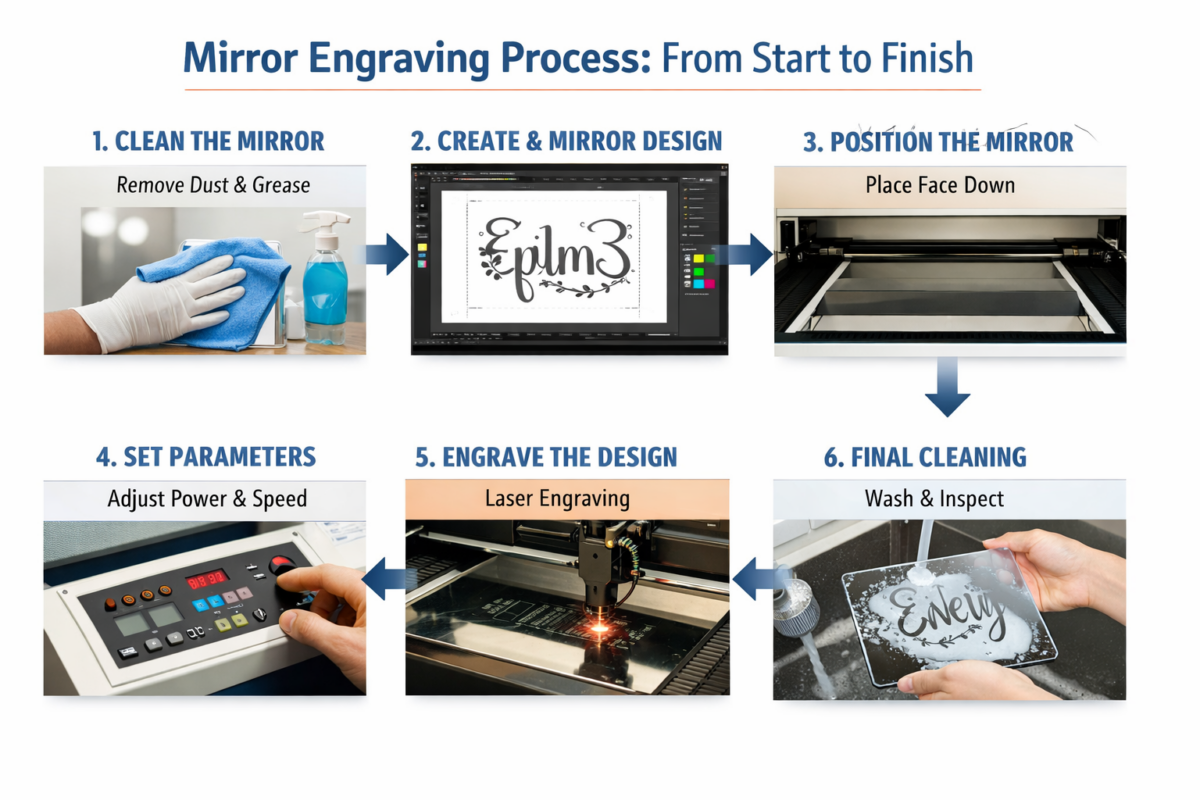
How to engrave mirror follows a clear sequence, with each step playing a role in how clean and sharp the final result looks. Below is a simple process to follow:
Preparation
The process starts with thoroughly cleaning the mirror, as any dust, fingerprints, or grease on the surface can affect engraving accuracy.
Design Creation
Next, the design is created or imported into engraving software such as Adobe Illustrator or LightBurn. This is where text, graphics, or patterns are finalized and sized correctly for the mirror.
Mirroring The Design
Since most mirror engraving is done from the back, the design must be flipped horizontally. This ensures the artwork appears correctly after engraving when viewed from the front.
Positioning The Mirror
The mirror is placed face down on the laser bed. Properly aligning the mirror is essential to keep the design centered and prevent movement during engraving.
Lock In The Machine Settings
Power and speed settings are set based on the machine being used. These settings ensure precise, even backing removal without damaging the glass.
Engraving
Once started, the machine removes the reflective coating in the selected areas, revealing the laser engraved mirror design. Remember, this step is fully automated. However, it should be monitored for consistency.
Final Cleaning
After engraving, the remaining debris on the back of the mirror is washed off with mild soap and water, leaving a clean, finished design ready for display.
Best Machines for Mirror Engraving
Wondering which laser machine is best for mirror engraving? Here, take a look at your options:
- Glass Laser Engraving Machine: Designed specifically for working with glass surfaces, these machines create a frosted effect by engraving the glass itself. They are commonly used for front-surface mirror engraving.
- UV Laser Marking Machine: Uses a shorter wavelength, allowing fine, controlled marking with minimal heat. This makes the UV laser machine suitable for detailed work on coatings and delicate mirror surfaces where precision matters.
- CO2 Laser Machines: A fine technology for mirror engraving, CO2 Lasers remove the paint and reflective backing cleanly while leaving the glass intact.
- Fiber Lasers: Used mainly in industrial settings to remove thin coatings with high precision, not ideal for decorative mirror engraving.
| Key Features To Look For In A Mirror Engraving Machine 🔋 Stable Power – Ensures clean, even engraving🖨️ Software Support – Smooth design-to-machine workflow🆒 Cooling & Ventilation – Protects the machine and clears fumes |
Best Practices for Professional Mirror Engraving
Follow these best practices to achieve a clean, precise, and finely engraved mirror:
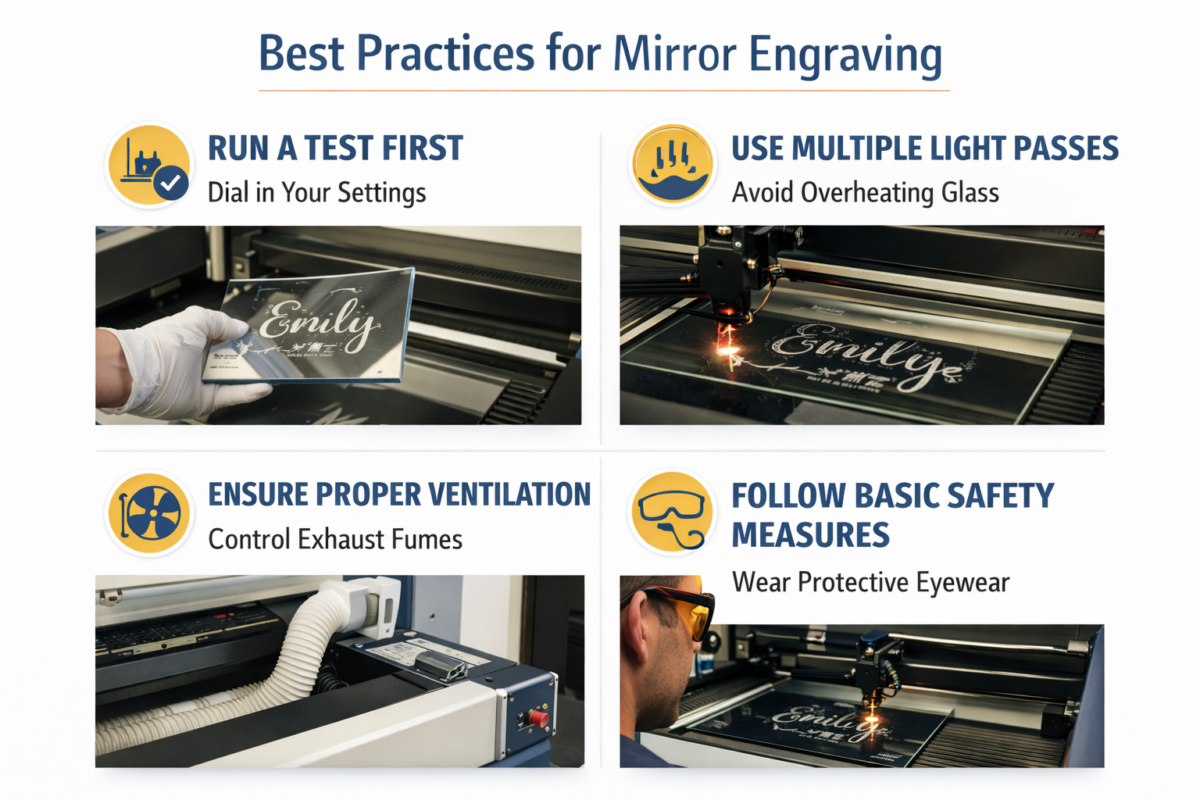
- Run A Test First: Always test your settings on a small mirror piece. This helps set the right power and speed before working on the final piece.
- Use Multiple Light Passes: Several lower-power passes are safer than one heavy pass. This reduces heat buildup and lowers the risk of cracks or stress marks.
- Ensure Proper Ventilation: Engraving burns the mirror’s backing, releasing fumes. A sound exhaust system keeps the workspace clear and ensures consistent results.
- Follow Basic Safety Measures: Wear proper laser safety eyewear and keep the work area clear while the machine is running to avoid unnecessary risks.
Getting Confident With Mirror Engraving
Mirror engraving feels far less intimidating once the basics fall into place. When you understand why a particular technique makes sense, and the process is clear, and the machine is well-matched to your requirements, it is easier to do the job. With all this in place, you can achieve results that improve naturally. And that confidence grows with each project, making the entire mirror engraving experience smoother and more satisfying.
Also read: 3 Special Features of Prakash Glass Laser Engraving Machine.
Frequently Asked Questions
1. What is mirror engraving, and how is it different from glass engraving?
Mirror engraving removes the reflective backing or lightly etches the surface, while glass engraving works directly on clear glass. The backing layer changes both the technique and the final look.
2. Is mirror engraving the right choice for my project?
If your project requirements include decorative pieces, signage, and custom designs that feature a reflective surface to add visual impact, it’s the right choice.
3. Does the thickness of the mirror affect engraving results?
Yes, thicker mirrors tend to handle heat and mechanical stress better, while thinner mirrors require more controlled settings to avoid damage.
4. Do all mirror coatings engrave the same way?
No, mirror backings vary by manufacturer and material, which can affect how easily the coating is removed during engraving.
5. Which laser machine is best for mirror engraving?
CO2 laser machines are commonly preferred for mirror engraving because they remove reflective backing cleanly while preserving the glass surface.