

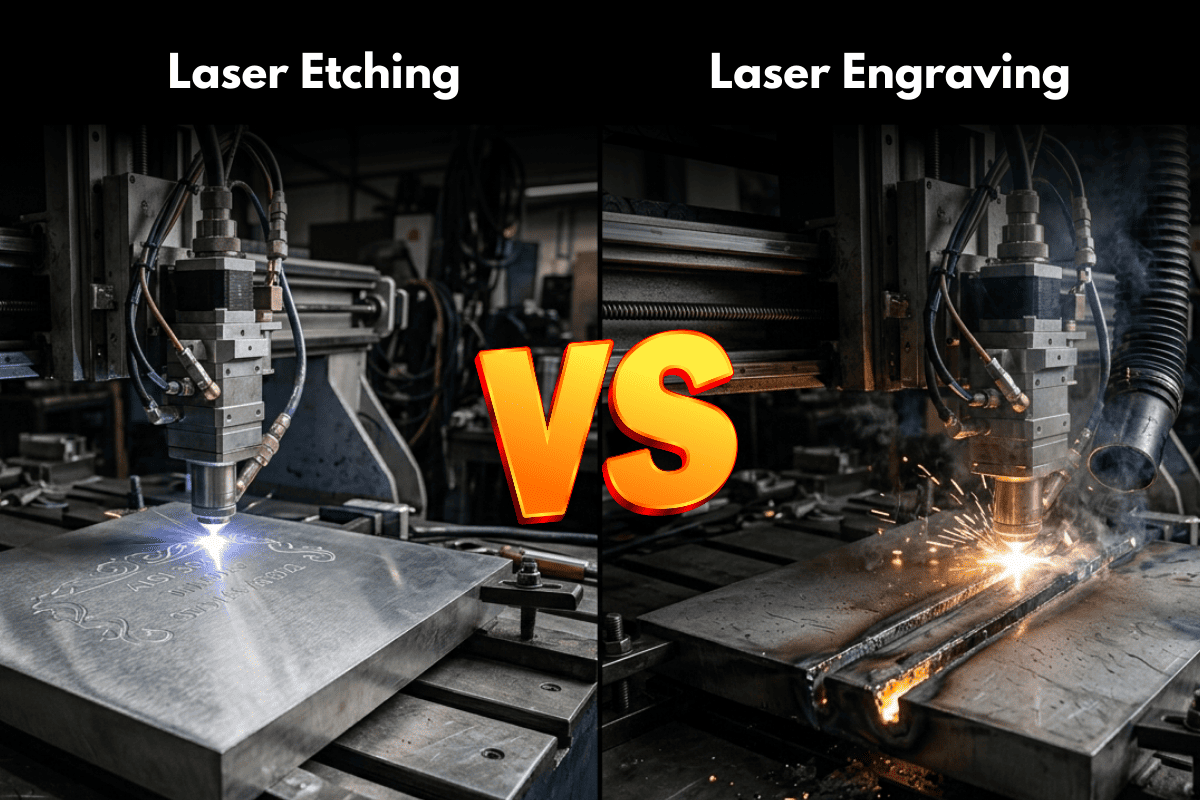
When comparing Laser Etching vs Laser Engraving, the key differences are depth, material alteration, and durability. Laser Etching slightly melts the surface for a raised texture, while Laser Engraving removes material to create a deeper, recessed mark, with each process suited to specific applications and materials. Both fall under laser marking, but each method suits different materials, performance needs, and applications.
Understanding these distinctions is essential for manufacturers, designers, and businesses seeking permanent identification, branding, or decorative finishes.
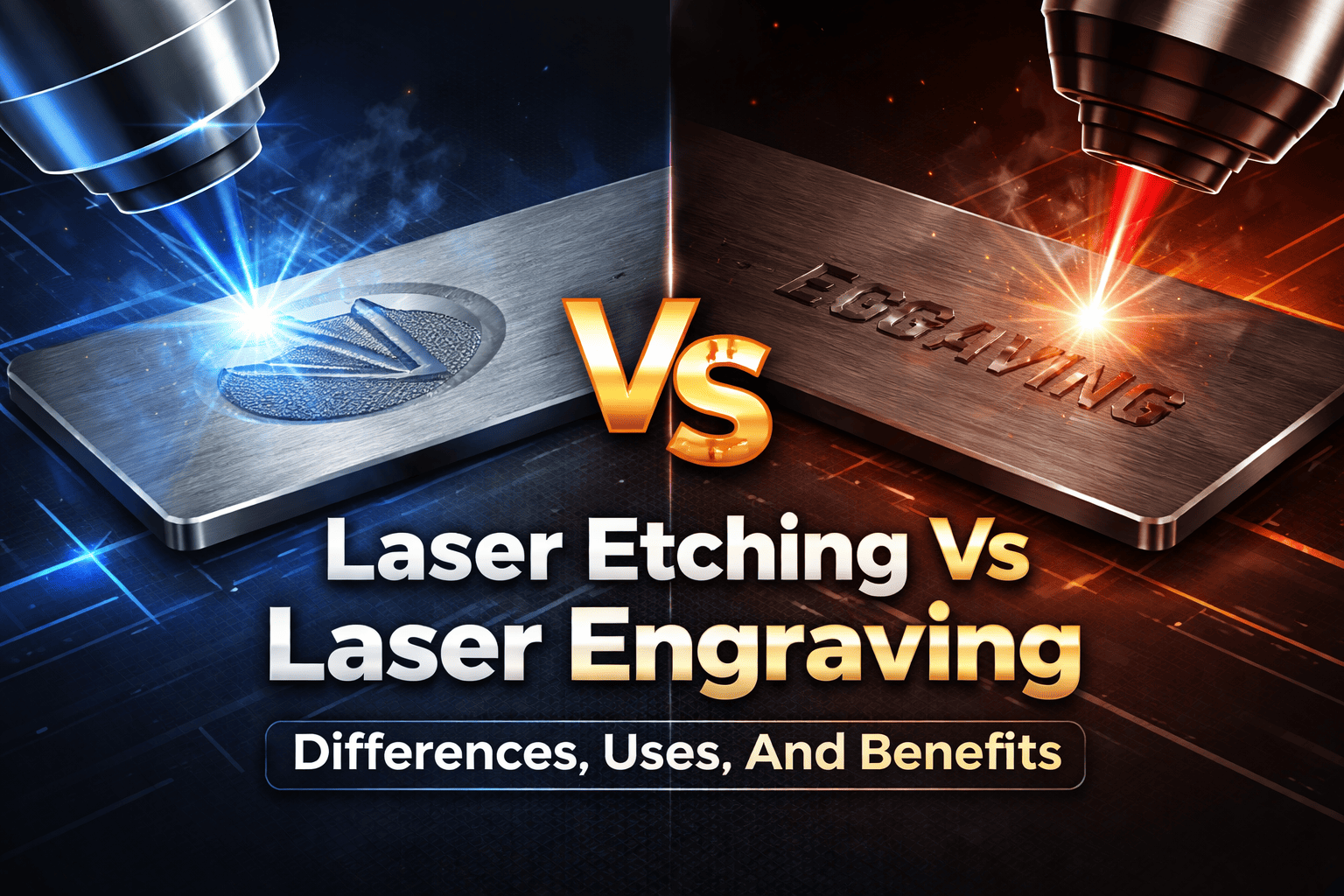
Table Of Contents
- The Science Behind Etching vs Engraving
- Typical Depth And Process Characteristics
- Energy Output & Beam Differences
- Etching vs Engraving: Application-Based Decision Guide
- Long-Term Performance Comparison
- Is Laser Engraving Different From Laser Etching And Laser Marking?
- Can One Machine Perform Etching And Engraving?
- Important Limitations
- Common Mistakes When Choosing Between Etching And Engraving
- Final Thoughts
- Frequently Asked Questions
- Read To Know More
The Science Behind Etching vs Engraving
At the material level, etching and engraving differ in how the laser interacts with the substrate:
What is Laser Etching?
It uses high heat to slightly melt the surface, causing micro-expansion. This creates a subtle texture or visible contrast without removing material.
What is Laser Engraving?
It uses concentrated energy to vaporize material, forming a recessed cavity. The mark is deeper and more durable, making it suitable for parts exposed to wear or subject to regulatory inspection.
Key Difference: Etching is faster and ideal for thin metals or high-volume production, while engraving is slower but offers long-term durability and abrasion resistance.
Typical Depth And Process Characteristics
Here is a quick comparison table for Laser Etching vs Laser Engraving.
| Process | Typical Depth | Key Characteristics | Common Materials |
|---|---|---|---|
| Laser Etching | 0.0001″ – 0.001″ | Fast, less aggressive, surface-level alteration | Stainless steel, aluminum, coated metals, plastics |
| Laser Engraving | 0.001″ – 0.020″+ | Deeper, tactile marks withstand wear and environmental exposure | Industrial components, aerospace parts, automotive plates, high-wear equipment |
Energy Output & Beam Differences
The difference between Laser Etching and Laser Engraving often comes down to:
- Wattage
- Pulse duration
- Beam intensity
- Energy density
Higher power and longer exposure create deeper engravings. Lower energy settings typically produce etching.
Fiber lasers are especially effective for metal engraving, while CO2 lasers are often used for wood, acrylic, and organic materials.
Etching vs Engraving: Application-Based Decision Guide
Here is a table for application scenarios and recommended methods.
| Application Scenario | Recommended Method | Primary Advantage | Key Consideration |
|---|---|---|---|
| Thin sheet metal or lightweight parts | Laser Etching | Surface modification without structural impact | Prevents warping or weakening |
| Industrial or high-friction environments | Laser Engraving | Recessed mark remains visible despite wear | Suitable for mechanical stress |
| Branding and promotional products | Laser Etching (standard) Laser Engraving (premium) | Balance between speed and visual depth | Cost vs tactile finish |
| Aerospace, medical, or defense traceability | Laser Engraving | Permanent identification for inspection | Meets regulatory marking standards |
Long-Term Performance Comparison
Durability is one of the biggest factors in choosing Laser Etching vs. Laser Engraving.
Abrasion Resistance
Engraved marks are more resistant to friction because they are recessed into the material. Even if the surface wears down slightly, the mark remains visible. Etched marks may fade over extended heavy abrasion.
Outdoor Exposure
In outdoor environments exposed to:
- UV radiation
- Rain
- Temperature fluctuation
- Corrosive air
Chemical Resistance
In industrial cleaning environments using solvents or acids, engraved marks withstand surface stripping better than etched marks.
Corrosion & Oxidation
Etching sometimes relies on surface oxidation for contrast. Over time, oxidation may change depending on environmental conditions.
Is Laser Engraving Different From Laser Etching And Laser Marking?
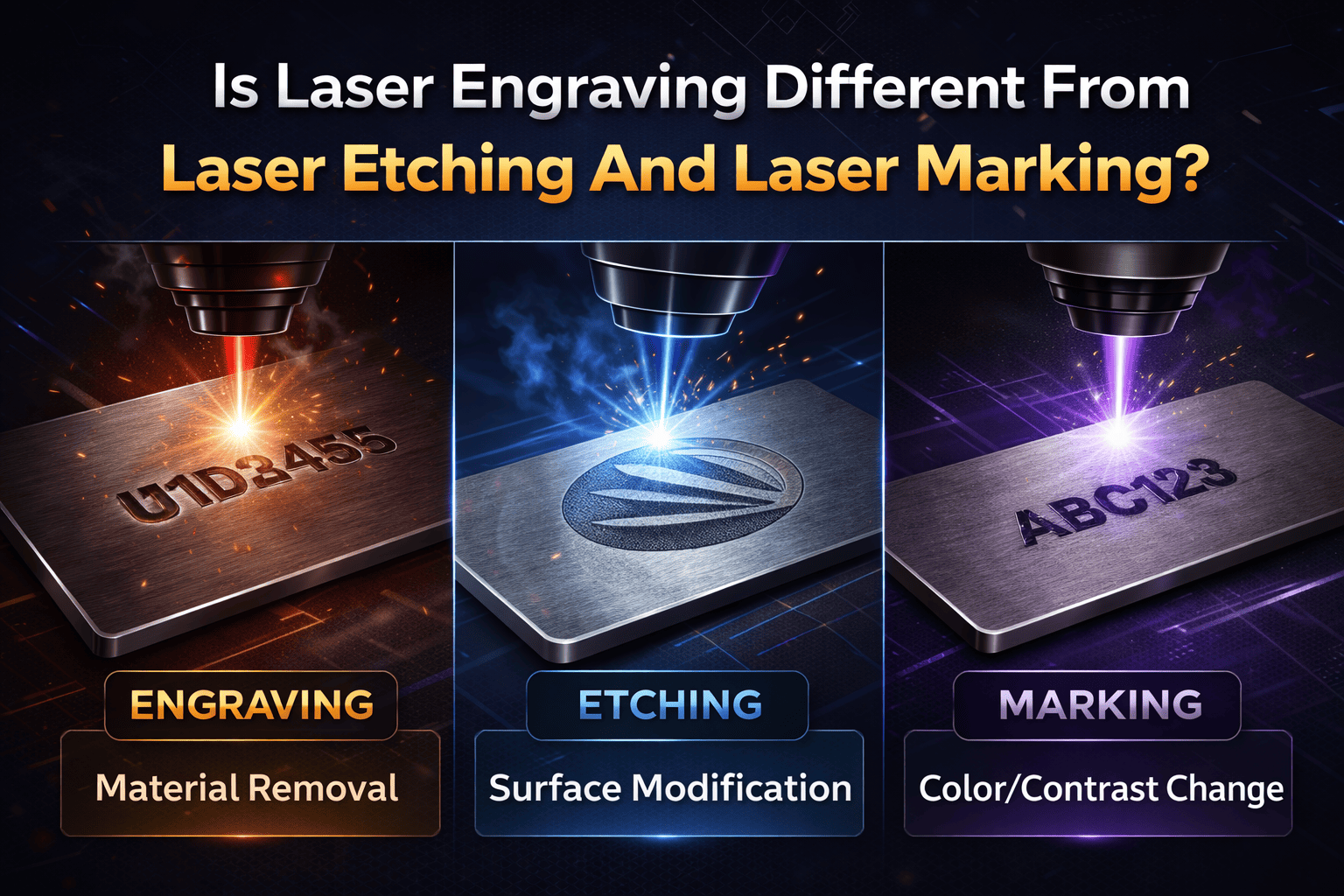
Understanding laser marking, engraving, and etching requires focusing on how each process interacts with the material at a technical level. While they all alter surfaces, the method, precision, and depth vary significantly.
Here is a table if you want to see a “laser marking vs engraving vs etching” comparison:
| Process | Process Type | Material Interaction | Precision Level | Typical Contrast/Finish |
|---|---|---|---|---|
| Laser Engraving | Material removal | Cuts into the substrate, creating a cavity | High | Deep, tactile, long-lasting marks |
| Laser Etching | Surface modification | Melts or slightly deforms the surface | Medium | Raised or textured, subtle depth |
| Laser Marking | Color/contrast change | Alters surface color or texture without removing material | Very high | Visible contrast with minimal depth change |
Can One Machine Perform Etching And Engraving?
Different laser types handle etching and engraving differently:
- Fiber Lasers: Can perform both etching and engraving on metals like stainless steel, aluminum, and titanium by adjusting power, speed, and pulse frequency—ideal for precision and durability.
- CO2 Lasers: Effective for engraving and etching wood, acrylic, and glass. Limited for metal unless coated; depth control is more challenging.
- UV Lasers: Suitable for light etching on delicate materials and electronics. Not designed for deep engraving due to lower power output.
Key Point: No single laser perfectly suits all materials; the choice depends on the material type and required depth.
How It’s Done:
- Power Levels: Lower power for etching; higher power for engraving
- Speed Settings: Faster speeds for surface marks; slower speeds for deeper engraving
- Pulse Frequency: Adjusted to control depth and contrast
- Multiple Passes: Increase engraving depth gradually
Important Limitations
- Fiber lasers are best for metals
- CO2 lasers are better for wood and acrylic
- Lower-watt machines may struggle with deep metal engraving
- Not all machines perform each process equally efficiently
While one system can often handle all three, choosing the right laser type ensures better performance and production efficiency.
Common Mistakes When Choosing Between Etching And Engraving
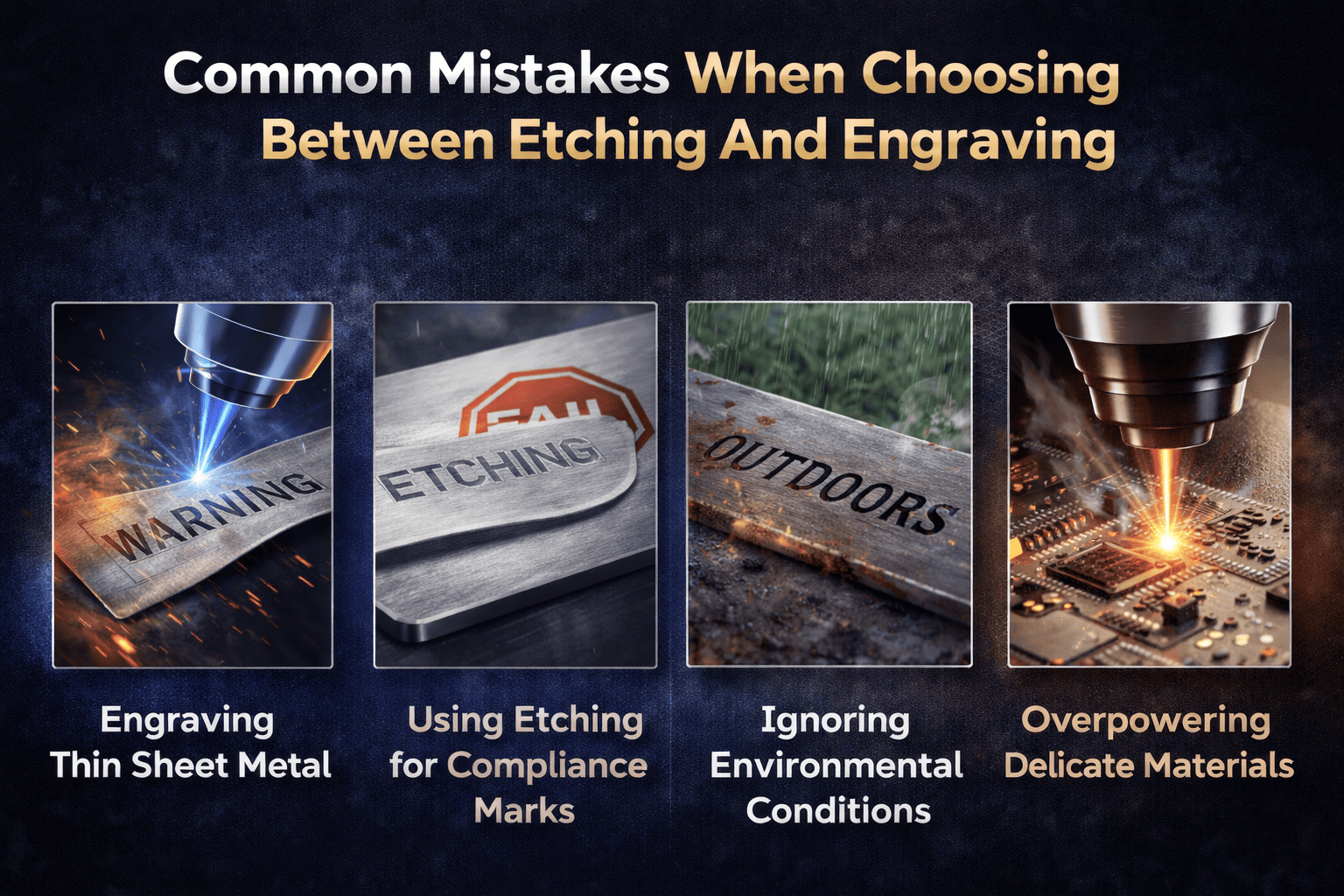
Avoiding the following mistakes prevents costly rework.
- Choosing engraving for thin sheet metal can cause warping
- Using etching where deep, permanent compliance marking is required
- Ignoring environmental exposure conditions
- Overpowering delicate materials
Final Thoughts
Selecting between Laser Etching and Laser Engraving is ultimately a strategic decision shaped by performance requirements, production goals, and operating conditions. While both methods deliver precise and permanent markings, their effectiveness depends on how the finished product will be used and maintained over time.
Evaluating material type, expected wear, regulatory expectations, and scalability ensures the chosen method aligns with practical demands. Rather than focusing on terminology, prioritize long-term functionality and consistency within your specific application.
Frequently Asked Questions
1. Does Laser Engraving affect material strength?
When done within controlled depth limits, engraving does not significantly weaken most materials. Excessive depth on thin components, however, may reduce structural integrity.
2. Is Laser Etching suitable for food-grade materials?
Yes, when properly controlled. Etching must maintain smooth surfaces to meet hygiene standards in food and medical environments.
3. Can Laser Etching be used on coated or painted surfaces?
Yes. Etching works well on coated or painted materials, but the finish may alter depending on coating thickness and type.
4. Which laser type is better for intricate or micro designs?
UV lasers are ideal for high-precision, delicate, or micro-scale designs due to minimal heat-affected zones.
5. Does engraving create heat-affected zones in metals?
Yes, deep engraving can create minor heat-affected zones, which should be considered for sensitive components or precision parts.
6. Can the same laser machine handle both metal and non-metal materials?
Some fiber lasers can handle metals and certain plastics, while CO2 lasers are better suited for wood, acrylic, and other non-metals. Choosing the right machine depends on material compatibility.
7. How does laser speed affect etching or engraving quality?
Higher speeds produce shallower marks with less material removal, while slower speeds increase depth and clarity, especially for engraving.
Read To Know More
- What Is The Difference Between CO2 Laser Engraving Machine And CO2 Laser Marking?
- What is the Difference Between Laser Marking and Laser Engraving?
- Laser Cut or Engraved Wood is Unique and Beautiful
- Stainless Steel Laser Engraving: The Ultimate Guide
- How Lasers Create Tactile Textures And Engraving On Glass Surfaces?