

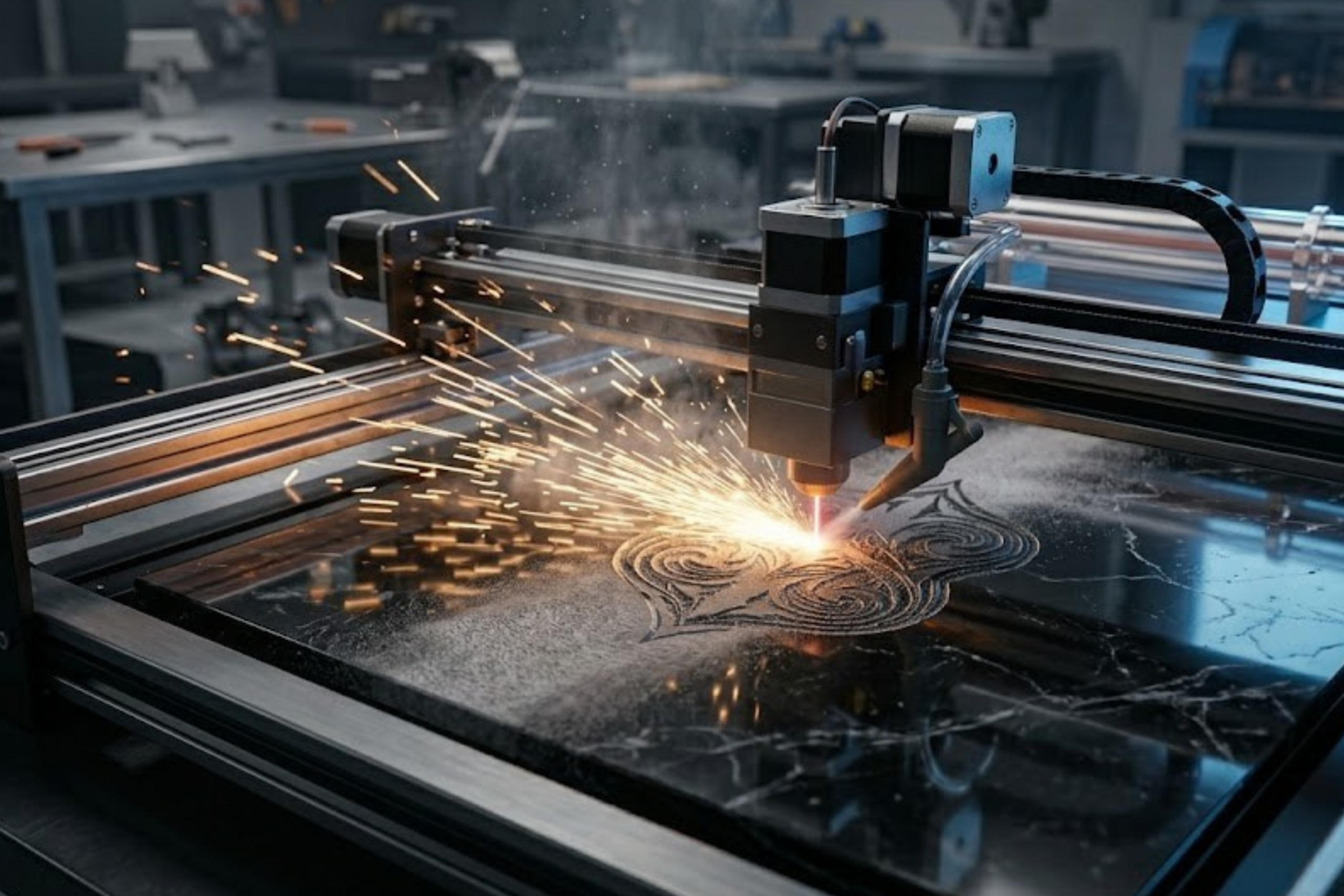
Laser engraving marble offers a precise way to create sharp, durable designs on natural stone surfaces. Since marble behaves differently from materials like wood or metal, achieving consistent results requires an understanding of how laser energy interacts with its structure. This guide covers the essential concepts, common challenges, equipment considerations, and practical techniques for engraving marble accurately and efficiently.
Table Of Contents
- Why Laser Engraving Marble?
- How Laser Engraving Marble Works
- Essential Equipment For Laser Engraving Marble
- Why Are CO2 Laser Cutting Machines The Most Preferred Tool?
- Step-By-Step Guide: How To Engrave Marble
- Common Defects And Tips To Avoid Them
- Laser Engraving Marble vs Other Engraving Methods
- Advantages Of Laser Engraving Marble
- Safety Considerations For Laser Engraving Marble
- Applications Of Laser-Engraved Marble
- Final Thoughts On Laser Engraving Marble
- Frequently Asked Questions
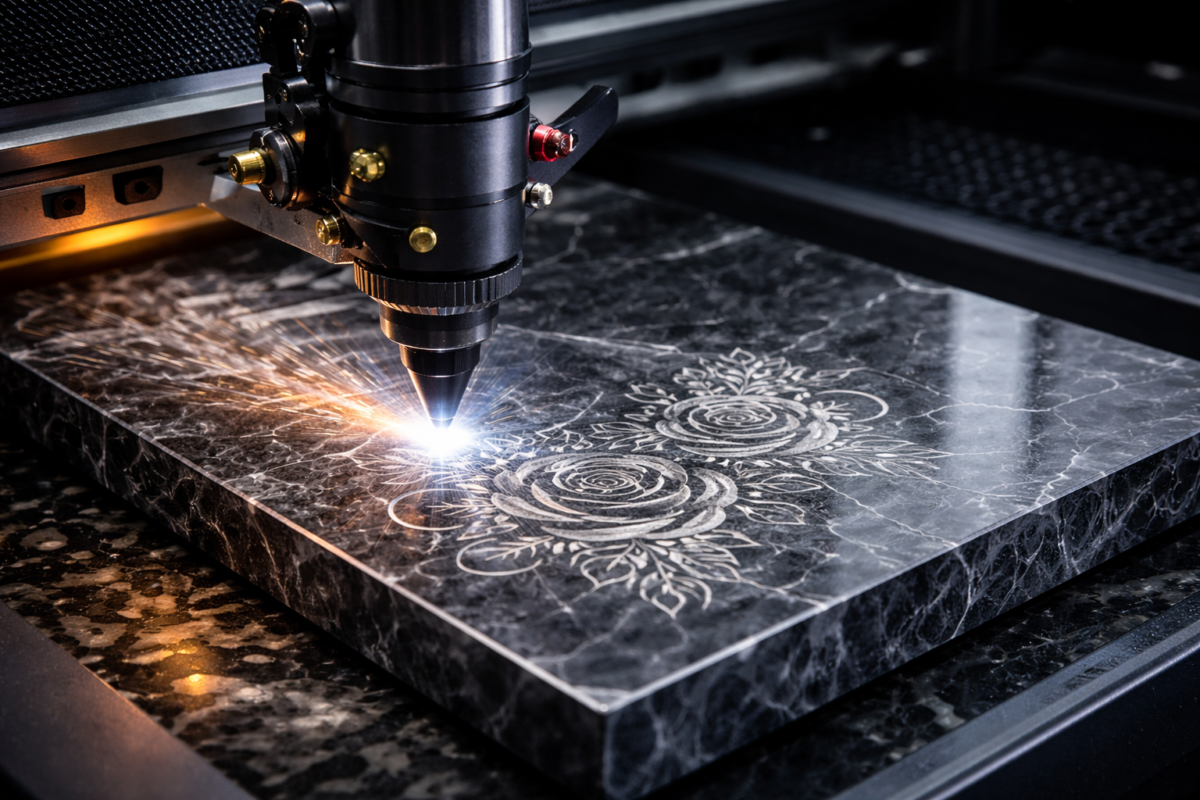
Why Laser Engraving Marble?
Laser-engraved marble is preferred for its ability to create precise, permanent designs without damaging the stone. Instead of cutting or removing large amounts of material, the laser uses controlled heat to modify the surface appearance.
- Produces clean, detailed markings with minimal surface disruption
- Preserves the strength and structure of the marble
- Allows consistent results across repeated designs
- Works well for plaques, decorative tiles, gifts, and architectural features
How Laser Engraving Marble Works
Laser engraving works by converting light energy into localized heat on the marble surface. This heat creates micro-fractures that form visible patterns without damaging nearby areas.
- The laser targets a tiny spot with high precision
- Initial reflection is high, but absorption improves as the surface heats
- Power, speed, and focus control clarity and depth
Essential Equipment For Laser Engraving Marble
Using the right equipment improves engraving quality and consistency. Each component plays a role in precision, safety, and repeatability.
Laser source
The laser type determines how efficiently energy interacts with marble.
- CO2 Lasers: Most effective and widely used
- Fiber Lasers: Less efficient on light marble
- Diode Lasers: Suitable for small or hobby projects
Fixtures
Stable positioning prevents movement and uneven engraving.
- Custom Fixtures: Ideal for irregular or curved pieces
- Standard Clamps: Suitable for flat tiles
Why Are CO2 Laser Cutting Machines The Most Preferred Tool?
CO2 laser cutting machines are the most popular choice for laser engraving marble because they combine precision, efficiency, and reliability, making them ideal for delicate stone surfaces.
- Optimal Wavelength: CO2 lasers emit light at a wavelength of approximately 10.6 μm. Marble absorbs this wavelength efficiently, producing clean, consistent etching without excessive heat.
- High Precision: The finely focused beam allows intricate designs, detailed text, and small patterns to be engraved without affecting surrounding areas.
- Controlled Heat Input: CO2 lasers generate minimal heat-affected zones (HAZ), reducing the risk of cracking or chipping on brittle marble surfaces.
- Ease of Use: Most commercial marble laser engraving machines are CO2-based, featuring adjustable power and focus that suit both beginners and professional operators.
| Pro Tip: Always combine a CO2 Laser with proper surface preparation and secure workholding. This ensures maximum clarity, contrast, and repeatable results. |
Step-By-Step Guide: How To Engrave Marble
Following a structured process ensures precision, reduces errors, and prevents cracking or surface damage. Each step balances heat input, laser control, and material response.
- Secure the marble in the machine
- Use custom fixtures or clamps to prevent movement during engraving.
- Ensure the surface is level to maintain consistent focus and depth.
- Avoid over-tightening, which can induce stress cracks in brittle marble.
- Set laser power according to marble color and thickness
- Lighter marble requires lower power; darker marble may need slightly higher settings.
- Adjust power to avoid overheating, which can cause micro-fractures or discoloration.
- Record settings for repeatable results on multiple pieces.
- Adjust speed, focus, and beam parameters
- Focus the laser precisely on the marble surface for clean etching.
- Control engraving speed: slower passes deepen marks but increase heat; faster passes reduce depth.
- Use the appropriate pulse or continuous wave settings for your CO2 laser machine.
- Run a test pattern before final engraving
- Test on a scrap piece or hidden area to fine-tune power, speed, and focus.
- Evaluate contrast, depth, and edge clarity.
- Adjust parameters based on marble type, surface polish, and moisture content.
- Engrave the final design
- Follow the design path methodically.
- Monitor the work continuously to catch inconsistencies early.
- Avoid sudden changes in power or speed that may create uneven marks.
- Clean the surface after engraving
- Remove dust using a soft brush or air blower.
- For deeper marks, lightly wipe with a damp cloth to enhance contrast.
- Do not use abrasive cleaning tools that could scratch the engraved pattern.
Common Defects And Tips To Avoid Them
Most marble engraving defects occur due to excessive heat, poor focus, or improper surface preparation. Identifying these issues early and adjusting settings helps prevent permanent damage and material waste.
- Cracking: Use lower power settings, avoid aggressive passes, and allow the marble to cool between runs.
- Uneven Color: Maintain consistent focus, ensure uniform surface polish, and test settings before final engraving.
- Chipping: Reduce power near edges, secure the workpiece firmly, and avoid engraving too close to corners.
Laser Engraving Marble vs Other Engraving Methods
| Method | Characteristics | Advantages | Limitations |
|---|---|---|---|
| Laser Engraving | Precise, clean, minimal material removal | Fast, detailed, repeatable | Requires proper machine setup and correct settings |
| Sandblasting | Abrasive etching removes material | Good for durability | Less precise, slower, and with limited detail |
| Hand Carving | Manual process using chisels or tools | Artistic control, unique patterns | Time-consuming, skill-dependent, inconsistent results |
Advantages Of Laser Engraving Marble
- High precision
- Minimal material removal
- Fast and repeatable
- Excellent for personalization
Safety Considerations For Laser Engraving Marble
Laser engraving involves heat, light radiation, and dust. Basic safety measures protect operators and equipment.
- Wear laser-rated goggles
- Use gloves and protective clothing
- Ensure proper ventilation
- Enclose the laser workspace

Applications Of Laser-Engraved Marble
- Architectural tiles and decor
- Monuments and memorials
- Personalized gifts and plaques
- Corporate signage and awards
Final Thoughts On Laser Engraving Marble
Marble laser engraving combines precision, efficiency, and durability when the correct techniques are applied. Success depends on understanding marble’s structure, choosing suitable laser equipment, and carefully controlling power, speed, and focus. With proper setup and preparation, laser engraving marble offers repeatable, high-quality results for decorative and professional applications.
Frequently Asked Questions
1. Can all marble be laser-engraved?
Not all marble is ideal for laser engraving. Light-colored, smooth marble engraves best, while dark or heavily veined stones may produce uneven contrast due to mineral variations.
2. What type of laser is best for marble engraving?
CO2 lasers are the most effective option for marble laser engraving because they provide controlled heat and consistent surface marking. They work especially well on flat and polished marble surfaces.
3. How do I engrave marble without cracking?
Use lower power settings, proper focus, and test passes to manage heat buildup. Allowing short cooling intervals between passes also helps prevent thermal stress.
4. Does laser engraving marble require special machines?
Yes, machines with adjustable power, focus control, and built-in safety features deliver better results. These controls allow precise tuning for different marble types and finishes.
5. How should marble be prepared before engraving?
Clean and dry the surface thoroughly, and lightly sand polished marble, if needed, to reduce reflections. Proper surface preparation improves engraving consistency and clarity.
6. How deep can laser engraving go on marble?
Engraving depth typically ranges from 0.1 to 0.3 mm per pass, depending on the laser settings and marble density. Multiple passes may be used for darker or harder stones.
7. Can laser engraving damage marble?
Improper settings can cause discoloration, chipping, or cracking. Using correct power levels, focus, and testing prevents surface damage and preserves the marble’s appearance.
Related Blogs
- Top 6 Reasons Why Laser Engraved Phone Cases Are Worth It
- Laser Engraving For Leather: Techniques For Different Leather Types
- Stone Engraving Samples
- How To Do Stone Engraving And Granite Engraving With A Laser Machine?