
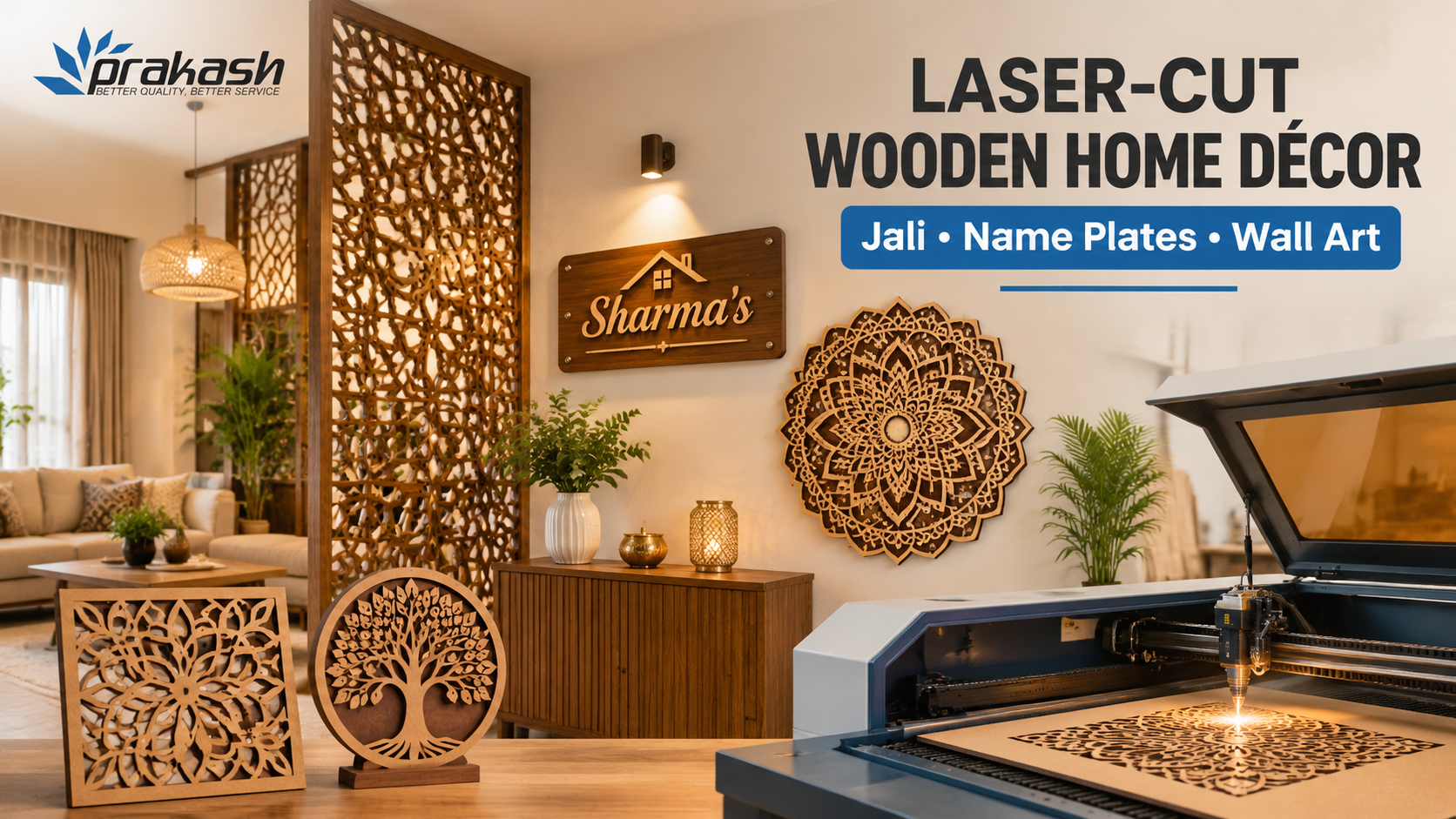
Walk into any new home, café or boutique today and you will notice one thing. The walls look different. Instead of plain paint, you see fine wooden jali panels, stylish name plates and detailed wall art. Most of these pieces are made with a laser cutting machine.
This trend is not limited to big cities. Small towns across India now have young entrepreneurs who start a laser cutting business from a small shop and serve local homes, offices and gift buyers. In this blog, we explain what laser-cut wooden décor is, why demand is growing, which products sell best, and how you can start.
What Is Laser-Cut Wooden Home Décor?
Laser-cut wooden décor means décor items made by cutting or engraving wood with a focused laser beam. A computer controls the beam, so it follows your design exactly. You draw a pattern on the screen, press start, and the machine cuts it out of the wood.
The items you can make include:
- Wooden jali panels and room dividers
- Name plates and house number plates
- Mandala and religious wall art
- Key holders, wall clocks and shelves
- Festival and wedding décor
A CO2 laser cutting machine is the most popular choice for this work because it cuts wood, MDF and plywood very well and gives a clean finish.
Why This Business Is Growing So Fast
Several things are pushing demand up at the same time.
1. People want personalised homes. Buyers no longer want the same mass-produced item that everyone has. They want their own family name, their own design and their own size. A laser machine makes one-piece orders as easy as bulk orders.
2. Homes and offices are being renovated and built in large numbers. Every new flat, villa, shop or office needs a name plate, a partition and some wall décor. That means steady, repeat demand in your own city.
3. Social media makes designs popular. One reel showing a beautiful jali panel can bring hundreds of enquiries. Buyers can now see what is possible and ask for something similar.
4. Customers prefer local makers. People like to meet the maker, share ideas and get quick delivery. A local laser shop can offer this better than an online seller far away.
5. The cost to start is manageable. Compared with many other manufacturing businesses, a laser décor setup needs a small space and a small team. One machine can produce many different products, so you are not stuck with a single item.
6. Festivals and weddings create seasonal peaks. Diwali, weddings, housewarmings and corporate gifting seasons bring a flood of orders for decorative and personalised items.
Popular Laser-Cut Wooden Décor Products
Wooden Jali Panels and Partitions
Jali is a traditional Indian design with fine geometric or floral patterns. Carving it by hand takes days and needs highly skilled artisans. A laser machine can cut the same pattern in a fraction of the time, and every piece comes out identical.
People use jali for:
- Room dividers between living and dining areas
- Pooja room doors and mandir backdrops
- Wall panels and ceiling accents
- Cabinet and wardrobe shutters
- Café and restaurant partitions
Because interior designers love jali, this is one of the best products for building steady B2B orders.
Name Plates and House Number Plates
Every home needs one, which makes this the easiest product to sell. You can offer:
- Family name boards with a clean engraved finish
- Layered name plates with backlit LED designs
- Office and cabin name boards
- Nameplates in English, Hindi, Punjabi and other languages
It is a fast product. A design can be ready in minutes, and customers often order name plates for relatives and friends too.
Wall Art and Mandala Designs
Wall art is where creativity shows. Laser machines can cut layered designs that create depth and shadow, such as:
- Mandala art in different sizes
- Tree of life and nature designs
- Map art, city skylines and monuments
- Religious symbols such as Om, Ganesh and Radha-Krishna
- Quotes and typography pieces
Layered wall art looks premium and can be sold at a higher price than simple items.
Other Products That Sell Well
- Key holders and organisers for entrance walls
- Wall clocks with custom designs
- Tea coasters and trays for the gifting market
- Kids’ room décor such as alphabet boards and cartoon cut-outs
- Corporate gifts with company logos
- Festival items such as Diwali lanterns and rangoli stencils
Why Laser Cutting Beats Traditional Carving
Hand carving is beautiful, but it is slow and costly. Laser cutting solves many problems for makers and buyers.
| Feature | Hand Carving | Laser Cutting |
|---|---|---|
| Speed | Very slow | Fast |
| Fine detail | Depends on the artisan | Very precise |
| Same design again | Hard to repeat exactly | Identical every time |
| Custom orders | Time-consuming | Easy and quick |
| Material waste | Higher | Lower |
| Skilled labour needed | Highly skilled | Basic training is enough |
The laser beam also seals the edge as it cuts, so there is less sanding work. Once a design is saved on the computer, you can produce it again whenever a customer asks.
Which Wood Works Best for Laser Décor?
Choosing the right material affects both cost and quality. Here are the common options:
- MDF: Affordable, smooth and easy to cut. It is the most popular choice for name plates, jali and wall art that will be painted.
- Plywood: Strong and good for larger panels. Birch and other good-quality plywood give clean edges and a natural wood look.
- Solid wood (teak, sheesham, pine): Excellent for engraving and premium products. Cutting thick solid wood needs a more powerful machine.
- Veneer and thin wood sheets: Great for layered art and delicate designs.
- Acrylic combined with wood: Used for modern name plates and backlit designs.
How thick you can cut depends on your machine’s laser power and the wood type. Always test your material first before taking a bulk order.
Which Laser Machine Do You Need?
For wooden décor, a CO2 laser cutting and engraving machine is the right choice. When you buy, think about these points:
Bed size. Jali panels and wall art are often large. A bigger bed, such as the popular 1300 x 2500 mm size (LC-1325), lets you cut full sheets of plywood or MDF without joining pieces.
Single head or double head. A single head machine suits small and medium workshops. A double head machine cuts two pieces at the same time, which doubles output for repeat designs. It is a good choice if you take bulk orders.
Laser power. Higher wattage cuts thicker wood faster. Pick a power level based on the thickness you plan to cut most often.
Software and support. Look for a manufacturer who gives training, spare parts and quick service. A machine that stands idle costs you money.
At Prakash Laser, we manufacture CO2 laser cutting machines in Faridabad with more than 30 years of machine-making experience behind the company. You can see how our machines work on real materials through our free sampling service before you decide.
How to Start a Laser Wood Décor Business: Step by Step
Step 1: Study your local market. Visit furniture shops, interior designers, builders and gift stores. Find out what people already buy and where the gaps are.
Step 2: Pick your focus. Start with two or three products, for example name plates, jali and wall art. Do not try to sell everything in the first month.
Step 3: Choose the right machine. Select a machine based on your product size, material and budget. Ask for a free sample cut on your own design to check the quality.
Step 4: Learn design basics. You can use free or low-cost design software. Many ready patterns are available, and you can hire a freelance designer for custom work.
Step 5: Make a sample catalogue. Cut ready samples of your best designs. Customers trust what they can touch. Photos and short videos help too.
Step 6: Set smart prices. Add material cost, machine time, finishing, packing and your profit. Premium layered designs and custom sizes can carry higher prices.
Step 7: Start selling. Approach interior designers, architects and local builders first. They bring repeat and bulk orders.
Simple Tips for Better Results
- Use good quality wood. Cheap, uneven sheets cause burn marks and cutting problems.
- Test your settings. Every wood type needs the right speed and power. Run a small test piece first.
- Use air assist and keep the lens clean. This reduces smoke marks and gives cleaner edges.
- Apply masking tape on the surface when cutting to protect the wood from smoke stains.
- Finish properly. Light sanding, polish, paint or melamine coating makes the item look professional.
- Design with strong joints. Very thin parts in a jali pattern can break. Keep bridges between cut areas wide enough.
- Pack carefully. Fine wooden pieces can crack in transit, so use proper packing.
How to Get Customers
You do not need a big budget. Try these ideas:
- Post short videos of the machine cutting a design. People love watching them.
- Create a Google Business profile so that people searching “laser cutting near me” can find you.
- Share your work on Instagram, Facebook and Pinterest.
- Join WhatsApp groups of builders, architects and interior designers.
- Offer a small discount on name plates for the first few customers to collect reviews.
- Display sample pieces at local exhibitions, wedding fairs and home décor shows.
Frequently Asked Questions
Q1. Is laser-cut wooden décor a profitable business in India? It can be, because demand for personalised and modern home décor is growing. Your profit depends on your product choice, pricing, material cost and how well you market your work.
Q2. Which laser machine is best for cutting wood? A CO2 laser cutting machine is the most suitable for wood, MDF and plywood. Choose the bed size and power based on the products and thickness you plan to make.
Q3. Can I cut thick plywood with a laser machine? Yes, within the limits of the machine’s power. Thicker boards need a more powerful laser and slower speed. Test your specific plywood before taking big orders.
Q4. Do I need technical knowledge to run a laser machine? No advanced knowledge is needed. With basic training on the machine and design software, most people can start producing within a short time.
Q5. What is the difference between a single head and a double head laser machine? A single head machine cuts one piece at a time. A double head machine has two cutting heads and produces two identical pieces together, which suits bulk work.
Q6. Can I try the machine before buying? Yes. Prakash Laser offers free sampling, so you can see how your own design and material turn out before you invest.
Final Words
Laser-cut wooden home décor is more than a passing trend. People want homes that look unique, and they want them made close to home. Jali panels, name plates and wall art are the three products leading this change, and each one can start small and grow with your skills.
If you are planning to enter this business, the right machine and the right support make all the difference. Prakash Laser can help you choose a CO2 laser cutting machine that fits your products and budget.
Ready to begin? Send us your design and wood sample for a free test cut, or contact our team to get a quote today.