

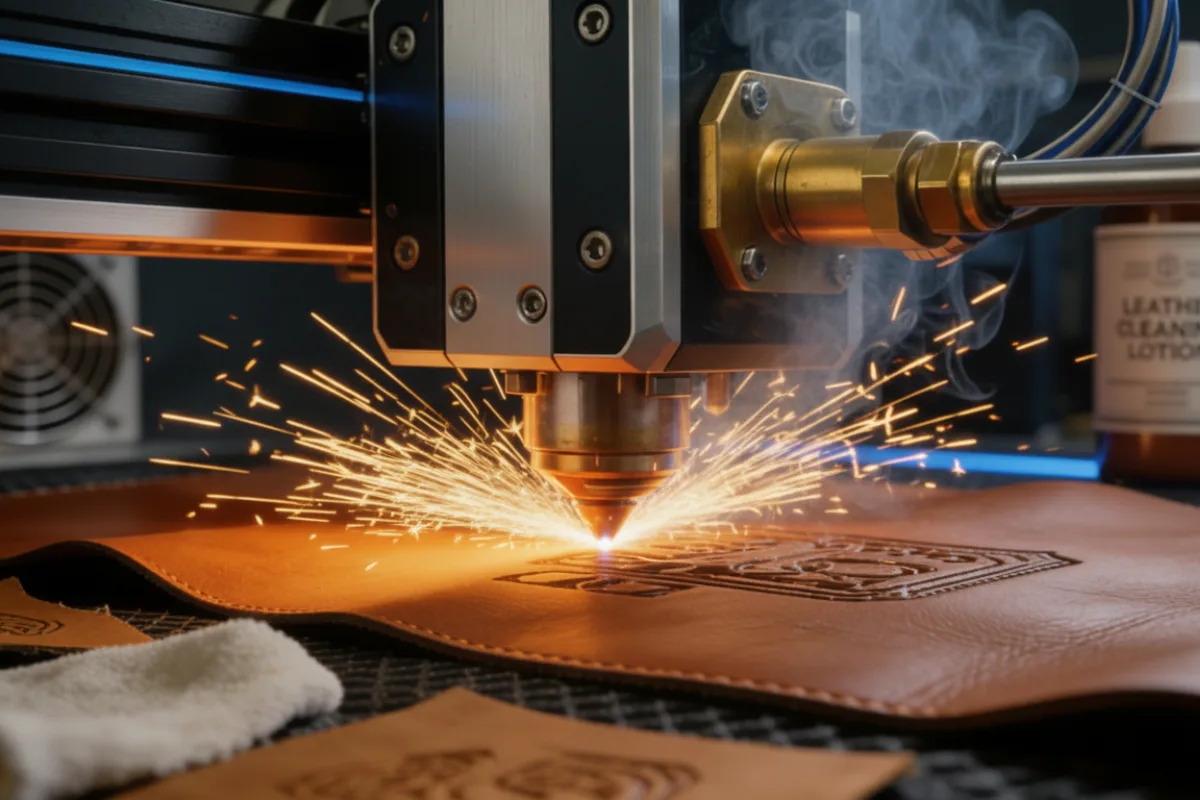
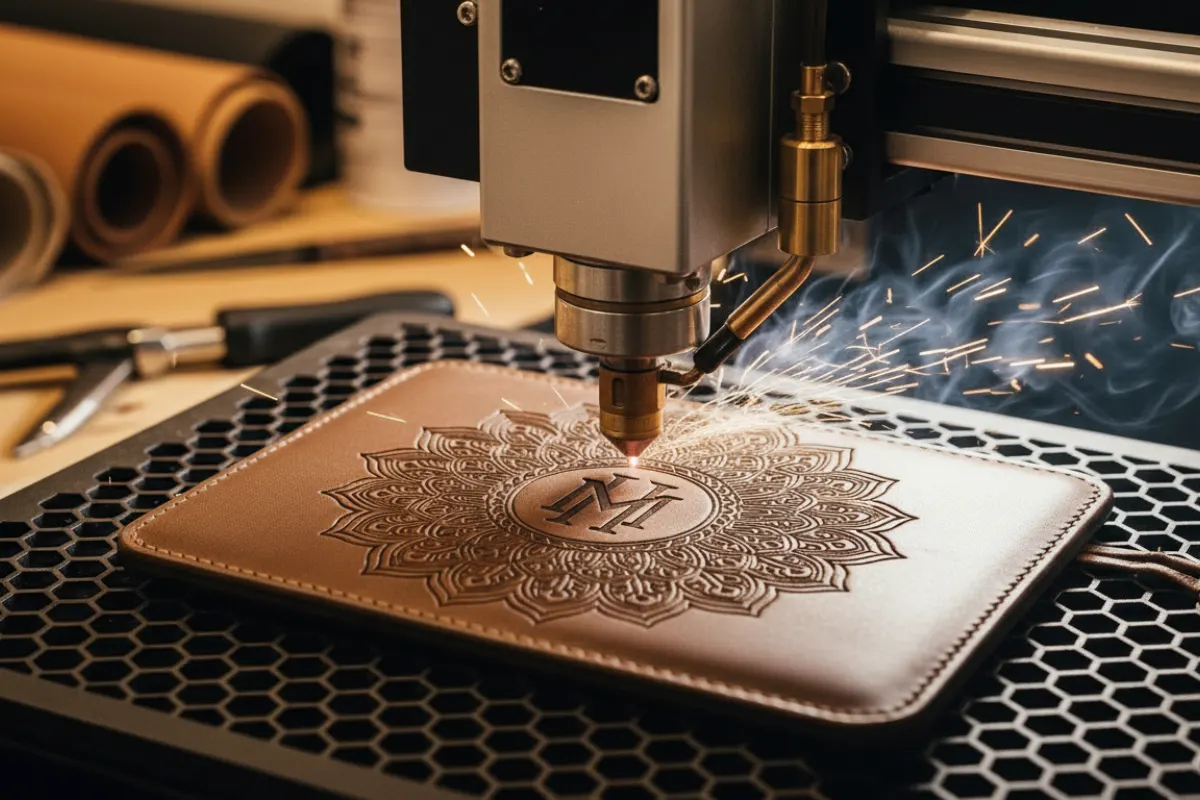
Laser engraving for leather allows you to add clean, lasting designs to everything from wallets and belts to journals, key tags, and patches. However, you must know that leather is a little different from other materials. The results change based on the leather type, surface finish, and engraving approach. That’s why technique matters so much.
In this article, we’ll explore how various leathers behave, the best methods to use, and tips for getting consistent, professional-looking results every time. Stick around til the end.
Table Of Contents
- Why Does Leather Behave Differently During Laser Engraving For Leather?
- What Are The Best Techniques For Laser Engraving Leather?
- Which Laser Type Works Best For Laser Engraving Leather?
- What Are The Recommended Laser Settings For Leather?
- What Are The Most Common Problems When Laser Engraving Leather?
- Frequently Asked Questions
Why Does Leather Behave Differently During Laser Engraving For Leather?
Leather reacts differently to laser engraving because it’s a natural, fibrous material, not a smooth or perfectly even surface. Instead of slicing through cleanly, the laser’s heat works directly on those fibers, which leads to a few noticeable results:
- Leather isn’t uniform, so even two areas on the same piece may react slightly differently
- The fibers darken and compress, creating a visible mark rather than a sharp cut.
On top of that, details like the tanning method, thickness, and surface finish play a big role. That’s why engraving results can vary from one leather item to another, even when you’re using the same settings.
What Are The Best Techniques For Laser Engraving Leather?
The best techniques for laser engraving for leather focus on proper preparation, controlled settings, and understanding how leather reacts to heat. These practical steps help you achieve consistent and predictable results.
- Choose The Right Machine: CO2 Lasers are well-suited for engraving leather because they interact effectively with organic materials. They allow for better control over depth and contrast, making them a reliable choice for clean and accurate leather engravings when paired with the correct settings.
- Clean the leather surface first: While using this Leather Laser Engraving and Cutting Machine, wipe away dust, oils, or residue so the laser interacts evenly with the material.
- Test on scrap leather: Small test runs help fine-tune power, speed, and frequency before you engrave the final piece.
- Work in a properly-ventilated area: Leather releases fumes during engraving, so proper airflow improves both comfort and consistency.
- Condition after engraving: Applying a light leather conditioner can enhance contrast and give engraved areas a richer, finished look.
| 💡 Pro Tip:If you’re engraving leather with a noticeable grain or texture, try defocusing the laser slightly. This can help soften harsh burn edges and produce more even contrast, especially on textured or softer leather surfaces. |
Quick Techniques By Leather Type And Their Finish
As discussed earlier, leather isn’t uniform, so understanding how different types and finishes react to laser engraving makes the process much easier. After all, minor adjustments based on the material can make a huge difference.
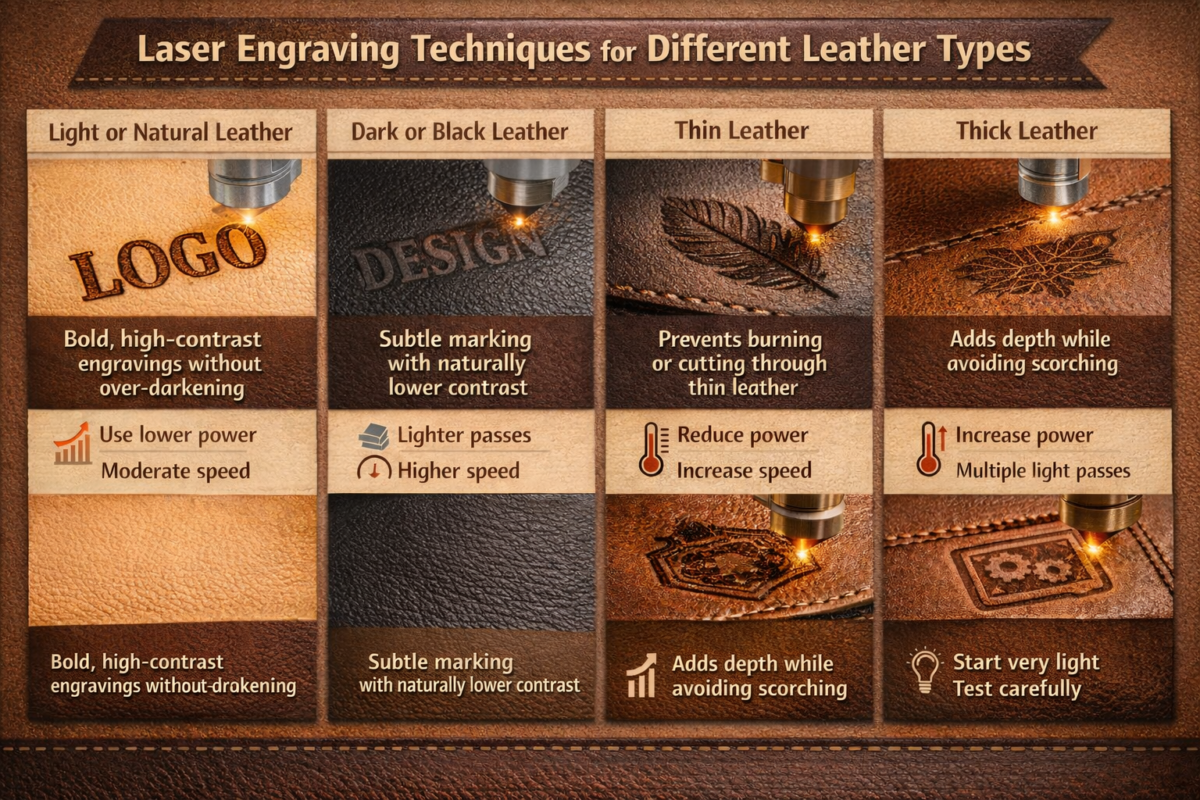
- Light or natural leather: Use lower power and moderate speed to maintain bold, high-contrast engravings without over-darkening.
- Dark or black leather: Focus on lighter passes and higher speed for subtle marking, as contrast will naturally be lower.
- Thin leather: Reduce power and increase speed to prevent burning or cutting through the material.
- Thick leather: Slightly increase power or use multiple light passes to add depth while avoiding scorching.
- Faux leather: Start with very light settings and test carefully, as coatings can react unpredictably to heat.
Which Laser Type Works Best For Laser Engraving Leather?
The type of Leather Laser Engraving Machine you use plays a major role in how clean, controlled, and consistent your designs will be. Even though there are several laser options, they don’t all work the same way on leather.
Are CO2 Lasers Best For Leather Engraving?
For laser engraving for leather, CO2 lasers are widely preferred because they produce smooth, even engraving with better control over contrast and depth. This makes them a reliable choice for detailed designs, text, and larger leather projects where consistency matters.
Can Diode Lasers Engrave Leather Effectively?
Diode lasers can engrave leather, but results depend heavily on the leather type and surface finish. And they work best for light surface marking and smaller designs.
What Are The Recommended Laser Settings For Leather Engraving?
A laser cutter machine for leather works best on the following settings:
- Power: 20–40% (lower for thin or light leather, slightly higher for thicker leather)
- Speed: 300–500 mm/s (faster speeds for lighter marks, slower speeds for darker engraving)
- Resolution (DPI): 250–500 DPI for clean text and detailed graphics
- Passes: 1 light pass for most engraving; multiple light passes if more depth is needed
What Are The Most Common Problems When Laser Engraving For Leather?
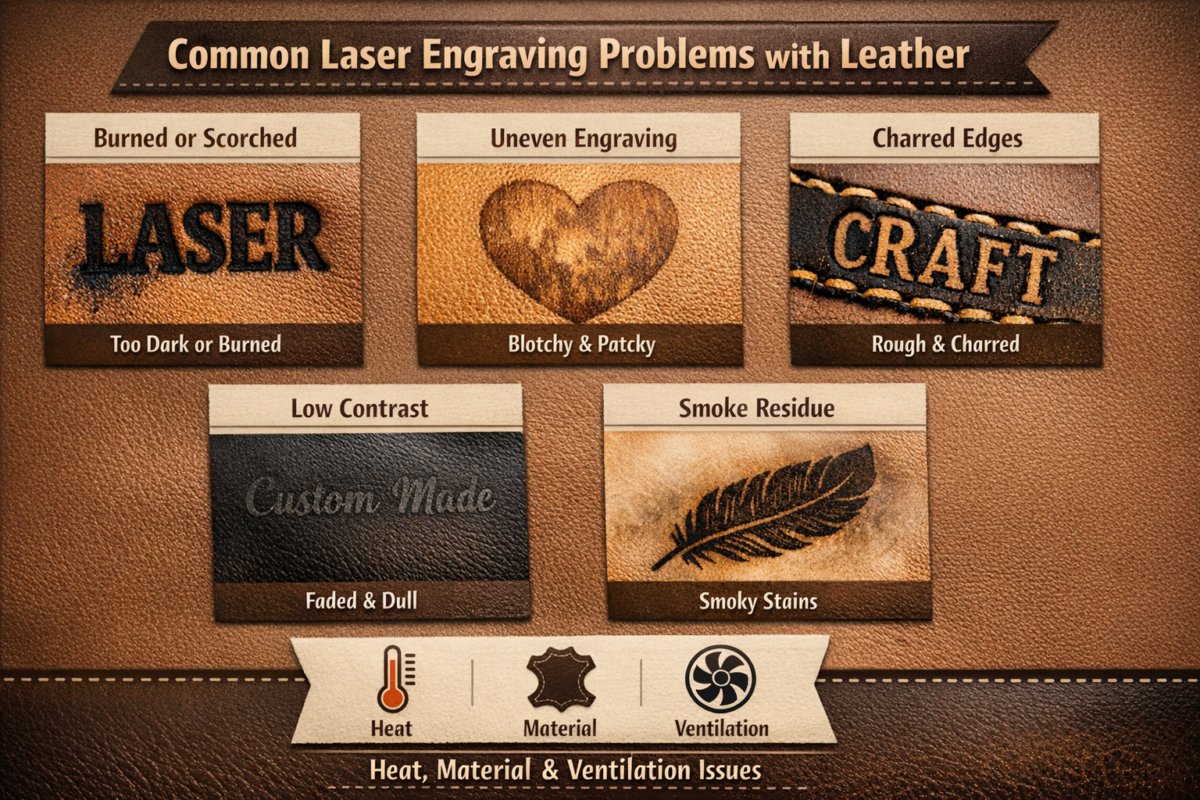
Even with the best laser engraving machine for leather, you can run into a few common issues with your operations. They are mostly related to heat control, material variation, and ventilation. When just one of these goes wrong, you may run into:
- Leather turns too dark or burns, which is caused by high power or slow speed. This issue allows heat to build up quickly, especially on thin or dry leather.
- Uneven or blotchy engraving: Natural differences in grain, density, oils, or surface finishes can make leather react inconsistently.
- Rough or charred edges: Often the result of engraving too deeply in a single pass instead of using lighter passes.
- Low contrast or faded marks: Common on dark or heavily finished leather, where lighter passes and speed adjustments work better.
- Smoke stains around the design: Poor ventilation lets smoke settle back onto the leather, causing surface discoloration.
Read more: 4 Popular Types of Laser Cutting Machines You Should Know.
Frequently Asked Questions
1. Does laser engraving damage leather?
Not really, especially when done correctly, laser engraving does not damage leather. Issues like burning or charring usually occur due to excessive power, slow speed, or lack of proper testing.
2. Should I test laser settings each time before engraving leather?
Yes, testing on scrap leather is essential. Due to natural variations in leather, even slight changes in power or speed can significantly affect engraving quality.
3. Can a leather laser engraving machine be used for engraving hats?
Yes, a leather laser engraving machine for hats can be used to engrave leather patches or leather components that are later applied to hats. The engraving is typically done on flat leather pieces before they are stitched or attached, rather than being engraved directly on finished hats.